|
5/8/2021 The Minutiae and Microscopic Anatomies of Capital: Examining Marx’s Commodity Form. By: Calla WinchellRead Now In Marx’s ambitious work Capital: Critique of Political Economy he has a daunting goal: to describe the functioning of capitalism that corrects the blindness of the preceding political economists that he had encountered. He seeks to denaturalize capitalism and to demonstrate the exploitative nature of its very foundations. This chapter epitomizes the method used throughout the text, which Marx builds on the back of the concept of the commodity form. Using the most quotidian concepts, like commodity and then the money equivalent, Marx makes the seemingly familiar feel mysterious through his “microscopic” gaze (Marx 90)[1]. Furthermore, through this scientific methodology, Marx reveals the strange homogenizing urge of capitalism, where everything is made equivalent through the money form. For example, where labor, previous to capitalism, was understood by its particular characteristics —what type of labor? What product? — under capitalism it becomes understood as an average “congealed” form of labor, with no particularities. Tracking capitalism’s impulse to make uniform provides a trail that Marx tracks, from the commodity form all the way to the “fetishism of commodity”. Capitalism, like the systems that came before it, lays claim to its own naturalness as proof of its necessity and inevitability. Seeking to problematize that viewpoint, Marx seeks to make the seemingly natural and unexamined aspects of capitalism alien. This reexamination, from a distance, of the foundational concepts of capitalism begins with the very smallest constitutive element: the commodity form. Marx acknowledges that, “the analysis of these forms seems to turn upon minutiae. It does in fact deal with minutiae, but they are of the same order as those dealt with in microscopic anatomy” (Marx 90). Though it “seems” to be minute, the commodity form is the heart of Marx’s labor theory of value, which posits that value is generated, not in the sphere of exchange, but in the sphere of production, when labor is performed. Marx adopts a scientific mode of inquiry, rather than an outrightly polemical or didactic mode. This choice manifests in many ways, from the metaphors he uses to more methodological questions of organization. He sketches out his view of capitalism as a living organism in his preface to the first German edition of Capital, saying that political economists had studied capitalism as one might an animal. “The value-form, whose fully developed shape is the money-form, is very elementary and simple. Nevertheless, the human mind has for more than 2,000 years sought in vain to get to the bottom of it all, whilst on the other hand, to the successful analysis of much more composite and complex forms, there has been at least an approximation” (Marx 89-90). In contrast, Marx seeks to describe the cellular level of capitalism. More importantly still, he seeks to prove that it is not the commodity that is “the economic cell-form” but rather value derived from labor. Turning his microscope to the commodity form, Marx argues that the commodity form is only an advent of capitalism. In order to be a commodity, an article must have “use-value” and “exchange-value”. The former essentially means that the object in question has utility that is separate and beyond its ability to be exchanged. While use-value is transhistorical, because objects have had utility since humans began using tools, the latter is contingent upon the advent of capitalism. Exchange-value means that one object can be exchanged for a certain quantity of another; the two object-types being exchanged need not be equivalent in quality and indeed, they rarely are. When viewed only as a bearer of exchange-value, the particular utility of an object is not considered. The exchange of two qualitatively different items is made possible because they share one common property: “that of being products of labor” (MER 305). This shared fact of being products of labor presumes that this labor is qualitatively the same, even though the true production process might require very different methods —spinning yarn versus carving wood, for example— and thus appear to be quite different. However, in the logic of capital, there is an abstract form of labor, what Marx terms a “congelation of homogeneous human labor” (MER 305). Essentially, this means that labor is quantified with the “socially necessary” time needed to produce something “under normal conditions” and “with the average degree of skill” (MER 305). Thus, value is a result of the labor-power expended on average, by an unskilled laborer, to produce the commodity in question. Simply put, commodity is best understood as value embodied. For example, the ingredients of a cake —sugar, flour, milk— lack as much value as the fully baked cake itself. Since the necessary components are purchased either way, the difference must be understood to be in the labor performed by the baker upon the materials which produced the higher value cake, as opposed to the unacted upon (un-labored) ingredients alone.  In order for an object to have value —and so become a commodity— it must possess a use-value and an exchange-value. If it lacks the first, then the object will not be purchased, no matter the hours of labor spent producing it. Lacking the second would mean that no labor had gone into producing it, though it can still have a use-value. Marx’s specific term for such an object is “the spontaneous products of nature” like sunshine or wind, which qualify as something with use-value but that cannot be exchanged precisely because no labor-power has been expended on it. Where use-value relies on the qualitative, meaning it depends on the specificity of the object’s particular utility, exchange-value is the reverse. This means that value is “totally independent of [its] use-value” (MER 305). This dichotomy between the particularity of transhistorical use-value and the homogeneity of exchange-value plays out again and again in Marx’s account, exposing capital’s desire for exchange of uniform equivalents more generally. After detailing the components of the general commodity form, Marx proceeds to talk about the specific commodity form of labor-power. Marx distinguishes between the production of goods in previous eras from the production of goods under capitalism, pointing to the division of labor as a key difference. Citing textiles—a common example for Marx— as an instance of change in history, Marx writes “wherever the want of clothing forced them to it, the human race made clothes for thousands of years, without a single man becoming a tailor” (MER 309). Without a sphere of exchange such division would be highly impractical. Yet, for all the dividing of labor into specializations that capitalism necessitates, there is presumed to be an abstracted idea of the average worker’s ability to perform relatively unskilled labor. This more general concept of labor might seem to undermine Marx’s claim about the division of labor’s importance, but it instead serves to highlight the lack of true “specialization”; any human can perform the kind of tasks that Marx’s labor theory of value rests upon. This sense of labor as homogenous is not, however, able to be translated across societies. Marx makes it quite clear that abstract labor can only be abstracted for current societal contexts; it cannot be translated across borders or eras. In other words, the abstract labor of a farmer in the 17th century will not be the same abstracted labor for contemporary workers, and so it should not be applied universally. The “special form” of the commodity of labor-power is distinct because in its consumption, more value is generated (MER 310). The essential nature of the general commodity is one of consumption. Purchasing something gives access to the use-value of the object, which is used and then used up. In this normal paradigm, the object is depleted of value through use. In contrast to this general commodity form, the commodity of labor-power generates more value as it is used, for the laborer generates new value through their labor. So, the use-value of labor-power is its potential to generate still yet more value. This quality is what supports the labor theory of value. While abstract labor is simply what the average person can be expected to produce over a duration of time, how might one account for more skilled labor under this theory of value? Marx writes that this should be understood as “simple labor intensified” or “multiplied simple labor”. So, one hour of skilled labor might be equal to three unskilled labor hours. Given that these are made equivalent, Marx argues that all labor in his system should be understood as unskilled, “to save ourselves the trouble of making the reduction” (MER 311). Once again, the desire for standardization and uniformity of capitalism stands in contrast with the particularities of different labor. Marx has set out in the section to give an account first of the commodity form, as an essential building block of capital. After he describes this basic structure, he moves to the more particular question of a universal equivalent commodity. The necessity of this universal equivalent commodity, namely a money form, is essential for the functioning of capitalism. In order to describe a universal equivalent, Marx describes first how two commodities can be made to relate to each, so that one commodity expresses itself as the equivalent of another, different commodity. Marx writes, “the relative form and the equivalent form are two intimately connected, mutually dependent and inseparable elements of the expression of value; but, at the same time, are mutually exclusive, antagonistic extremes” (MER 314). In order to form a relationship between two commodities it is necessary to make one relational to the other, translating its value into another form. This second commodity simply expresses the first, but cannot express beyond that. In other words, there can only be one “unit” or one commodity which expresses itself and the other, relational commodity as well. The first commodity, which Marx terms “the relative form”, is embodied in the second chosen commodity. To return to the baking metaphor, we’ll assume that three bags of flour is the equivalent value of one cake. Cake is here the equivalent, and flour is the relative. This relational form points to the “special form” of labor as a creator of value. It is the cake and the flour’s state as products of labor that allow for their equivalence. It is a creation of equivalence that, “brings into relief the specific character of value-creating labour, and this it does by actually reducing the different varieties of labour embodied in the different kinds of commodities to their common quality of human labour in the abstract” (MER 316). One only needs to take this relational comparison a bit farther to arrive at a universal equivalent. In the previous example, cake is fitted to the role of universal equivalent, but a true money-form allows for easier still expression of relations of value-created-by-labor. The money form becomes the only equivalent, achieving “a directly social form” because it allows for relations of meaning to form between commodities and this new equivalent (Marx 161). However, the larger sociality of relation between laborers is further obscured. The homogenizing impulse that Marx has revealed with his comparisons between use-value and exchange-value, concrete labor and abstract labor, gains full expression with the mysteriously mute fetishism of commodity. All relationship between laborers is disappeared behind the gleam of the universal equivalent; meaning is displaced from its proper understanding of the sociality of labor, onto the abstracted universal equivalent commodity, the money form, which he discusses in the next chapter. It is a commodity, because it is value embodied —and thus, labor embodied— and because it has use-value, in that it allows for easy exchange between products, thus able to “satisfy the manifold wants of the individual producer” (MER 322). This ease of exchange directly obscures the “peculiar social character of the labor that produces” this fetishism of commodity (MER 321). Though, as Marx observes, “a commodity appears, at first sight, a very trivial thing, and easily understood”, through tracing the origin of the value derived from commodity to the expenditure of labor-power, Marx reveals the essentially unnatural and mysterious nature of the building block of capitalism: the commodity form. Examined under his “microscopic” view, the familiar is made alien to us, and capital can begin to be “de-naturalized”. [1] I used two editions of this chapter, as the Marx-Engels Reader seems to have abridged some sections. I will cite the Reader using the acronym “MER”. All other citations refer to the translated version of the whole text. See Work Cited for details. Citations Marx, Karl, and Friedrich Engels. The Marx-Engels Reader. Ed. Robert C. Tucker. 2nd ed. New York: Norton, 1978. Print. Marx, Karl. Capital: A Critique of Political Economy. Trans. Ben Fowkes. London, UK: Penguin, 1992. Print. AuthorCalla Winchell is trained as a writer, researcher and a reader having earned a BA in English from Johns Hopkins University and her Masters of Humanities from the University of Chicago. She currently lives in Denver on Arapahoe land. She is a committed Marxist with a deep interest in disability and racial justice, philosophy, literature and art.
1 Comment
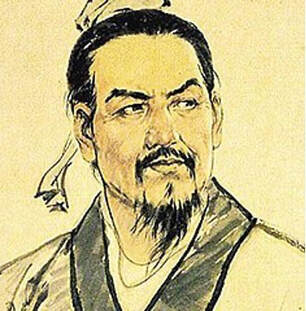 “Well, Karl, what do you know about the Legalists and Han Fei in particular?” “I remember what Reese [“Dictionary of Philosophy and Religion” by William L. Reese] says. That he lived in the Third Century B.C., that he was the Prince of Han and committed suicide in 233 B.C. because the King of Qin wouldn’t accept his services. He is the major philosopher in the Legalist School.” “Pretty good. Chan calls this school the most radical of the schools for its rejection of Confucianism (morality) and Moism (religion). Remember, the Qin Kingdom conquered the other Chinese Kingdoms and the Qin Dynasty (221-206 B.C.) set up the imperial system, under the First Emperor, that ruled China until 1912. The dubious claim to fame of the Legalists is that they helped set up the ideological framework for the Qin. Han Fei was the most important of a line of Legalist philosophers. He also studied under Xunzi and, unjustly I think, some of his more ‘totalitarian’ tendencies have been read back into his teacher. Legalist predecessors were Kuan Chung (Seventh Century B.C.), Lord Shang, Prime Minister of Qin (Fourth Century B.C.), his contemporary, the Prime Minister of Han, Shen Buhai and Shen Dao (c.350-275 B.C.). Chan notes that his fellow student with Xunzi, Li Si, who died in 208 B.C. was behind the suicide of Han Fei. I can’t believe he killed himself just because he couldn’t get a job with the future First Emperor!” “That does seem strange. Here is some more info in Creel [H.G. Creel “Confucius and the Chinese Way”]. It seems Li Si actually turned the King against Han Fei by telling him that he would not support Qin in a war against Han. Han Fei was tossed into prison and forced to kill himself by Li Si. That makes more sense.” “It also makes Li Si a fake sage! That type of behavior seems completely against all the teachings of the philosophers we have so far discussed! Xunzi would not have liked that at all. Why did he do it?” “His motive makes it even worse. He knew that Han Fei was a better philosopher than he, and he was jealous that the King would prefer him. Li Si was already a minister in Qin when Han Fei came to offer his services.” “So, are we ready to look at the “Han Feizi” and see what this new philosophy was all about?” “I’m ready, Fred.” “Chan says Han Fei is most famous for his synthesis of Legalist views and for his discussion of the Dao which influenced all the Daoists of note. I will begin with Chan’s first selection ‘1. The Synthesis of Legalistic Doctrine.’ Han Fei starts by noting that Confucianism and Moism are the most popular philosophies and attacks them for trying to pretend they represent the wisdom of the old sage kings. Han Fei is against using the past as a model for the present and future. He says, since no one can really tell what the old sage-kings' true teachings were or how to apply them today, then, ‘To be sure of anything without corroborating evidence is stupidity, and to base one’s argument on anything about which one cannot be sure is perjury. Therefore those who openly base their arguments on the authority of the ancient kings and who are dogmatically certain of Yao and Shun are men either of stupidity or perjury.’ “ “Technically, while Mo may have mentioned Yao and Shun, it was Wen and Tang and Wu and Yu that he appeals to most of the time in the Chan extracts. But in principle Han Fei’s argument is against both Mo and Confucius.” “This next quote shows that the Legalists were in favor of a government of laws and not of men! ‘Although there is a naturally straight arrow or a naturally round piece of wood [once in a hundred generations] which does not depend on any straightening or bending, the skilled workman does not value it. Why? Because it is not just one person who wishes to ride and not just one shot that the archer wishes to shoot [so bending and straightening of wood is needed as a skill-tr]. Similarly, the enlightened ruler does not value people who are naturally good and who do not depend on reward and punishment. Why? Because the laws of the state must not be neglected, and government is not for only one man. Therefore the ruler who has the technique does not follow the good that happens by chance but practices the way of necessity ....’ And Chan remarks, ‘In the necessity of straightening and bending, note the similarity to Xunzi. The theory of the originally evil nature of man is a basic assumption of the Legalists.” “I still say that Xunzi was not like the Legalists. I pointed this out at the start of our discussion on the Xunzi.” “And I said I agreed with you. You will be happy to know that Chan also agrees with you and not with Fung [Fung Yu-lan, “A Short History of Chinese Philosophy”] who holds that Han Fei based his doctrines on those of Xunzi.” “Well, I like that! Just what does old Chan have to say about this issue Fred?” “He says the bending and straightening in Xunzi meant education and the like, but Han Fei only relied on rewards and punishments. Chan said, ‘Xunzi had a firm faith in man’s moral reform but the Legalists have no such faith.’ And, he adds, ‘It is misleading, at least, to say, as Fung does, that Han Feizi based his doctrines on the teachings of Xunzi.’ This is because they ‘were utterly different in their attitudes toward man as a moral being.’” “I’ll buy that. So, let’s go on with some more of the ‘Han Feizi’.” “Sure. Han Feizi says the enlightened ruler needs four things to ensure his success. Namely, the ‘timeliness of the seasons,’ the support of the people, ‘skills and talents,’ and finally a position of power. He says, ‘Acting against the sentiment of the people, even Meng Pen and Xia Yu (famous men of great strength) could not make them exhaust their efforts. Therefore with timeliness of the seasons the grains will grow of themselves.’ In fact with all four conditions, then, ‘Like water flowing and like a boat floating, the ruler follows the course of Nature and enforces an infinite number of commands. Therefore he is called an enlightened ruler....’” “Sounds like Daoism.” “You couldn’t be more right Karl. Chan’s comment on that quote I just gave is, ‘Of all the ideas of the Legalists, perhaps the most philosophical is that of following Nature, which was derived from the Daoists.’ And, although he did not include it in his “Source Book”, Chan says that one of the chapters in the “Han Feizi” is a commentary on the thought of Laozi.” “That’s excellent. Does he get more specific about law?” “Try this. ‘The important thing for the ruler is either laws or statecraft. A law is that which is enacted into the statute books, kept in government offices, and proclaimed to the people. Statecraft is that which is harbored in the ruler’s own mind so as to fit all situations and control all ministers. Therefore for law there is nothing better than publicity, whereas in statecraft, secrecy is desired....’” “Sounds a little like Machiavelli.” “He goes on, ‘Ministers are afraid of execution and punishment but look upon congratulations and rewards as advantages. Therefore, if a ruler himself applies punishment and kindness, all ministers will fear his power and turn to the advantages.’” “Yes, I remember this. The ‘two handles’ of government--reward and punishment. Machiavelli says a prince is better off being feared than loved, and I see that Han Fei also goes in for the fear factor.” 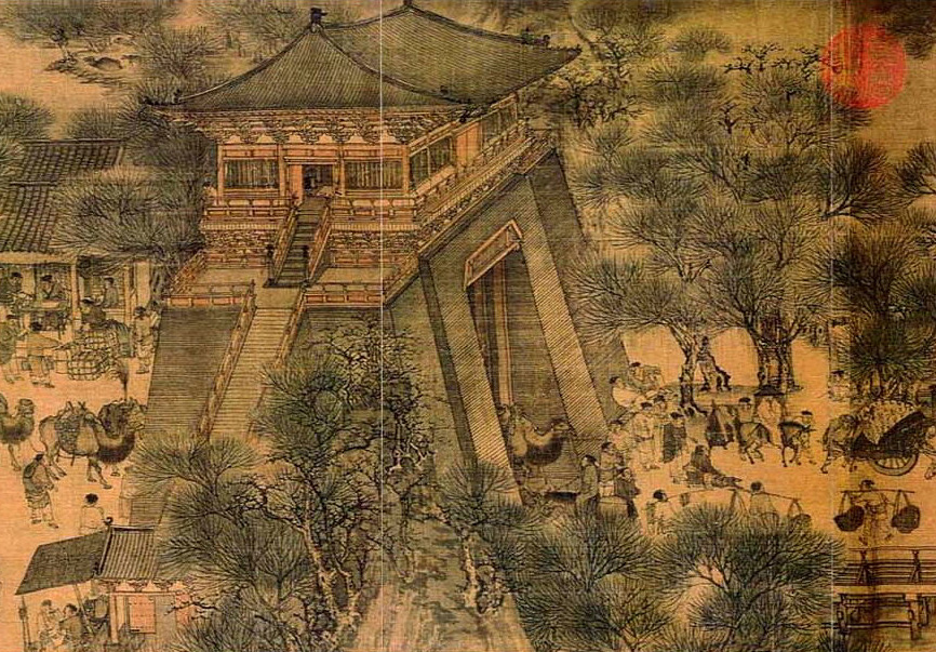 “Yes he does. A minister gets punished if he does something small after having said he would do something big, but also if he expects to do something small and it turns out to be big. Han Fei says, ‘It is not that the ruler is not pleased with the big accomplishments but he considers the failure of the big accomplishments to correspond to the words worse than the big accomplishments themselves. Therefore he is to be punished....’” “That certainly won’t encourage ministers to surpass themselves! That seems counter-productive. I understand being punished for big talk and little deeds, but if you set out to do only a little yet accomplish something big despite yourself, I think it is not wise for the ruler to punish you. Suppose you said you would delay the enemy while the ruler collects his forces and instead you are able to defeat the enemy. What is the sense of being punished?” “I agree with you Karl but that is the way Legalists play the game. Here is what Chan says about it. ‘Like practically all ancient Chinese schools, the Legalists emphasized the theory of the correspondence of names and actualities. But while the Confucianists stressed the ethical and social meaning of the theory and the Logicians stressed the logical aspect, the Legalists were interested in it primarily for the purpose of political control. With them the theory is neither ethical nor logical but a technique for regimentation.’” “Well that it is, but it will not really work in the interests of the ruler. In fact the Qin Legalist state fell apart shortly after the death of the First Emperor. Don’t forget that Han Fei had to commit suicide, a victim perhaps of his own Machiavellian position.” “Here is a big attack on the Confucianists.” “This should be good!” “This attack is also directed at Mozi so his doctrines were still around. ‘At present Confucianists and Moists all praise ancient kings for their universal love for the whole world, which means that they regarded the people as parents [regard their children].... Now, to hold that rulers and ministers act towards each other like father and son and consequently there will necessarily be orderly government, is to imply that there are no disorderly fathers or sons. According to human nature, none are more affectionate than parents who love all children, and yet not all children are necessarily orderly.’” “So here come the ‘two handles’.” “It seems to be the case Karl. Han Fei says that you have to have laws against the disorderly people in the state. He makes the point that ‘people are submissive to power and few of them can be influenced by the doctrines of righteousness.’” “That’s the case in empirical states that haven’t been designed to conform to Confucian ideals. Why should we limit ourselves to these kinds of state?” “Because that is being realistic. Look, Han Fei says, at what happened to Confucius in the real world. In the real world ‘Duke Ai of Lu was an inferior ruler. When he sat on the throne as the sovereign of the state, none within the borders of the state dared refuse to submit. For people are originally submissive to power and it is truly easy to subdue people with power. Therefore Confucius turned out to be a subordinate and Duke Ai, contrary to one’s expectation, became a ruler. Confucius was not influenced by Duke Ai’s righteousness; instead, he submitted to his power. Therefore on the basis of righteousness, Confucius would not submit to Duke Ai, but because of the manipulation of power, Confucius became a subordinate to him. Nowadays in trying to persuade rulers, scholars do not advocate the use of power which is sure to win, but say that if one is devoted to the practice of humanity and righteousness, one will become a true king.’” “Just the view of Plato as well as al-Farabi [872-950 A.D, great Islamic Aristotelian]. But you don’t have to tell me that Han Fei thinks that that is bunk.” “With a vengeance! It looks to me that he wouldn’t support any of the Confucian policies and would rather see a big military state--Sparta rather than Athens! He says, ‘The state supports scholars and knights-errant in times of peace, but when an emergency arises it has to use soldiers. Thus those who have been benefited by the government cannot be used by it and those used by it have not been benefited.’” “It does look like a professional army would fulfill his ideas. But, that type of army is parasitical in times of peace and it makes oppression by the government so much the easier. I presume his reference to ‘knights-errant’ is a swipe at the Moists.” “Here are some more of his ideas, ‘If in governmental measures one neglects ordinary affairs of the people and what even the simple folks can understand, but admires the doctrines of the highest wisdom, that would be contrary to the way of orderly government. Therefore subtle and unfathomable doctrines are no business of the people.... Therefore the way of the enlightened ruler is to unify all laws but not to seek for wisemen and firmly to adhere to statecraft but not to admire faithful persons. Thus laws will never fail and no officials will ever commit treachery or deception.’” “You know Fred, I don’t think that this is an either/or type of situation. I’m sure the Confucians would also agree that the people should not be left out of consideration. They always advocated education. That doesn’t mean that just because you have the elementary schools you have to abandon the university--which is what Han Fei seems to be saying. His emphasis on ‘statecraft’--the secret machinations of the ruler’s brain seems to conflict with his confidence in the ‘laws’ and introduces arbitrariness into the system. As for officials never committing treachery or deception--look what happened to him. Either Li Si, a Legalist himself, committed treachery or Han Fei was engaged in deception and the future First Emperor was right to imprison him. But the consensus is that Han Fei was innocent. Therefore he was the victim of ‘statecraft’ and in this instance the laws failed. I think it was this contradiction in his system that led to its untenability in the long run and why Confucianism, which is more balanced and nuanced, somewhat succeeded. I would also like to point out that his stress on the ‘common people’ is probably due to the influence of Daoism and this influence is also the reason he failed to integrate popular education and ‘the doctrines of the highest wisdom.’ For him these doctrines didn’t exist in the Confucian or Moist sense.” “I think you are right Karl. These next words have a real Daoist flavor. He says, ‘In regard to the words [of traveling scholars], rulers of today like their arguments but do not find out if they correspond to the facts. In regard to the application of these words to practice, they praise their fame but do not demand accomplishment. Therefore there are many in the world whose talks are devoted to argumentation and who are not thorough when it comes to practical utility.... In their deeds scholars struggle for eminence but there is nothing in them that is suitable for real accomplishment. Therefore wise scholars withdraw to caves and decline the offering of positions.’” “Very Daoist! Too bad Han Fei did not take his own advice. If he had gone to live in a cave somewhere instead of going off to take a position in Qin, and struggling for eminence with Li Si, he would not have ended up having to commit suicide.” “Here is the last quote from this section of Chan. ‘Therefore in the state of the enlightened ruler, there is no literature of books and records but the laws serve as the teaching. There are no sayings of ancient kings but the officials act as teachers. And there are no rash acts of the assassin; instead, courage will be demonstrated by those who decapitate the enemy [in battle]. Consequently, among the people within the borders of the state, whoever talks must follow the law, whoever acts must aim at accomplishment, and whoever shows courage must do so entirely in the army. Thus the state will be rich when at peace and the army will be strong when things happen.’” “Wow! This is no good. ‘No literature of books’--this will result in a violation of the Prime Directive as the only views available will be Legalist and thus authority rather than reason will end up ruling people’s minds.” 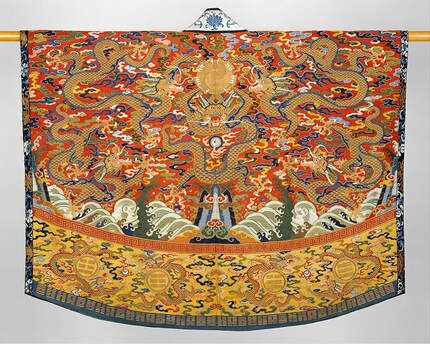 “Chan says, ‘The advocation of prohibiting the propagation of private doctrines eventually led to the Burning of Books in 213 B.C. and in the periodic prohibitions of the propagation of personal doctrines throughout Chinese history.’” “Chan wrote that before the ‘Cultural Revolution’, which was neither ‘cultural’ nor a ‘revolution,’ we can see the bad effects of this doctrine are still alive. Not allowing ‘personal doctrines’ means only state sanctioned ‘truth’ is allowed, a sure condition for ending up as far away from being able to find ‘truth’ as you can imagine. I hate to seem critical of the Chinese government, especially as it has raised the Chinese people out of feudal despair and into the modern world, but they should heed Carl Sagan’s advice that ‘The cure for a fallacious argument is a better argument, not the suppression of ideas.’” I’m not singling out China. Every government in the world could do better in this respect.” “Well put Karl, but now I’m going to go over the other section that Chan has in his “Source Book”, namely Han Fei’s discussion of Daoism, which Chan calls ‘one of the most important.’ Chan calls this section ‘Interpretations of Dao.’ Are you ready for this?” “Ready!” “OK, here goes, ‘Dao is that by which all things become what they are. It is that with which all principles are commensurable. Principles are patterns (wen) according to which all things come into being, and Dao is the cause of their being. Therefore it is said that Dao puts things in order (li). Things have their respective principles and cannot interfere with each other, therefore principles are controlling factors in things. Everything has its own principle different from that of others, and Dao is commensurate with all of them [as one]. Consequently, everything has to go through the process of transformation. Since everything has to go through the process of transformation, it has no fixed mode of life. As it has no fixed mode of life, its life and death depend on the endowment of material force (qi) [by Dao]. Countless wisdom depends on it for consideration. And the rise and fall of all things is because of it. Heaven obtains it and therefore becomes high. The earth obtains it and therefore can hold everything....’” “He seems to be following Laozi fairly closely.” “Yes indeed, as the following shows as well. ‘Whatever people use for imagining the real [as the skeleton to image the elephant] is called form (xiang). Although Dao cannot be heard or seen, the sage decides and sees its features on the basis of its effects. Therefore it is called [in the ‘Laozi ] “shape without shape and form without objects.”’” “Sort of like ‘Gravity” with Newton. It couldn’t be seen or heard but the effects, as with the falling apple, led Newton to work out its features. The great law that controls everything, like Gravity, that is the Dao.” “Han Fei goes on. ‘In all cases principle is that which distinguishes the square from the round, the short from the long, the course from the refined, and the hard from the brittle. Consequently, it is only after principles become definite that Dao can be realized.’” “But Dao is the basis of principle! To keep my Newton analogy going, I would have to say that it is only when objects are manifesting their attraction that Gravity can be realized.” “It is the ‘eternal’ Dao that Han Fei is interested in. He says, ‘Only that which exists from the very beginning of the universe and neither dies nor declines until heaven and earth disintegrate can be called eternal. What is eternal has neither change nor any definite particular principle itself. Since it has no definite particular principle itself, it is not bound in any particular locality. This is why [it is said in the ‘Laozi’] that it cannot be told. The sage sees its profound vacuity (xu) and utilizes its operation everywhere. He is forced to give it the name Dao. Only then can it be talked about. Therefore it is said, “The Dao that can be told of is not the eternal Dao.”’” “Does Chan say why this is ‘most important’?” “Yes he does. He goes into this passage with a long comment. ‘This is one of the earliest and most important discussions of Dao. It is of great importance for two reasons. First, principle (li) has been the central concept in Chinese philosophy for the last eight hundred years, and Han Fei was one of the earliest to employ the concept. Secondly, to him Dao is not an undifferentiated continuum in which all distinctions disappear. On the contrary, Dao is the very reason why things are specific and determinate. This is a radical advance and anticipated the growth of Neo-Daoism along this direction in the third and fourth centuries A.D.’” “That completes our treatment of Han Fei?” “It does. You know, I think we need to discuss Laozi and Daoism as this philosophy is almost equal to Confucianism in Chinese thought. If we want to really understand China today then we must understand the ‘Dao’ of Chinese Communism so we should get a grip on the thought of Laozi. O.K., let’s do it next. AuthorThomas Riggins is a retired philosophy teacher (NYU, The New School of Social Research, among others) who received a PhD from the CUNY Graduate Center (1983). He has been active in the civil rights and peace movements since the 1960s when he was chairman of the Young People's Socialist League at Florida State University and also worked for CORE in voter registration in north Florida (Leon County). He has written for many online publications such as People's World and Political Affairs where he was an associate editor. He also served on the board of the Bertrand Russell Society and was president of the Corliss Lamont chapter in New York City of the American Humanist Association. 4/30/2021 Antonio Gramsci and Political Praxis in the Materialist Theory of History. By: Sebastián LeónRead Now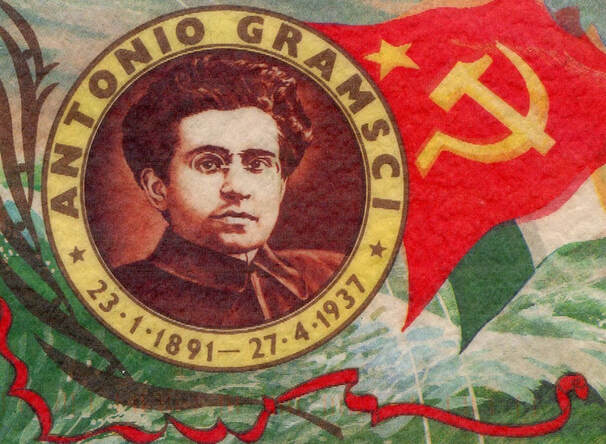 In commemoration of the 84th anniversary of his death. Antonio Gramsci is one of the most relevant theorists in the history of Marxism - he is also one of the most misunderstood. Self-proclaimed heterodox leftists of all latitudes have made “neogramcism” their banner, finding in the Sardinian revolutionary a symbol of the break with real socialism, Marxism-Leninism and the materialist theory of history. Perhaps the best known figure in this intellectual trend has been the Argentine Ernesto Laclau, who once again made a key concept such as hegemony fashionable in the academic mainstream. Laclau defined his neogramscism as "post-Marxist", having completely abandoned historical and dialectical materialism, and conceived of social reality as a fundamentally discursive, unstable and radically contingent construct, in which the different forces dissatisfied with the present social arrangement could, through the elaboration of highly porous ideas and slogans, join a political force capable of challenging the common sense of society to the powers that be (that is, hegemony). Here, the conquest of socialism and communism gave way to a "radical democracy", in which every area of social life was left open to democratic deliberation to reconfigure the established order. It is necessary to differentiate Laclau, as well as other self-proclaimed “neo-Gramscians” and followers of Gramsci (whether they are “post-Marxists” or “heterodox Marxists”), from the man himself. For, although there are many who seek to decouple Gramsci and his thought from Marxism-Leninism, his effort cannot be understood if it is not as the attempt of a communist, committed to the revolutionary spirit of the October Revolution, to bring Marxist theory to life in territories that had previously remained unexplored. For, if the Bolshevik triumph had captured the imagination and hopes of Gramsci and a whole generation of Western revolutionaries, the reality of post-World War I Europe forced them to confront failure and the rise of reaction. 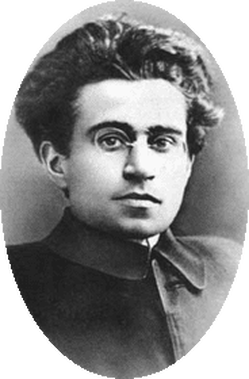 Gramsci the Bolshevik One of the things that is fascinated about Gramsci is the extent to which he emphasizes the role of subjectivity and political will over the relentless inertia of the relations of production and the productive forces. There are those who think that the construction of socialism and emancipation has more to do with the will of human beings than with the creation of certain material conditions that make it possible; however, one must understand the weight that Gramsci gives to the subjective dimension of politics in its context. The Bolshevik triumph in Russia represented for him “the rebellion against Marx’s Capital ”, insofar as it embodied the triumph of a Marxism (that of Lenin) that came to be understood fundamentally as“ concrete analysis of the concrete situation ”with a view to the strategic organization of political action, over the positivist orthodoxy of the Second International, which clung to a linear and evolutionary model of history, in which the backward countries had to largely imitate the history of the West (necessarily having to go through industrial capitalism and the formation of liberal democracy before attempt a socialist revolution) before making their own. The Social Democrats of the Second International would place their hands on their head with the events in Russia, where the popular masses - mostly peasants - carried out the first successful socialist revolution of the 20th century. These events would profoundly mark a socialist like Gramsci, whose homeland was part of the southern periphery of Europe. However, none of this implied a voluntaristic understanding of politics: on the contrary, the Italian communist understood perfectly that the possibility of the Russians to create a socialist society was anchored in the availability of advanced technical-scientific resources in other parts of the world, which could be implemented by the communists to develop their productive forces without handing over the reins of government to the bourgeoisie. The emphasis on revolutionary organization and will did not imply a disregard for the objective conditions that constrained them; on the contrary, the consideration of these conditions should give rise to a form of collective action that found in the present an opportunity to make history, without applying abstract schemes alien to the singularity of the context. If Gramsci emphasized the weight of human agency, it was always from the coordinates of Leninism, which he saw as a truly dialectical materialism, which marked a distance with a mechanistic materialism, as harmful to revolutionary theory as voluntary idealism.  Civil society, hegemony and historical bloc However, the context that the Italian Communists would have to face would be very different from the Russian one. With the rise of fascism, Gramsci, who had become head of the CPI and had been elected deputy, would be put in prison, and would remain there practically until the end of his short life. It would be there where he would elaborate the bulk of his theoretical writings, gathered in the famous volume known as The Prison Notebooks. In his writings from this stage of his life, Gramsci touches on a host of highly relevant topics, from history and economics to politics and philosophy, passing through education and culture. However, if there is an axis that articulates this scattered compendium, this will be the problem of the defeat of socialism in Europe (in particular, in Italy): why had the winds of change coming from the East finished evaporating? And why had the bourgeois reaction managed to take hold where socialism and the working class had failed? It is from this fundamental concern that Gramsci's interest in the question of hegemony arises. In his opinion, the dominance of the capitalist class over the whole of society could not be understood if it was reduced exclusively to a form of violent coercion (political or economic); rather, the power of it was to be thought of as an articulation of coercive force and persuasion. The first would correspond to what Gramsci called "political society": the strictly coercive apparatuses of the State, such as the legal apparatus, the armed forces, the police, etc. However, the second would correspond to “civil society”, which was rather the space of consensus and persuasion, where the beliefs, values and norms shared by the different members of a society were produced: the family environment, educational and religious institutions, the media, unions, etc. It was in the context of thinking about the formation of this sociocultural "common sense" that Gramsci recovered and expanded the Leninist concept of hegemony, which would come to refer to the political domain of a social class (the bourgeoisie), anchored in its pact with other social classes (such as the petty bourgeoisie) and their undisputed control of the cultural field, making common sense of their particular interests and worldview. From his point of view, it would have been this form of hegemonic control, and not its coercive power, that would have allowed the bourgeoisie to subdue the progressive forces of the continent and strengthen its dominance. It would be these theoretical elaborations that would lead Gramsci to take an interest in fields that Marxist theory had typically relegated to a more marginal place, such as the culture, tradition and faith of the popular classes. From his point of view, the Bolshevik triumph in Russia, as it had occurred in the context of war, had only been possible because the aristocratic and bourgeois elites had not managed to consolidate hegemony, and this allowed Lenin and the Bolsheviks to win in a war of maneuvers (basically, defeating them in an open confrontation in the period of the Russian Civil War). On the other hand, where the hegemony of the bourgeoisie and its allies was entrenched, the only way to seize political power and transform the relations of production was through the formation of a “historical bloc” of a “national-popular” character. With the proletariat at the head, an alliance of the popular or subaltern classes (poor and middle peasants, progressive layers of the petty bourgeoisie, and, in a context such as Latin America, the indigenous peoples) had to be formed which, united by a popular progressive culture, (through a new philosophy and a new morality, new artistic and literary expressions, and a new spirituality that articulates the experiences of the people in a key revolutionary manner) could be transformed into a counter-hegemonic force, ready to contest the bourgeois common sense of society in a "war of positions", intervening politically and finally fracturing capitalist control of the means of production. A good recent example of how the consolidation of this popular hegemony can not only win the ideological dispute to the bourgeoisie, but also guarantee the vitality of a revolutionary process, is the recent victory of the MAS in Bolivia after the coup against Evo Morales in 2019. Despite the tragic political defeat, the forces of reaction could not finish imposing themselves on Bolivian society, since the profound changes in the national culture carried out by the MAS during its years in power, had earned it the massive support of a heterogeneous but ideologically favorable people for their political project. For this reason, eventually the coup plotters had no choice but to stop postponing the elections and accept their defeat and the return to power of their enemies. Of course, the coup against Morales also leaves the lesson that a victory in the war of positions does not guarantee the uninterrupted continuity of the revolution. It is also necessary to be prepared to win in the war of maneuvers, to defend by arms the transformation of society when the reactionaries make it necessary. However, it is clear that the thought of Antonio Gramsci, far from implying a break with Marxism-Leninism, represents a crucial, truly dialectical development of the materialist theory of history, one that is of great importance for thinking about the context of contemporary bourgeois democracies. AuthorSebastián León is a philosophy teacher at the Pontifical Catholic University of Peru, where he received his MA in philosophy (2018). His main subject of interest is the history of modernity, understood as a series of cultural, economic, institutional and subjective processes, in which the impetus for emancipation and rational social organization are imbricated with new and sophisticated forms of power and social control. He is a socialist militant, and has collaborated with lectures and workshops for different grassroots organizations. Translated and Republished from Instituto Marx-Engels.
 The three pillars of American republicanism“Bill of Rights Socialism” was first put forward by Gus Hall, Chairman of the Communist Party, USA, in his 1990 pamphlet The American Way to Bill of Rights Socialism. Emile Shaw wrote in 1996 that Bill of Rights Socialism “conveys the idea that we will incorporate U.S. traditions into the structure of socialism that the working class will create.” Since then, the CPUSA has continued to deepen and expand this theory to correspond with the real needs of struggle. The CPUSA is not alone in this project; other communist parties have also been applying Marxism-Leninism creatively to produce important innovations, bringing socialist construction into the modern age while also adapting their own path to their unique national conditions. How could it be otherwise? All struggles for socialism have unfolded within the context of their particular national circumstances. In Vietnam, it produced “Ho Chi Minh Thought.” In Cuba, the revolution linked itself to the legacy of Jose Martí. The many innovations in China are known as “Socialism with Chinese Characteristics.” No struggle has ever discounted their unique political traditions and general national conditions and been successful in achieving liberation. US republican traditions were deeply influenced by the Roman republic, where political sovereignty was derived from a free citizenry rather than a single monarch. According to Irish philosopher and world-renowned political theorist Philip Pettit, this centuries-old tradition of republicanism can be defined by “three core ideas” familiar to any US citizen: The first idea, unsurprisingly, is that the equal freedom of its citizens, in particular their freedom as non-domination — the freedom that goes with not having to live under the potentially harmful power of another — is the primary concern of the state or republic. The second is that if the republic is to secure the freedom of its citizens then it must satisfy a range of constitutional constraints associated broadly with the mixed constitution. And the third idea is that if the citizens are to keep the republic to its proper business then they had better have the collective and individual virtue to track and contest public policies and initiatives: the price of liberty, in the old republican adage, is eternal vigilance.1 These “three core ideas” form the bedrock of the political tradition of the U.S. republic. Bill of Rights Socialism, then, must grapple with these three core ideas if we are to synthesize the revolutionary struggle of the working class with the unique political conditions of the United States. Freedom and the republic The ideological core of the U.S. is its emphasis on the concept of “freedom.” Anyone with even a passing familiarity of U.S. politics knows that every single other question revolves around this core ideal. No other single concept, even that of democracy, holds as much power as this idea. Pettit distinguishes two approaches to freedom: liberalism and republicanism, both of which were present at the birth of the United States. Liberalism developed out of the European enlightenment period. It was a product of the rising bourgeoisie, which sought to guarantee freedom of commerce while leaving many other areas of domination untouched. Its basis is the freedom of the individual to own and dispose of property with a minimum of state interference. Republican freedom is rooted in the Roman idea that to be free, a person must not suffer dominatio. This means that a free person must be free not only of active interference of political power but also inactive, latent interference by any outside force. Freedom is not only an act, but a status. The real enemy of freedom in the republican tradition is not just interference by political authorities; it is the arbitrary power that some people may have over others.2 Pettit elaborates: “[Freedom] means that you must not be exposed to a power of interference on the part of any others, even if they happen to like you and do not exercise that power against you.”3  Specifically, this means you are not free if you have a good boss or a good landlord who has the power to arbitrarily intervene against your employment or housing, but simply chooses not to do so. If that power exists, even in a latent and unexercised way, working-class people cannot be understood to have the status of freedom, since this “freedom” may arbitrarily change at any given moment. Working people under capitalism live in day-to-day dependence on the employing class. Pettit articulates what he refers to as the “eyeball test” to help clarify what republican freedom means: [Citizens] can look others in the eye without reason for the fear or deference that a power of interference might inspire; they can walk tall and assume the public status, objective and subjective, of being equal in this regard with the best. . . . The satisfaction of the test would mean for each person that others were unable, in the received phrase, to interfere at will and with impunity in their affairs.4 This definition of freedom should be intuitively familiar to all working-class people. Are you free if you have to pretend to be friends with your boss, bite your tongue, or fake your laughter to stay on the boss’s good side? When at-will employment prevails in so many workplaces, can working-class people be free if they can be fired for any reason or no reason at all? According to the republican definition of freedom, the answer is unequivocal: Working people are not free under capitalism. Crucially, this means republicanism is distinct from the libertarian theory of freedom. Rather than being concerned exclusively with a vertical theory of freedom, where the state alone is seen as a threat to freedom, republicanism is also concerned with the arbitrary power private citizens can have over one another. Republican freedom means freedom not only from arbitrary state interference, but also from abusive partners, racial and national discrimination, and the private tyrannies of modern capitalism. Republican freedom has always meant more than just free markets. Bill of Rights Socialism, then, recognizes the inherent contradiction of “freedom” in monopoly capitalism — it is a smokescreen for the objective increase of unfreedom for the sake of profit. In today’s stage of capitalist development, the objective condition of most of U.S. society and the broader world is to be unfree and dominated by finance monopoly capitalism and imperialism. Second, Bill of Rights Socialism asserts that this contradiction can be resolved only by putting an end to the dictatorship of monopoly capital through a popular, democratic revolution that elevates the working class to the leading, decisive social element constituting state power. The mixed constitution as a class balancing act The second “core idea” of republicanism is the “range of constitutional constraints associated broadly with the mixed constitution.” This tradition of the “mixed constitution” (mixed government) developed out of revolutionary class struggle as a way to balance the contradiction between the general “human” struggle for emancipation and the particular class project upon which the new state must be founded. The most well-known republic in ancient history was formed in Rome with the overthrow of the Roman monarch Lucius Tarquinius Superbus by the patrician aristocracy of Rome. Tarquinius’ rule had become so intolerable to the aristocracy that they resolved by degrees to overthrow him. Yet the patricians by themselves could not bring to bear enough force to decisively win in their revolutionary struggle. The revolution was sparked when the masses of plebians rioted over the rape of Lucretius by Tarquinius’ son and her subsequent suicide. This mass activity was critical for the aristocracy to unite and banish the monarchy and replace it with two consuls who would be able to “check” one another through a veto. 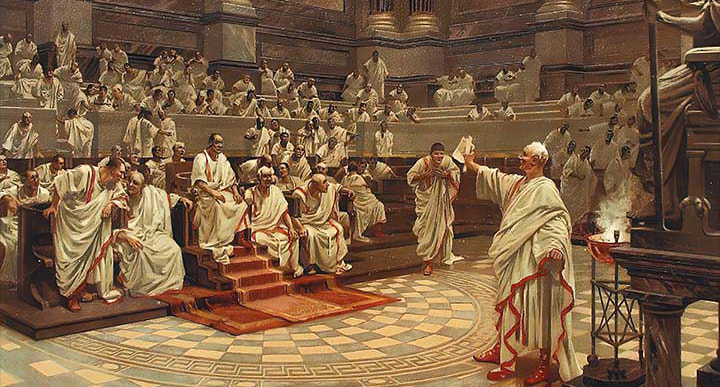 The mixed constitutions of republics emerged out of this historical process as the institutionalization of a balanced form of class rule. The Roman aristocracy was able to secure its position of power in the Roman Senate. Yet spontaneous plebian activity in the revolutionary struggle forced the patricians to integrate the popular class into its republican system as well. Checks and balances in a republic are reflections of the underlying balance of class forces at a particular moment when that republic is first constituted. Machiavelli makes this observation explicitly in his Discourses on Livy: I say that those who condemn the dissensions between the nobility and the people seem to me to be finding fault with what as a first course kept Rome free, and to be considering quarrels and the noise that resulted from these dissensions rather than the good effects they brought about, they are not considering that in every republic there are two opposed factions, that of the people and that of the rich, and that all laws made in favor of liberty result from their discord.5 According to political scientist Kent Brudney, Machiavelli “accepted the class basis of political life and believed that class conflict could be beneficial to a republic.” The “creative possibilities of class conflict” were recognized for “their importance to the maintenance of Roman liberty.” Brudney continues: “The episodes of conflict between the Roman patriciate and the Roman people were vital to the development of good laws and to the continuity of Rome’s founding principles.”6 This class-struggle understanding of mixed constitutionalism was also at the fore in the debates around the ratification of the U.S. Constitution. Scholar James Wallner directly connects the debates around the creation of the Senate with Machiavelli’s theory of institutionalized class struggle: The U.S. Senate exists for one overriding reason: to check the popularly elected U.S. House of Representatives. Throughout the summer of 1787, James Madison and his fellow delegates to the Federal Convention highlight, again and again, the Machiavellian observation that institutionalized conflict was essential to the preservation of the republic. Trying to inject an updated understanding of Machiavelli’s dictum into the heart of the new federal government, they created a Senate whose institutional features — size, membership-selection process, nature of representation, length of term of office, compensation — are properly understood only in relation to the body’s House checking role.7  Wallner points to Federalist Paper No. 62, where James Madison wrote: “The necessity of a senate is not less indicated by the propensity of all single and numerous assemblies to yield to the impulse of sudden and violent passions, and to be seduced by factious leaders into intemperate and pernicious resolutions.” The recent Shay’s Rebellion had been sparked by Massachusetts farmers demanding debt relief that was opposed by the merchant class that dominated the state government. This rebellion pressed the Federalist framers to consider the inclusion of an “aristocratic” senate capable of effectively subduing the “violent passions” of the masses, something missing from the Articles of Confederation that had preceded it.8 Thus, we see that “mixed constitutions” of republics are only the institutionalization of class struggle. If the republic is supposed to make the affairs of public power a question of public input, it must always balance the class foundation of the state with at least the nominal political participation of the masses. Ruling class power in a republic is always concentrated in the senate, and popular power is always located in a “lower” branch of government. This balance creates a dynamism between the two while also developing a hegemonic understanding of the state as representing “the whole people,” even if the state is always constituted under a specific class basis. Bill of Rights Socialism deepens the theory of the mixed constitution and gives it a proletarian character. Rather than calling for the abolition of the senate as such, Bill of Rights Socialism recognizes the need to reconstitute the republic along proletarian class lines, transforming the current senate founded on the “wisdom” of slave owners and oligarchs into an “industrial” senate that is instead based on the wisdom and experience of the leaders of the working class. Like Lenin’s soviets, the industrial senate would be built out of “the direct organisation of the working and exploited people themselves, which helps them to organise and administer their own state in every possible way.” Leaders, drawn from the broad working-class majority, would carry with them both an intimate knowledge of all parts of the production process and a distinct working-class perspective into the development of public policy. And like both the soviets and senates past, the industrial senate would be insulated from universal direct election, with a focus on cultivating tested working-class leadership collaborating to build and protect a common vision of a democratic socialist republic. The class character of the senate would serve as a “check” on one side of the equation.9 But Bill of Rights Socialism can grow only out of the success of a massive people’s front. Led by the organized working class, this front would also contain all progressive people and class allies, including small farmers, small- and medium-size-business owners, the self-employed, and independent intellectuals and professionals. The primary stage of socialism does not end class struggle but transforms it under the decisive political rule of the working class. A “People’s House” would provide a democratic space for these other class elements to make constructive and progressive contributions to building socialism without sacrificing or obscuring the working-class nature of the new republic. Further, experience from the last century indicates that even a working-class state can degenerate bureaucratically without broader popular participation and oversight. In addition to incorporating non-proletarian class elements constructively into the workers’ republic, the lower house would also provide a space for the exercise of universal suffrage and the direct election of representatives by the whole people. These popular representatives could play a consultative role to the industrial senate and provide institutional oversight. This would provide a “check” on the other side of the equation. The “checks and balances” between the industrial senate and the people’s house would capture the “quarrels and the noise” familiar to American democracy while preserving absolutely the republic’s fundamental class nature. This dynamic interrelationship creates the conditions for the third core idea of republicanism to prevail, the “contestatory citizenry.” It is right to rebel (within limits) The third core idea of republicanism depends on the active engagement of its citizens “to track and contest public policies and initiatives.” Freedom can be secured only through struggle. This ideal has been a fundamental political principle of all oppressed people struggling for their democratic rights and freedom in the United States. Frederick Douglass taught us years ago the price of freedom: If there is no struggle, there is no progress. Those who profess to favor freedom, and yet depreciate agitation, are men who want crops without plowing up the ground. They want rain without thunder and lightning. They want the ocean without the awful roar of its many waters.10 The contestatory citizenry forms a fundamental basis for the Bill of Rights and so must serve as a basis for Bill of Rights Socialism. These rights include freedom of speech, of assembly, of faith and conscience, and the right to be informed about the functioning of public power. Politically critical art, protests, and organizations must play a fundamental role in the construction of socialism in the United States and thus must be protected under Bill of Rights Socialism.  Struggle does not only occur between oppressor and oppressed, between exploiter and exploited. Struggle also goes on within the oppressed and exploited. Historical development has created an unevenness within the working class: divisions around race, sex, sexuality, religion, cultural beliefs, nationality, language, and so on. This unevenness can be overcome only after a long period of struggle to resolve these divisions and build a unity through our diversity; to give real content to the national motto “E Pluribus Unum.” While the initial steps in this process of internal struggle for unity within the working class and democratic forces must be made before the establishment of socialism by building a people’s front, the establishment of socialism does not mechanically erase the social unevenness within that people’s front overnight. Revolution and reform are distinct, but also deeply interrelated. The development of social scientific methods and professional specialization has produced the historical capacity to carry out deep and broad reforms to the social system in a planned, scientific, and rational way. Reform can and must always go on, improving social institutions and making sure they advance with the times. However, reform does not happen abstractly, but according to the degree of political will brought to bear on the process. Reform in a social system hits a wall when the ruling class is no longer willing to exercise its political will to allow the reform process to deepen and expand according to the needs of the populace. Revolution is not in and of itself the solution to social problems; revolution is the punctuated transformation from one form of class rule to the next. This transformation in class rule does not replace reform, but unlocks it to unfold more deeply, at a faster pace, and in a more thoroughgoing way than the degenerate ruling class that was replaced could or would allow. By elevating the working class to the level of the ruling class in a workers’ republic, the struggle for reforms is not ended but transformed. Republicanism allows this reform struggle to take place both on an individual, contestatory foundation protected by a socialist Bill of Rights, as well as within the bounds of law constrained by socialist constitutional forms. Peace, prosperity, democracy, and freedomLet us be crystal clear: the United States needs a socialist revolution. The old ruling class, dominated by finance monopoly capital and incapable of keeping pace with the needs of the time, must be overthrown and in its place the working class, at the head of a mass democratic movement of all oppressed people and classes, must be elevated to rule in its place. The class basis of the current republic must not be ignored but instead placed at the center of the conversation. But the struggle is not to “abolish” the republican form outright. There are no serious ideas, to be perfectly frank, on what to put in its place. The soviet system was for the Soviets, the Chinese system for the Chinese, so on. The struggle is to revolutionize the republic to preserve the republican system at a higher level of development. Indeed, the fundamental argument of Bill of Rights Socialism must be that only a socialist revolution can preserve the republican liberties and democratic rights that so many oppressed and exploited people have fought hard and made tremendous sacrifices to secure. Socialist revolution means the deepening of democracy under the decisive state leadership of the working class. This essay is only a theoretical sketch to show the consistency between Marxism-Leninism and the “core ideas” of the republican political tradition. There are an almost limitless number of questions that arise from its premise: Can a workers’ republic be secured through the amendment process or through a new Constitutional Convention? How exactly should an industrial senate be ordered and secured? Should it be through indirect election, sortition (selection by lottery), selection, or a combination? How does federalism fit into this picture? How can we more explicitly articulate its relationship to imperialism and oppressed nations? And many more. Only through thoughtful struggle — not isolated contemplation or outrageous sloganeering — can the political soil be tilled to allow new possibilities to develop. Bill of Rights Socialism is not an “answer” in itself but a path to be blazed by combining the creative leadership of the Communist Party with the limitless dynamism and transformative potential of millions of Americans from all backgrounds linked together in the struggle for peace, prosperity, democracy, and republican freedom. Sources
AuthorBradley Crowder was born and raised in the Permian Basin oil patch that spans eastern New Mexico and west Texas. He is a labor organizer that has worked with the American Federation of Teachers and the Fight For 15. He has his undergraduate in economics from Texas State University and currently working on his master's degree in labor studies at UMass - Amherst. He is a proud member of the Communist Party, USA. Republished from CPUSA
4/25/2021 Book Review: Ashley Bohrer - Marxism and Intersectionality (2020). Reviewed By: Carlos L. GarridoRead Now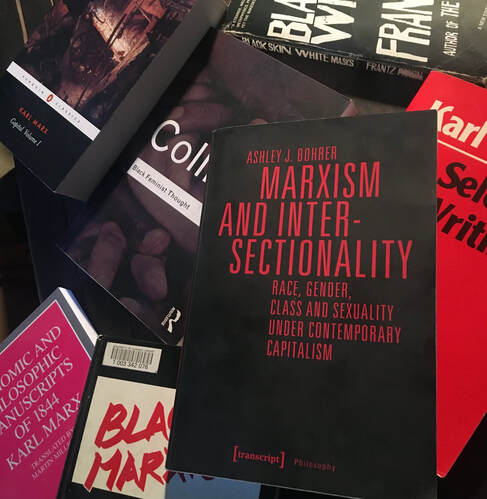 In her 2020 text Marxism and Intersectionality: Race, Gender, Class and Sexuality under Contemporary Capitalism, Ashley J. Bohrer sets out to demystify the erroneous conception that the traditions of Marxism and Intersectionality are incompatible. In finding that in academia the interactions between these two traditions have been “grounded more in caricature than in close reading,” Bohrer sets out to expose and correct what she calls the “synecdochal straw person fallacy” present in the way each tradition has interacted with the other (AB, 14, 20). In noting that both traditions represent active ways of “reading, understanding, thinking, and dreaming beyond the deep structures of exploitation and oppression that frame our world,” her starting point is historical, i.e., she begins by outlining the historical precursors of the intersectional tradition (AB, 21). In doing so, she situates the origins of intersectional thought in spaces inseparably linked to communist and socialist activism, organizations, and parties. Nonetheless, it is important to note before we continue that her goal is not to ‘synthesize’ the two traditions, or to subsume the one under the other, but to articulate a ‘both-and’ approach, in which the conditions for the possibility of “theoretical coalitions between perspectives, in which the strengths of each perspective are preserved” arises (AB, 23). Bohrer sets the groundwork for her project by situating the historical unity of the intersectional tradition and socialism. She begins by examining the 19th century thinkers Maria Stewart, Sojourner Truth, and Ida B. Wells-Barnett. Bohrer argues that these three central foremothers of the intersectional tradition had concerns not limited to the dynamics of race and gender, i.e., the three understood that concerns of “labor, class, capitalism, and political economy” were inseparable from concerns of race and gender (AB, 35). In Stewart she demonstrates the presence of an early (1830s) notion of surplus value at hand in the analysis of enslaved black women’s work, who she saw as performing the labor that allowed for the profits of the owner. In Truth she examines her lucid development of the structural role reproductive labor played for capitalism, and more specifically, how the exploitation of this reproductive labor takes a variety of forms according to race. Lastly, in Wells-Barnett she examines how her groundbreaking work on lynching not only demystifies the narrative of the black male rapist, but postulates that “lynching was predominantly a tool of economic control,” used to keep the black community economically subordinated to white capitalist (AB, 40). Bohrer proceeds to examine the three key intersectional forerunners of the first half of the 20th century: Louise Thompson Patterson, Claudia Jones, and W.E.B. Du Bois, all which were at some point members of the Communist Party. In Patterson we see the development of the concept of ‘triple exploitation’ used to describe the unique position black working-class women have under capitalism, placing them in a context in which they are exploited as workers, women, and blacks. Influenced by Patterson’s notion of ‘triple-exploitation’ and the Marxist-Leninist concept of ‘superexploitation,’ Claudia Jones refurnishes and expands on both – reconceptualizing the former as ‘triple-oppression,’ and redefining the latter to account for the uniquely exploitative position black women occupy under capitalism. In postulating black women’s position as ‘superexploited,’ Jones considers black women, not the white industrial proletariat, the “most revolutionary segment of the working class” (AB, 50). Lastly, in Du Bois we see expressed a profound understanding that race, class, and gender are tied with “simultaneous significance” to the structural contradictions of capitalism (AB, 51). This simultaneous significance of the three requires an individual and systematic understanding of oppression to be fully comprehended. Bohrer closes out her historical contextualization by looking at the last half of the 20th century. She begins by looking at the three approaches to thinking about the relations of class, race, and gender that arise in the 1960s-80s. These three are: double and triple jeopardy, standpoint theory, and sexist racism. Bohrer argues that although these three played a great role in the development of the intersectional tradition, they are still “distinct from a full theory of intersectionality,” for they contain, in different ways, the reifying, homogenizing, and essentializing ways of thinking of race, class, and gender that intersectionality attempts to move beyond (AB, 35). Bohrer then examines the anti-capitalist critiques present in the intersectional thought of the Combahee River Collective, Patricia Hill Collins, Angela Davis, bell hooks, and Audre Lorde. In the Combahee River Collective, we see the inclusion of class, race, gender, and sexuality as interlocking systems of oppression that “permeate all moments of capitalist exploitation” (AB, 74). The same sentiment, conceptualized in various ways, permeates throughout the work of Collins (matrix of domination), Davis, hooks (white supremacist capitalist patriarchy), and Lorde (white male heterosexual capitalism). Having contextualized the historical unfolding of the intersectional tradition, Bohrer moves on to examine what she considers to be the best forms of intersectionality, i.e., the ones that do not leave class behind, and the best forms of Marxism, i.e., the ones that do not consider race, sex, and other forms of oppression secondary and epiphenomenal to class-based exploitation. Beyond this, she also examines the disputes each side has with the other, and how these end up being largely based on synecdochal straw person fallacies. Bohrer begins by attempting to lay out as refined a definition as possible to the question ‘what is intersectionality?’. To get to the refined, Bohrer starts with the general, stating that broadly “intersectionality is a term that brings together a variety of positions on the relationships between modes of oppression and identity in the contemporary world” (AB, 81). From here, Bohrer goes on to postulate five definitions of intersectionality as presented by some of its key theorists: Kimberlé Crenshaw, Leslie McCall, Patricia Hill Collins, Ange-Marie Hancock, and Vivian May. By showing there is disputes between intersectional thinkers on how intersectionality should be thought of, Bohrer breaks the conceptions of intersectionality as a homogenous theoretical approach, and demonstrates that there is plurality, disputes, and discussion actively happening within the tradition. Nonetheless, she marks six central postulates of intersectional thinking that permeate in most intersectional theorists. These are: 1- anti single axis thinking – the various forms of oppression are enmeshed within each other and inseparable; 2- anti ranking oppressions – no one oppression is any more important than another, i.e., being constructed relationally, you cannot solve one without solving the others; 3- Think of oppression in multiple registers – structurally, individually, representationally, etc.; 4- Identity is politically and theoretically important – identity is never pure, it is always “multi-pronged, group-based, historically-constituted, and heterogenous;” 5- Inextricable link of theory and practice – activism and the theoretical are linked; and 6- Power is described and attacked – intersectionality is not neutral, it is both “descriptive and normative,” it describes and critiques power (AB, 93, 95). Having laid out the plurality of approaches, and also the unifying central postulates of intersectionality, Bohrer proceeds to examine the ways in which some Marxist theorists distort and fallaciously critique intersectionality. I will here lay what I take to be the six (out of eight) most important and frequent critiques of intersectionality, and the responses Bohrer gives to each. The first critique argues that intersectionality is individualistic, and thus, in line with the ethos of capitalism. But, as we saw in the previous postulates, identity for the intersectional theorist is group based and historically constructed. The second critique reduces intersectionality to postmodernism and poststructuralism. In doing so, Bohrer references Sirma Bilge in arguing that what is taking place is the “whitening of intersectionality,” i.e., a framework originated and guided by black women is subsumed under a white man predominated field (AB, 107). The third critique postulates intersectionality as liberal multiculturalism, falling within the logic of neoliberalism. Bohrer argues that although intersectional discourse is whitewashed and misused by neoliberal representationalism, intersectional theorists are ardent critics of this and fight to sustain the radical ethos of intersectionality. The fourth critique argues that intersectionality does not sufficiently account for issues of class. Bohrer contends, through Linda Alcoff, that in order to properly understand class, one must understand it enmeshed in race, sex, and gender. The fifth critique argues that intersectional theorists fail to account for the historical causes of that which they describe and critique. Bohrer responds that the intersectional theorists do account for the historical causes of the matrices of domination, but that instead of attributing the cause to one thing, they take a multi-dimensional approach. The last critique we will examine states that intersectionality multiplies identities and makes it harder for solidarity to arise. Bohrer’s response to this is that we must refrain from thinking of solidarity as the lowest common denominator of sameness, solidarity must be thought of as the building of coalitions of difference, united by a sameness in interest, not identity. Bohrer now embarks on repeating with Marxism what she just did with intersectionality. She begins by devoting her time to demonstrating that what she calls the reductive ‘orthodox story’ of Marxism, which postulates Marxism “as a fundamentally class-oriented, economically-reductionist, teleological theory of waged factory labor,” is not the only form of Marxism (AB, 124). Bohrer approaches this task by postulating seven assumptions the ‘orthodox story’ makes, and then responds to each in a way that demonstrates how Marx, Engels, and queer, feminist, anti-racist, and anti-imperialist Marxists have addressed these questions free of the reductive assumptions of the ‘orthodox story.’ Some of these non-reductive approaches include: 1- looking beyond waged labor to examine the labor that is structurally necessary but unpaid; 2- looking at how the division of labor is racialized and sexualized; 3- examining the necessary role violence and oppression attendant in colonialism, land expropriation, and slavery played in the development of capitalism, not just as a function, but as an integral structural part of the system; 4- looking at the non-homogeneity of capitalism, i.e., examining how it can take different forms; and 5- looking at the politico-social apparatuses developed to reinforce these practices. Building on the non-reductive forms of Marxism she just espoused, Bohrer now embarks on the task of showing how many critiques of Marxism coming from the intersectional tradition, like the Marxist critique of intersectionality previously examined, are based largely on misunderstandings or understandings limited to the reductive ‘orthodox story.’ Concretely, Bohrer examines four common criticisms of Marxism from intersectional theorist: 1-“Marxism is economically reductive”…; 2-“it necessarily treats all other forms of oppression as mere epiphenomena of the ‘true’ oppression of class”; 3-“Marxism is inherently a male, Eurocentric form of analysis that can therefore never speak to the oppression of women, people of color, and people from the Global South”; 4-“a Marxist understanding of exploitation is founded on the binary opposition of capitalist and proletarian, making it incapable of thinking through the complex and nuanced organizations of exploitation and oppression” (159). Bohrer argues these critiques are largely limited in scope to the ‘orthodox story’ of Marxism which she has already established is merely one form out of many in the Marxist tradition. These intersectional critiques of Marxism become unwarranted when the form of Marxism examined is of the non-reductive type she appraised in chapter three. The theoretically novel portion of her text begins by her looking at the relationship between exploitation and oppression. She argues that instead of reducing one onto the other, like has been done by the intersectional and Marxist traditions in the past, we must conceive of the two as having an ‘elective affinity,’ i.e., a “kind of consonance or amenability.” (AB, 200) This means, she argues, that we must think of the two as ‘equiprimordial’, i.e., related to each other as “equally fundamental, equally deep-rooted, and equally anchoring of the contemporary world” (AB, 199). In order to fully understand a phenomenon in capitalism we must understand how exploitation and oppression “feed off and play into one another as mutually reinforcing and co-constituting aspects of the organization of capitalist society” (AB, 201). Beyond this, she argues that “a full understanding of how class functions under capitalism requires understanding how exploitation and oppression function equiprimordially” (Ibid.). Therefore, four central points must be understood to capture capitalism non-reductively: “1) capitalism cannot be reduced to exploitation alone; 2) capitalism cannot be reduced to class alone; 3) class cannot be reduced to exploitation alone; 4) race, gender, sexuality cannot be reduced to oppression alone” (AB, 204). Although the equiprimordial lens Bohrer introduces for thinking of the relationship between oppression and exploitation may be helpful, the development of the concept is stifled by her limited understanding of the notion of class in Marx’s work. Bohrer argues that instead of limiting class to being constituted only through exploitation, like in Marx, thinking of class equiprimordially allows us to see it constituted through exploitation and oppression. To expand on her point Bohrer references Rita Mae Brown who states that, “Class is much more than Marx’s definition of relationship to the means of production. Class involves your behavior, your basic assumptions about life[…]how you are taught to behave, what you expect from yourself and from others, your concept of a future, how you understand problems and solve them, how you think, feel, act…” (AB, 202). Although Marx never provides an explicit systematic study of class, for when he attempts the task in Ch. 52 of Capital Vol 3 the manuscript breaks off after a few paragraphs, we can nonetheless see his conception of class throughout his political works. Examining how Marx deals with class in his 18th Brumaire on Louis Bonaparte shows the previous sentiment from Brown and Bohrer to be problematic. In relation to the French peasantry, he states that, Insofar as millions of families live under conditions of existence that separate their mode of life, their interests, and their culture from those of the other classes, and put them in hostile opposition to the latter, they form a class.[i] This constitutes a notion of class that although influenced, is not reducible to the group’s relation to the means of production. It would seem then, that Marx’s notion of class is fundamentally relational in two ways, first as a relation a group bears to the means of production, and second as the relation a group’s mode of life and culture bears to another. Thus, unlike Bohrer states, already in Marx’s conception of class, when understood fully and not synecdochally, class can already be constituted through exploitation and oppression. Bohrer also develops what she refers to as the ‘dialectics of difference’ present in both traditions as the way of understanding capitalism as a “structure and a logic” (AB, 208). In demonstrating how both traditions show capitalism developing contradictions in the real world, Bohrer’s first move is rejecting the reductive Aristotelean binary logic that finds contradiction to designate falsehood and which attributes normative statuses of ‘superior’ and ‘inferior’ to the polarities. Instead, Bohrer argues that in both traditions the world is understood dialectically, i.e., in a way in which the plurality of the ‘middle’ that binary logic excludes is included, and in a way in which the polarities of the binary are taken to be in a dynamic tension, not a static opposition. Dialectics of difference does not ignore or flatten polarities and contradictions but engages with them and resists through the inclusion of the excluded middle. This dialectic has nothing to do with the simplified and progressivist triad (thesis-antithesis-greater synthesis) present in popular conception. Instead of the beaten down reductive triad, Bohrer concludes by offering three metaphors for modeling dialectics: Collins’ matrix, the Frankfurt school’s constellation, and the prism metaphor. These three metaphors, to be effective, must be used together as “overlapping on one another” (AB, 229). Having examined the descriptive potential of a non-reductive dialectic, Bohrer proceeds to espouse its prescriptive implications, i.e., “how do we organize from these contradictions? how do we put the dialectic of difference into transformative practice?” (Ibid.) Bohrer begins by postulating that we must develop a theoretical framework that accounts for the intergroup differentiation logic of capitalist incommensurability (the inconsistent logics of racialization: logic of elimination – natives, logic of exclusion – blacks, and the logic of inclusion – latino/a) and that accounts for the intragroup homogenization logic of capitalist commensurability. Her response is a redefinition of how we conceive of solidarity. Solidarity must not be understood as the lowest common denominator of identity sameness, but as based on coalitions of difference and incommensurability united by mutual interest in transcending a system in which life is suppressed and molded in and by structures of exploitation and oppression. These coalitions, she argues, are to be built from the structural interconnectedness that capitalism already provides. It is, therefore, solidarity based on unity, not uniformity. As she states: Capitalism thus links us together, in a tie that binds us, often painfully, in relation to one another. This moment of relation is the true ground of solidarity. Solidarity does not require the erasing our differences or the rooting of our political projects in the moments that our interests are aligned. Solidarity is thus the name for affirming the differences that exploitation and oppression produce within and between us; it is also the name for recognizing that every time I fight against anyone’s oppression or exploitation, I fight against my own, I fight against everyone’s (259). Citations [i] Marx, Karl. “The Eighteenth Brumaire of Louis Bonaparte” In The Communist Manifesto and Other Writings. (Barnes and Nobles Classics, 2005), p. 159. AuthorCarlos is a Cuban-American Marxist who graduated with a B.A. in Philosophy from Loras College and is currently a graduate student and Teachers Assistant in Philosophy at Southern Illinois University, Carbondale. His area of specialization is Marxist Philosophy. His current research interests are in the history of American radical thought (esp. 19th century), and phenomenology . He also runs the philosophy YouTube channel Tu Esquina Filosofica and Co-Hosts the Midwestern Marx Podcast, the Midwestern Marx hosted 'The Chapter 10 Podcast' and does occasional Marxist Theory videos on the Midwestern Marx YouTube Channel. 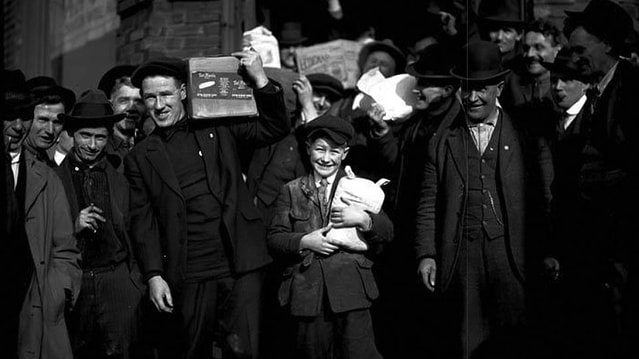 A group of men and a boy carrying groceries during the Seattle general strike, February 7, 1919. | Museum of History and Industry, Seattle. The Centennial of the Russian Revolution November 7, 2017 marks the 100th anniversary of the Russian Revolution and the establishment of the world’s first socialist state. To commemorate the occasion, People’s World presents a series of articles providing wide-angled assessments of the revolution’s legacy, the Soviet Union and world communist movement which were born out of it, and the revolution’s relevance to radical politics today. Other articles in the series can be read here. Just before Christmas, on December 21, 1917, a strange freighter pulled into Elliott Bay in Seattle. This vessel bore an unfamiliar flag—a red flag. This was a Russian ship, the Shilka, out of Vladivostok, Russia. Only a few weeks before, on November 7, a Bolshevik revolution had taken place in Russia and its leader, Vladimir Lenin, proclaimed a workers’ and farmers’ state.  The Seattle city fathers were disturbed by this sight. After all, they had just gone through a tumultuous lumber strike. Several local issues were stirring the AFL Central Labor Council. What was the purpose of this ship? Rumors circulated that it carried weapons and gold to foster a revolution in Seattle and the U.S. The U.S. had just entered WWI, the “Great War,” back in April, and patriotic fervor was at a high pitch. And the new revolutionary government had declared peace with our German enemy. This ship could be a potential threat. Given these fears, port authorities refused to allow the Shilka to land, and it sat stranded in the harbor. But the ever resourceful Bolshevik sailors managed to sneak ashore and make contact with the IWW and the labor movement. (Some of the socialist sailors had lived in the U.S. and spoke English.) Eventually, the ship docked at Pier 5. Rather than guns and gold, investigators found the cargo to be beans, peas, and licorice root—destined for Baltimore. And, oh yes, some suspicious Russian vodka laced with red peppers. By this time, of course, newspaper headlines around the country screamed about the “Bolshevik ship of mystery” and IWW plots. Socialist leader Eugene V. Debs commented, “Everything that happens nowadays that the ruling classes do not like is laid at the feet of the IWW.” Seattle’s socialist newspaper, the Socialist Daily Call, regularly carried articles about the Shilka by journalist Anna Louise Strong. Although the AFL Central Labor Council was critical of the IWW, the Seattle Union Record also expressed concern for the Russian sailors and how they were being treated. The Central Labor Council also drafted a letter to Russian workers expressing their fraternal greetings and best wishes to all who aspired to “establish a true and free industrial democracy” in Russia. The Tacoma IWW wrote a message cheering the revolution and declaring their support for a “worldwide industrial commonwealth based on the brotherhood of man.” Nicolai Kryukov, a Bolshevik from the sailor’s committee, met with IWW members a number of times and spoke at their meetings about the revolution and what it hoped to achieve. The members, probably led by lumberjack Roy Brown, wrote a congratulatory message to Russian workers: “To Nicholai Lenin and the Representatives of the Bolshevik Government and Through Them to the Workers of Russia.” The sailors carefully secreted the letter on their ship. As the ship left port on January 5, a crowd of over 200 well-wishers cheered. A band played La Marseillaise—one of the anthems of the Russian workers then. The sailors also carefully secreted messages from the IWW and the Seattle Central Labor Council, to be delivered in Vladivostok. Following the ship’s departure, there was a right-wing backlash in which the offices of the Socialist Daily Call were burned to the ground and several local radicals were arrested. The Shilka docked in Vladivostok, and the newspaper Red Banner printed the IWW letter on March 20, 1918. The message from the Seattle Central Labor Council had been entrusted to the non-Bolshevik captain, who apparently jumped ship during refueling in Japan. Nothing more was heard from him, and the letter was lost to history. In November 1920, Kryukov met Lenin at a conference. Lenin told him that he had read the letter and answered it. When he learned that Kryukov and his comrades had been on the ship, Lenin warmly embraced him. Lenin had written his reply on August 26, 1918. It was a very dark and dangerous time for the Russian Revolution. Armies from the U.S., Britain, France, and Japan had invaded Russia in an attempt to crush the revolution. Insurgent generals Kolchak, Wrangel, Denikin, Yudenich, and others initiated civil war aimed at restoring the Czarist autocracy. U.S. troops had landed in Murmansk and later, beginning in August 1918, in Vladivostok. By the end of September, there were 7,500 U.S. troops operating out of Vladivostok. About 3,000 Canadian and Australian troops were sent by Britain. Kolchak ran a hideously brutal “government” which appalled the allied troops. A Canadian soldier wrote, “However much one may deprecate the Bolshevik methods, we Canadians in Siberia could neither hear or see anything which inspire in us any confidence in the Kolchak government… There came to our ears stories of the workings of that government which savored more of Caesar Borgia that any democratic government.” The main contingent of troops in Siberia, however, came from Japan. Estimates of the Japanese forces ran as high as 70,000 troops. It became obvious that the Japanese were interested in reclaiming Siberian lands lost in previous wars with Russia. When the Germans signed the armistice ending WWI on November 11, 1918, U.S. and other occupying troops remained in Russia, not leaving until January 1920. The Japanese remained until 1922—and continued to occupy Sakhalin Island, which the Soviets recaptured in 1945. But what of Lenin’s letter to the American workers?  A 1935 edition of Lenin’s “Letter to American Workers,” from International Publishers. What Lenin desperately needed was for U.S. troops to be removed from Siberia and for aid to counterrevolutionaries to be stopped. He recognized the importance of the U.S. in the Allied Coalition—and as a future trading partner. When Lenin finished his letter, the question became how to deliver it? Again, it was a Russian seaman who was called upon to sail to America and see that the letter was published. He was also given a secret letter to President Woodrow Wilson from Lenin, who called for peaceful and friendly relations. (Wilson never revealed the contents of this letter.) Lenin’s letter to American workers was handed to John Reed, who had just returned from Russia, and who set about getting the letter printed in socialist newspapers far and wide. So what did Lenin have to say in his Letter to American Workers? First, he sought to make connections between the American Revolution of 1776 and the Russian Revolution of 1917: “The history of modern, civilized America opened with one of those great, really liberating, really revolutionary wars of which there have been so few compared to the vast number of wars of conquest which, like the present imperialist war, were caused by squabbles among kings, landowners, or capitalists over the division of usurped lands or ill-gotten gains. That was the war the American people waged against the British robbers who oppressed America and held her in colonial slavery, in the same way as these “civilized” bloodsuckers are still oppressing and holding in colonial slavery hundreds of millions of people in India, Egypt, and all parts of the world.” Lenin also commented on the U.S. Civil War: “The American people have a revolutionary tradition which has been adopted by the best representatives of the American proletariat, who have repeatedly expressed their complete solidarity with us Bolsheviks. That tradition is the war of liberation against the British in the eighteenth century and the Civil War in the nineteenth century. In some respects, if we only take into consideration the ‘destruction’ of some branches of industry and of the national economy, America in 1870 was behind 1860. But what a pedant, what an idiot would anyone be to deny on these grounds the immense, world-historic, progressive and revolutionary significance of the American Civil War of 1863-65! “The representatives of the bourgeoisie understand that for the sake of overthrowing Negro slavery, of overthrowing the rule of the slave owners, it was worth letting the country go through long years of civil war, through the abysmal ruin, destruction, and terror that accompany every war. But now, when we are confronted with the vastly greater task of overthrowing capitalist wage-slavery, of overthrowing the rule of the bourgeoisie—now, the representatives and defenders of the bourgeoisie, and also the reformist socialists who have been frightened by the bourgeoisie and are shunning the revolution, cannot and do not want to understand that civil war is necessary and legitimate.” Pointing to the revolutionary and socialist traditions of American workers, he added: “The American workers will not follow the bourgeoisie. They will be with us, for civil war against the bourgeoisie. The whole history of the world and of the American labor movement strengthens my conviction that this is so. I also recall the words of one of the most beloved leaders of the American proletariat, Eugene Debs, who wrote in the Appeal to Reason, I believe towards the end of 1915, in the article, “What Shall I Fight For” (I quoted this article at the beginning of 1916 at a public meeting of workers in Berne, Switzerland)—that he, Debs, would rather be shot than vote credits for the present criminal and reactionary war; that he, Debs, knows of only one holy and, from the proletarian standpoint, legitimate war, namely: the war against the capitalists, the war to liberate mankind from wage-slavery.” Lenin knew, of course, that help was not on the way and that it would require a world-wide effort to guarantee the success of the Russian socialists: “We know that help from you will probably not come soon, comrade American workers, for the revolution is developing in different countries in different forms and at different tempos (and it cannot be otherwise). We know that although the European proletarian revolution has been maturing very rapidly lately, it may, after all, not flare up within the next few weeks. We are banking on the inevitability of the world revolution, but this does not mean that we are such fools as to bank on the revolution inevitably coming on a definite and early date. We have seen two great revolutions in our country, 1905 and 1917, and we know revolutions are not made to order, or by agreement. We know that circumstances brought our Russian detachment of the socialist proletariat to the fore not because of our merits, but because of the exceptional backwardness of Russia, and that before the world revolution breaks out a number of separate revolutions may be defeated.” Did Lenin’s article ever reach the Seattle workers? Did it somehow play a role in the General Strike of 1919? This is a yet-unsettled question, and we will leave it for another time—but one has hopes. This article is based on a paper presented at the Pacific Northwest Labor History Association conference in Vancouver, British Columbia. AuthorJames H. Williams is a retired professor and long-time labor and community activist living in Tacoma, Washington. This article was first published by People's World
 Comrades: A Russian Bolshevik who participated in the Revolution of 1905 and for many years afterwards lived in your country has offered to transmit this letter to you. I have grasped this opportunity joyfully for the revolutionary proletariat of America — insofar as it is the enemy of American imperialism — is destined to perform an important task at this time. The history of modern civilized America opens with one of those really revolutionary wars of liberation of which there have been so few compared with the enormous number of wars of conquest that were caused, like the present imperialistic war, by squabbles among kings, landholders and capitalists over the division of ill-gotten lands and profits. It was a war of the American people against the English who despoiled America of its resources and held in colonial subjection, just as their "civilized" descendants are draining the lifeblood of hundreds of millions of human beings in India, Egypt and all corners and ends of the world to keep them in sub- jection. Since that war 150 years have passed. Bourgeois civilization has born its most luxuriant fruit. By developing the productive forces of organized human labor, by utilizing machines and all the wonders of technique America has taken the first place among free and civilized nations. But at the same time America, like a few other nations, has become characteristic for the depth of the abyss that divide a handful of brutal millionaires who are stagnating in a mire of luxury, and millions of laboring starving men and women who are always staring want in the face. Four years of imperialistic slaughter have left their trace. Irrefutably and clearly events have shown to the people that both imperialistic groups, the English as well as the German, have been playing false. The four years of war have shown in their effects the great law of capitalism in all wars ; that he who is richest and mightiest profits the most, takes the great- est share of the spoils while he who is weakest is exploited, martyred, oppressed and outraged to the utmost. In the number of its colonial possessions, English imperial- ism has always been more powerful than any of the other countries. England has lost not a span of its "acquired" land. On the other hand it has acquired control of all German colonies in Africa, has occupied Mesopotamia and Palestine. German imperialism was stronger because of the wonderful organization and ruthless discipline of "its" armies, but as far as colonies are concerned, is much weaker than its opponent. It has now lofet all of its colonies, but has robbed half of Europe and throttled most of the small countries and weaker peoples.. What a high conception of "liberation" on either side! How well they have defended their fatherlands, these "gentlemen" of both groups, the Anglo-French and the German cap- italists together with their lackeys, the Social-Patriots. American plutocrats are wealthier than those of any other country partly because they are geographically more favorably situated. They have made the greatest profits. They have made all, even the weakest countries, their debtors. They have amassed gigantic fortunes during the war. And every dollar is stained with the blood that was shed by mil- lions of murdered and crippled men, shed in the high, honor- able and holy war of freedom. Had the Anglo-French and American bourgeoisie accepted the Soviet invitation , to participate in peace negotiations at Brest-Litovsk, instead of leaving Russia to the mercy of brutal Germany a just peace without annexations and indemnities, a peace based upon complete equality could have been forced upon Germany, and millions of lives might have been saved. Because they hoped to reestablish the Eastern Front by once more drawing us into the whirlpool of warfare, they refused to attend peace negotiations and gave Germany a free hand to cram its shameful terms down the throat of the Russian people. It lay in the power of. the Allied countries to make the Brest-Litovsk negotiations the forerunner of a general peace. It ill becomes them to throw the blame for the Russo-German peace upon our shoulders! The workers of the whole world, in whatever country they may live, rejoice with us and sympathize with us, applaud us for having burst the iron ring of imperialistic agreements and treaties, for having dreaded no sacrifice, however great, to free ourselves, for having established ourselves as a socialist republic, even so rent asunder and plundered by German imperial- ists, for having raised the banner of peace, the banner of Socialism over the world. What wonder that, we are hated by the capitalist class the world over. But this hatred of imperialism and the sympathy of the class-conscious workers of all countries give us assurance of the righteousness of our cause. He is no Socialist who cannot understand that one cannot and must not hesitate to bring even that greatest of sacrifice, the sacrifice of territory, that one must be ready to accept even military defeat at the hands of imperialism in the interests of victory over the bourgeoisie, in the interests of a transfer of power to the working-class. For the sake of "their" cause, that is for the conquest of world-power, the imperialists of England and Germany have not hesitated to ruin a whole of row of nations, from Belgium and Servia to Palestine and Mesopotamia. Shall we then hesitate to act in the name of the liberation of the workers of the world from the yoke of capitalism, in the name of a general honorable peace; shall , we wait until we can find a way that entails no sacrifice ; shall we be afraid to begin the fight until an easy victory is assured ; shall we place the integrity and safety of this "fatherland" created by the bourgeoisie over the interests of the international socialist revolution? We have been attacked for coming to terms with German militarism. Is there no difference between a pact entered upon by Socialists and a bourgeoisie (native or foreign) against the working-class, against labor, and an agreement that is made between a working-class that has overthrown its own bour- geoisie and a bourgeoisie of one side against a bourgeoisie of another nationality for the protection of the proletariat? Shall we not exploit the antagonism that exists between the various groups of the bourgeoisie. In reality every European under- stands this difference, and the American people, as I will presently show, have had a very similar experience in its own his- tory. There are agreements and agreements, fagots et fagots, as the Frenchman says. When the robber-barons of German imperialism threw their armies into defenseless, demobilized Russia in February 1918, when Russia had staked its hopes upon the international solidarity of the proletariat before the international revolution had completely ripened, I did not hesitate for a moment to come to certain agreements with French Monarchists. The French captain Sadoul, who sympathized in words with the Bolshe- viki while in deeds he was the faithful servant of French im- perialism, brought the French officer de Lubersac to me. "I am a Monarchist. My only purpose is the overthrow of Ger- many," de Lubersac declared to me. "That is self understood (cela va sans dire)," I replied. But this by no means prevented me from coming to an understanding with de Lubersac concerning certain services that French experts in explosives were ready to render in order to hold up the German advance by the destruction of railroad lines. This is an example of the kind of agreement that every class-conscious worker must be ready to adopt, an agreement in the interest of Socialism. We shook hands with the French Monarchists although we knew that each one of us would rather have seen the other hang. But temporarily our interests were identical. To throw back the rapacious advancing German army we made use of the equally greedy interests of their opponents, thereby serving the interests of the Russian and the international socialist revolution. In this way we furthered the cause of the working-class of Russia and of other countries; in this way we strengthened the proletariat and weakened the bourgeoisie of the world by mak- ing use of the usual and absolutely legal practice of manoever- ing, shifting and waiting for the moment the rapidly growing proletarian revolution in the more highly developed nations had ripened. Long ago the American people used these tactics to the advantage of its revolution. When America waged its great war of liberation against the English oppressors, it likewise entered into negotiations with other oppressors, with the French and the Spaniards who at that time owned a considerable portion of what is now the United States. In its desperate struggle for freedom the American people made "agree- ments" with one group of oppressors against the other for the purpose of weakening all oppressors and strengthening those who were struggling against tyranny. The American people utilized the antagonism that existed between the English and the French, at times even fighting side by side with the armies of one group of oppressors, the French and the Spanish against the others, the English. Thus it vanquished first the English and then freed itself (partly by purchase) from the dangerous proximity of the French and Spanish possessions. The great Russian revolutionist Tchernychewski once said: Political activity is not as smooth as the pavement of the Nevski Prospect. He is no revolutionist who would have the revolution of the proletariat only under the "condition" that it proceed smoothly and in an orderly manner, that guarantees against defeat be given beforehand, that the revolution go forward along the broad, free, straight path to victory, that there shall not be here and there the heaviest sacrifices, that we shall not have to lie in wait in besieged fortresses, shall not have to climb up along the narrowest path, the most impassible, winding, dangerous mountain roads. He is no revolution- ist, he has not yet freed himself from the pendantry of bourgeois intellectualism, he will fall back, again and again, into the camp of the counter-revolutionary bourgeoisie.  They are little more than imitators of the bourgeoisie, these gentlemen who delight in holding up to us the "chaos" of revolution, the "destruction" of industry, the unemployment, the lack of food. Can there be anything more hypocritical than such accusations from people who greeted and supported the imperialistic war and made common cause with Kerensky when he continued the war? Is not this imperialistic war the cause of all our misfortune? The revolution that was born by the war must necessarily go on through the terrible difficulties and sufferings that war created, through this heritage of destruction and reactionary mass murder. To accuse us of "destruction" of industries and "terror" is hypocrisy or clumsy pedantry, sho*vs an incapability of understanding the most elemental fundamentals of the raging, climatic force of the class struggle, called Revolution. In words our accusers "recognize" this kind of class struggle, in deeds they revert again and again to the middle class Utopia of "class-harmony" and the mutual "interdependence" of classes upon one another. In reality the class struggle in revolutionary times has always inevitably taken on the form of civil war, and civil war is unthinkable without the worst kind of destruction, without terror and limitations of form of democracy in the interests of the war. One must be a sickly sentimentalist not to be able to see, to understand and appreciate this necessity. Only the Tchechov type of the life- less "Man in the Box" can denounce the Revolution for this reason instead of throwing himself into the fight with the whole vehemence and decision of his soul at a moment when history demands that the highest problems of humanity be solved by struggle and war. The best representatives of the American proletariat — those representatives who have repeatedly given expression to their full solidarity with us, the Bolsheviki, are the expression of this revolutionary tradition in the life of the American people. This tradition originated in the war of liberation against the English in the 18th and the Civil War in the 19th century. Industry and commerce in 1870 were in a much worse position than in 1860. But where can you find an American so pendantic, so absolutely idiotic who would deny the revolutionary and progressive significance of the American Civil War of 1860-1865? The representatives of the bourgeoisie understand very well that the overthrow of slavery was well worth the three years of Civil War, the depth of destruction, devastation and terror that were its accompaniment. But these same gentlemen and the reform socialists who have allowed themselves to be cowed by the bourgeoisie and tremble at the thought of a revolution, cannot, nay will not, see the necessity and righteousness of a civil war in Russia, though it is facing a far greater task, the work of abolishing capitalist wage slavery and overthrowing the rule of the bourgeoisie. The American working class will not follow the lead of its bourgeoisie. It will go with us against the bourgeoisie. The whole history of the American people gives me this confidence, this conviction. I recall with pride the words of one of the best loved leaders of the American proletariat, Eugene V. Debs, who said in the "Appeal to Reason" at the end of 1915, when it was still a socialist paper, in an article entitled "Why Should I Fight?" that he would rather be shot than vote for war credits to support the present criminal and reactionary war, that he knows only one war that is sanctified and justified from the standpoint of the proletariat: the war against the capital- ist class, the war for the liberation of mankind from wage slavery. I am not surprised that this fearless man was thrown into prison by the American bourgeoisie. Let them brutalize true internationalists, the real representatives of the revolutionary proletariat. The greater the bitterness and brutality they sow, the nearer is the day of the victorious proletarian revolution. We are accused of having brought devastation upon Russia. Who is it that makes these accusations? The train-bearers of the bourgeoisie, of that same bourgeoisie that almost completely destroyed the culture of Europe, that has dragged the whole continent back to barbarism, that has brought hunger and destruction to the world. This bourgeoisie now demands that we find a different basis for our Revolution than that of destruction, that we shall not build it up upon the ruins of war, with human beings degraded and brutalized by years of war- fare. O, how human, how just is this bourgeoisie! Its servants charge us with the use of terroristic methods. — Have the English forgotten their 1649, the French their 1793? Terror was just and justified when it was employed by the bourgeoisie for its own purposes against feudal domina- tion. But terror becomes criminal when workingmen and poverty stricken peasants dare to use it against the bourgeoisie. Terror was just and justified when it was used to put one exploiting minority in the place of another. But terror becomes horrible and criminal when it is used to abolish all ex- ploiting minorities, when it is employed in the cause of the ac- tual majority, in the cause of the proletariat and the semi-pro- letariat, of the working-class and the poor peasantry. The bourgeoisie of international imperalism has succeeded in slaughtering 10 millions, in crippling 20 millions in its war. Should our war, the war of the oppressed and the exploited, against oppressors and exploiters cost a half or a whole million victims in all countries, the bourgeoisie would still maintain that the victims of the world war died a righteous death, that those of the civil war were sacrificed for a criminal cause. But the proletariat, even now, in the midst of the horrors of war, is learning the great truth that all revolutions teach, the truth that has been handed down to us by our best teachers, the founders of modern Socialism. From them we have learned that a successful revolution is inconceivable unless it breaks the resistance of the exploiting class. When the work- ers and the laboring peasants took hold of the powers of state, it became our duty to quell the resistance of the exploiting class. We are proud that we have done it, that we are doing it. We only regret that we did not do it, at the beginning, with sufficient firmness and decision. We realize that the mad resistance of the bourgeoisie against the socialist revolution in all countries is unavoidable. We know too, that with the development of this revolution, this resistance will grow. But the proletariat will break down this resistance and in the course of its struggle against the bourgeoisie the proletariat will finally become ripe for victory and power. Let the corrupt bourgeois press trumpet every mistake that is made by our Revolution out into the world. We are not afraid of our mistakes. The beginning of the revolution has not sanctified humanity. It is not to be expected that the working classes who have been exploited and forcibly held down by the clutches of want, of ignorance and degradation for cen- turies should conduct its revolution without mistakes. The dead body of bourgeois society cannot simply be put into a coffin and buried. It rots in our midst, poisons the air we breathe, pollutes our lives, clings to the new, the fresh, the living with a thousand threads and tendrils of old customs, of death and decay. But for every hundred of our mistakes that are heralded in- to the world by the bourgeoisie and its sycophants, there are ten thousand great deeds of heroism, greater and more heroic because they seem so simple and unpretentious, because they take place in the everyday life of the factory districts or in se- cluded villages, because they are the deeds of people who are not in the habit of proclaiming their every success to the world, who have no opportunity to do so. But even if the contrary were true, — I know, of course, that this is not so — but even if we had committed 10,000 mistakes to every 100 wise and righteous deeds, yes, even then our re- volution would be great and invincible. And it will go down in the history of the world as unconquerable. For the first time in the history of the world not the minority, not alone the rich and the educated, but the real masses, the huge majority of the working-class itself, are building up a new world, are deciding the most difficult questions of social organization from out of their own experience. Every mistake that is made in this work, in this honestly conscientious cooperation of ten million plain workingmen and peasants in the re-creation of their entire lives — every such mistake is worth thousands and millions of "faultless" successes of the exploiting minority, in outwitting and taking advantage of the laboring masses. For only through these mistakes can the workers and peasants learn to organize their new existence, to get along without the capitalist class. Only thus will they Be able to blaze their way, through thousands of hindrances to victorious socialism. Mistakes are being made by our peasants who, at one stroke, in the night from October 25 to October 26, (Russian Calen- dar) 1917, did away with all private ownership of land, and are now struggling, from month to month, under the greatest difficulties, to correct their own mistakes, trying to solve in practice the most difficult problems of organizing a new so- cial state, fighting against profiteers to secure the possession of the land for the worker instead of for the speculator, to car- ry on agricultural production under a system of communist farming on a large scale. Mistakes are being made by our workmen in their revolutionary activity, who, in a few short months, have placed prac-tically all of the larger factories and workers under state ownership, and are now learning, from day to day, under the greatest difficulties, to conduct the management of entire in- dustries, to reorganize industries already organized, to over-come the deadly resistance of laziness and middle-class reac-tion and egotism. Stone upon stone they are building the foundation for a new social community, the self-discipline of labor, the new rule of the labor organizations of the working- class over their members. Mistakes are being made in their revolutionary activity by the Soviets which were first created in 1905 by the gigantic upheaval of the masses. The Workmen's and Peasant's Soviets are a new type of state, a new highest form of Democracy, a particular form of the dictatorship of the proletariat, a mode of conducting the business of the state without the bourgeoisie and against the bourgeoisie. For the first time democracy is placed at the service of the masses, of the workers, and ceases to be a democracy for the rich, as it is, in the last analysis, in all capitalist, yes, in all democratic republics. For the first time the masses of the people, in a nation of hundreds of millions, are fulfilling the task of realizing the dictatorship of the proletariat and the semi-proletariat, without which social- ism is not to be thought of. Let incurable pedants, crammed full of bourgeois democrat- ic and parliamentary prejudices, shake their heads gravely over our Soviets, let them deplore the fact that we have no direct elections. These people have forgotten nothing, have learned nothing in the great upheaval of 1914-1918. The com- bination of the dictatorship of the proletariat with the new democracy of the proletariat, of civil war with the widest ap- plication of the masses to political problems, such a combina- tion cannot be achieved in a day, cannot be forced into the battered forms of formal parliamentary democratism. In the Soviet Republic there arises before us a new world, the world of Socialism. Such a world cannot be materialized as if by magic, complete in every detail, as Minerva sprang from Jupi- ter's head. While the old bourgeoisie democratic constitutions, for in- stance, proclaimed formal equality and the right of free as- semblage, the constitution of the Soviet Republic repudiates the hypocrisy of a formal equality of all human beings. When the bourgeoisie republicans overturned feudal thrones, they did not recognize the rules of formal equality of monarchists. Since we here are concerned with the task of overthrowing the bourgeoisie, only fools or traitors will insist on the formal equality of the bourgeoisie. The right of free assemblage is not worth an iota to the workman and to the peasant when all better meeting places are in the hands of the bourgeoisie. Our Soviets have taken over all usable buildings in the cities and towns out of the hands of the rich and have placed them at the disposal of the worknien and peasants for meeting and organi- zation purposes. That is how our right of assemblage looks — for the workers. That is the meaning and content of our Soviet, of our socialist constitution. 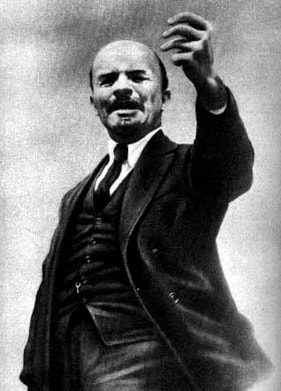 And for this reason we are all firmly convinced that the Sov- iet Republic, whatever misfortune may still lie in store for it, is unconquerable. It is unconquerable because every blow that comes from the powers of madly raging imperialism, every new attack by the international bourgeoisie will bring new, and hitherto unaf- fected strata of workingmen and peasants into the fight, will educate them at the cost of the greatest sacrifice, making them hard as steel, awakening a new heroism in the masses. We know that it may take a long time before help can come from you', comrades, American Workingmen, for the develop- ment of the revolution in the different countries proceeds along various paths, with varying rapidity (how could it be otherwise!) We know fullwell that the outbreak of the Europ- ean proletarian revolution may take many weeks to come, quickly as it is ripening in these days. We are counting on the inevitability of the international revolution. But that does not mean that we count upon its coming at some definite, nearby date. We have experienced two great revolutions in our own country, that of 1905 and that of 1917, and we know that revo- lutions cannot come neither at a word of command nor accord- ing to prearranged plans. We know that circumstances alone have pushed us, the proletariat of Russia, forward, that we have reached this new stage in the social life of the world not because of our superiority but because of the peculiarly reac- tionary character of Russia. But until the outbreak of the in- ternational revolution, revolutions in individual countries may still meet with a number Of serious setbacks and overthrows. And yet we are certain that we are invincible, for if humanity will not emerge from this imperialistic massacre broken in spirit, it will triumph. Ours was the first country to break the chains of.imperialistic warfare. We broke them with the great- est sacrifice, but they are broken. We stand outside of imper- ialistic duties and considerations, we have raised the banner of the fight for the complete overthrow of imperialism for the world. We are in a beleaguered fortress, so long as no other interna- tional socialist revolution comes to our assistance with its ar- mies. But these armies exist, they are stronger than ours, they grow, they strive, they become more invincible the longer im- perialism with its brutalities continues. Workingmen the world over are breaking with their betrayers, with their Gompers rand their Scheidemanns. Inevitably labor is approaching communistic Bolshevistic tactics, is preparing for the prole- tarian revolution that alone is capable of preserving culture land humanity from destruction. We are invincible, for invincible is the Proletarian Revolution. This Letter was republished from Wikisource
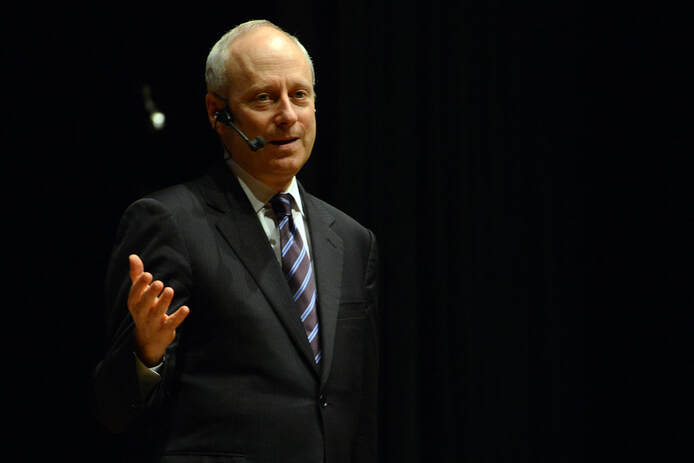 Reflections on Thomas Nagel's critique (of Michael Sandel's book “Public Philosophy: Essays on Morality in Politics”) “Progressive but Not Liberal," THE NEW YORK REVIEW OF BOOKS, May 25, 2006. Thomas Nagel entitles his essay on the social philosophy of Michael J. Sandel "Progressive but Not Liberal." Non-liberal progressives are most often to be found in socialist and communist organizations but not Sandel who is a professor of government at Harvard and referred to as a "communitarian" by Nagel. Nagel is happy to be a liberal and takes Sandel to task for having "defective" views about "liberalism." Nagel in fact defends the liberal cause by his critique of Sandel. I intend to analyze Nagel's critique from a Marxist perspective. Nagel points out that the political system in the US is more volatile and heterogeneous than what one would find in Western Europe. The US is, in fact, "radically divided over issues of war, taxes, race, religion, abortion, and sex." He maintains that these differences are deep rooted and about "ultimate values." Yet these divisions do not threaten the stability of our political system. He says that "the cohesion of American society is stronger than its divisions" can be seen by the fact that people with radically incompatible basic value systems cohabit in a common political system and strive to express those values legally through open political processes. And, he maintains, this can be done "only because of a general commitment to the principles of limited government embodied in the Constitution." Well times have changed since Nagel penned this. American society is far from the stability outlined above: Après Trump le déluge. The election of Biden and the Republican response shows that the “general commitment” to the Constitution is under extreme duress. Nagel goes on to divide the US political universe into two broad sections—based on how they respond to the problems listed above-- i.e., war, taxes, race,etc. The conservatives, we are told, "are more interested in enforcing moral standards [and they think their standards are the only right ones--tr] on the community and protecting private property, and less interested in protecting personal liberty [libertarian conservatives would dispute this--tr] and reducing inequality." It is just the opposite with progressives, he says. Progressives have to decide how to pursue their principles-- as "first" or "second" order principles. First order principles are those deeply held "fundamental beliefs" or core principles. The second order principles are those "concerning what kind of first order-principles may be used to justify the exercise of political and legal power". For example, should we try and have the state outlaw capital punishment based on the first order principle that all killing by the state is immoral [excluding the military], or should we use a different principle such as the corruption of the legal system or the racism in the sentencing procedures without calling into question the ultimate moral status of capital punishment itself. Nagel allies himself with liberalism which he identifies more or less with the political philosophy of another Harvard professor, the late John Rawls, author of such books as "Political Liberalism" and "A Theory of Justice." According to Nagel liberalism tends to rely on second order principles and not confront the conservative positions with head on challenges of first order magnitude. Nagel says, for example that gay rights can be defended by liberals on the principle that the government should not be controlling "private sexual conduct" without getting into the issue of the moral status of homosexuality. The target of Nagel's article, Sandel, represents another school of progressives which Nagel says is "not liberal." These progressives want to argue their positions on first order principles and duke it out with the conservatives on core values. Sandel wants to replace "liberalism" with what he thinks the "communal" republican spirit of the early US was, which he contrasts with the present day liberal concern with "individualism." What Sandel is interested in is (his words) "soul craft." Nagel explains this as "the cultivation of virtue in the citizenry by the design of political, social and economic institutions." Wait a minute! This sounds familiar. This sounds like a species of the program of social engineering embarked upon in the Soviet Union in the 1930s and subverted and fought with tooth and claw by the big capitalist powers, first with their rebellious cat's paw Hitler, then continued as the Cold War by Hitler's anti-communist successors. Nagel senses this as well, as we shall see. More immediately, however, Nagel attacks Sandel for having a "defective" understanding of Liberalism and misinterpreting the social philosophy of John Rawls. Nagel tells us that there are many forms of "Liberalism" but he contrasts only two-- European and American. The former is characterized by "the libertarianism of economic laissez-faire" (which sounds to me suspiciously like current neocon thought) while the latter represents "the democratic egalitarianism of the welfare state" (the owl of Minerva really does take flight at dusk, someone should tell Nagel that the welfare state is history). But, he tells us, "all liberal theories have this in common: they hold that the sovereign power of the state over the individual is bounded by a requirement that individuals remain inviolable in certain respects, and that they must be treated equally." Basically this means equality before the law and equal political status (one person one vote, unless you are Black or Hispanic and your votes are tossed) and in American Liberalism "equality of opportunity and fairness in the social and economic structure of the society." I don't know what planet Nagel is from, maybe a parallel universe where Sweden is the only superpower, but the US definitely does not fit this description. Well, maybe not, but those are the goals to be reached and John Rawls represents this kind of Liberalism which stresses "distributive justice that combats poverty and large inequalities perpetuated by inheritance and class." Yes, Liberalism wants to combat poverty and inequality based on the observation that "the poor ye shall always have with you" but Marxism, unlike Liberalism which wants to tinker with the bad consequences of Capitalism without ever questioning the system itself, wants to eliminate poverty , not just combat it, by getting rid of the economic system that breeds it, i.e., capitalism. Sandel rejects Rawls "Liberalism." He has, as Nagel says "spent his career" opposing Rawls and Rawls’ form of "egalitarian liberalism." What he contests is "Rawls’ central claim that individual rights and principles of social justice should take precedence over the broad advancement of human welfare according to some standard of what constitutes the good life." This is wrongly framed from the Marxist perspective. We certainly are in favor of "broad advancement of human welfare" but not based on some bourgeois idealist concept of "the good life" but based on what we claim to be a scientific understanding of the motive force of the capitalist system, its directionality and the real possibility of restructuring of society in such a way that classes are abolished and all people will truly escape from the realm of necessity to that of freedom. This may sound utopian, but it is actually more realistic than the schemes of Rawls, Nagel or Sandel. Meanwhile, while Rawls subordinates the "broad advancement of human welfare" to "individual rights", Sandel maintains that, in his own words, "Principles of justice depend for their justification on the moral worth or intrinsic good of the ends they serve." Nagel doesn't like this formulation. Sandel would ban Nazis from holding rallies but uphold the rights of people demonstrating for equality and against racism, for example. But, Nagel says, using Sandel's principle, people opposed to homosexuality ought to be opposed to gay people holding rallies. But it is the state that guarantees the rights of citizens and decides which ends are ultimately of "moral worth or intrinsic good." Nazis and KKK folk fail on both counts besides the fact that they would on principle end the rights of others to demonstrate if they could while gay people are not demanding the suppression of heterosexuals they are only asking for civil rights. So, I don't think the analogy a good one to use against Sandel. What Nagel really objects too is that Sandel thinks "the priority of right as being intelligible only if it serves the good." Liberals would "bracket" the question about if abortion, for example, was "murder" and defend the right to it on the grounds that a woman's right to choose should not be denied because of the "religious convictions of the majority." Sandel thinks that in order to approve of or support abortion we must "first determine that the Catholic position is false." This is a requirement for bracketing the question of its mortal status. 'The more confident we are," Sandel writes, "that fetuses are, in the relevant moral sense, different from babies, the more confident we can be in affirming a political conception of justice that sets aside the controversy about the moral status of fetuses." Nagel says this is begging the question not bracketing it but this is because of how he has set up the question in the first place. Being a Liberal he is looking for a Liberal answer, based on a second order principle, and Sandel, not being a Liberal, looks for first order principles. I think Marxists are more akin to Sandel than to Nagel. Surely we want to decide if abortion is murder or not before we support it. Do women have a right to commit murder? What are the Catholic reasons for thinking this is murder? When we find out that the reasons are not based on science or an intelligent open minded examination of the evidence but only upon superstition and close minded adherence to dogma this surely must be the basis for our rejection of the anti-abortion viewpoint. This way of thinking does not make Sandel's views of Liberalism "obtuse." There are many behaviors that can be sanctioned by the state, Nagel says, that the state does not have to have an official position on with respect to their rightness or moral status. The state can be neutral in other words. But Sandel, says Nagel, "thinks justice and rights depend on what is actually good, and what rules and institutions serve those ends; he is not a relativist." This is also good Marxism. Marxists should, to the best standards available, try to determine the actual states of affairs they are dealing with and not bracket truth conditions. This would have prevented many of the catastrophes of the 20th century socialist project. These different positions lead, as Nagel points out, to a "deep issue." Namely, "Do all moral standards derive from a single principle, or are there different principles for different kinds of entities?" Rawls and Sandel have very different views on this. Rawls does not hold that there is a common moral principle from which both personal rights and public rights derive. Rawls "thought that justice, which is the special virtue of social institutions like the state, depended on the distinctive moral character of the state itself, as an immensely powerful form of collective agency." In a Liberal democracy we are subject to majority rule. Actually, however, this has ceased to be the case in the US. The two elections won by George W. Bush were most likely won as a result of vote fraud consciously carried out in disregard for any moral commitment to democratic values and solely to attain state power for the personal enrichment of corporate class entities at the expense of the majority of the population. This looks like a trend that has further developed. The tactic was also attempted by Trump to stay in power but in his case failed because he had lost the support of the corporate ruling class. Even his legal first victory did not represent “majority rule” because the majority voted for Clinton. Nevertheless, Rawls thinks in terms of a functioning bourgeois democracy with majority will "coercively enforced." But Rawls also believes in "fairness." This means that in addition to political and civil equalities the state must also "combat racial, sexual, and socioeconomic inequality." With regard to this duty of the state, Nagel says, "This is the fairness that Sandel derides." But I don't think that Sandel is for racial, sexual and socioeconomic inequality, nor do I think his social philosophy (or Marxism) entails any such consequences. Nagel says that the state has no special moral status for Sandel. Sandel thinks once the people have decided on the ends to be sought (for Marxists this would be the abolition of property, classes and the state as well as the construction of socialism and communism) which for Sandel are ("seems to be" Nagel writes, which shows some confusion on this) "an unmaterialistic culture of closely knit communities and strong family ties" then the state will be used to construct this type of social reality (under socialism being eventually abolished or "withering away)." But this kind of thinking will also lead, says Nagel, "to theocracy, fascism or communism for those who accept alternative conceptions of the human good." Nagel thinks this is a telling point against Sandel but it isn't. The same thing can happen under the limited constitutional state that Liberals like Rawls and Nagel think can be constructed or maybe is even exemplified by the US today. Constitutions and philosophical models are not what guarantee freedom and rights. Only an informed, educated and alert citizenry can do that, and that is what we currently lack, and lack by governmental and corporate design, in the US today. Nagel concludes by saying that "A hunger that demands more from the state [than "constitutional patriotism"] will lead us where history has shown we should not want to go." I am afraid we are on that road already and we have got on this road not only by reading direction signs put up by non-Liberal progressives, but by following those posted by Rawls and his followers as well. To halt the current slide towards fascism ("the national security state") we will need the combined forces of the progressive left, the working class, the establishment union movement as well as those in the “center” of the political spectrum(always an unreliable section—i.e., the AFL-CIO leadership) who still believe in democracy and take the Bill of Rights seriously. Rawlsian Liberalism alone will not suffice. AuthorThomas Riggins is a retired philosophy teacher (NYU, The New School of Social Research, among others) who received a PhD from the CUNY Graduate Center (1983). He has been active in the civil rights and peace movements since the 1960s when he was chairman of the Young People's Socialist League at Florida State University and also worked for CORE in voter registration in north Florida (Leon County). He has written for many online publications such as People's World and Political Affairs where he was an associate editor. He also served on the board of the Bertrand Russell Society and was president of the Corliss Lamont chapter in New York City of the American Humanist Association. This article is a modified and republished version of the article that was first published by Political Affairs Magazine.
 The connection between the authoritarian personality and the working class began in earnest in the 1950s with cold war political sociologist Seymour Martin Lipset. Lipset argued that since World War I, “working class groups have proved to be the most nationalistic and jingoistic sector of the population” [1959: 483.] His concept of authoritarianism is a mash-up Adorno’s ideas mixed with support for “extremist” groups like the Jehovah’s Witnesses and the Communist Party. Lipset argued that in the US, the working class authoritarianism poses a threat to democracy. The question is: does the psychology of individuals in the working class explain Trump’s rise to power? A Marxist perspective reveals the flaws in this and other individual-level psychological explanations:
 Upper class benevolence is a bourgeois fantasy. Despite its obvious flaws, the psychological argument has a special appeal for members of the privileged class, who want to hold themselves blameless for the social ills around them. They believe they knew better, and they blame the working class to avoid facing up to their own culpability. Scapegoating the working class is known as the “myth of upper class benevolence.” One classic study in race and ethnicity shows the fallacies in the myth of upper class benevolence and zeroes in on the ways the working class is often portrayed, incorrectly, as the source of white supremacy. In his book The Mississippi Chinese: Between black and white, the sociologist James Loewen interviewed hundreds of residents of the Mississippi Delta. He found upper middle class whites routinely blamed poor working class whites for any and all oppression of both African Americans and Chinese Americans. But looking closely at the facts gave Loewen a much different picture of culpability. It was the privileged planter- and business-class whose members had the power to keep Chinese- and African-Americans out of their neighborhoods, schools, and workplaces. Working class organizations like the American Legion, Veterans of Foreign Wars, and small Baptist churches were the first to welcome people of color, while upper class organizations like the Chamber of Commerce, the Rotary Club, and Episcopalians excluded them. Financial institutions acted in the interests of the privileged class and served to limit opportunities for others. Schools reserved for whites only were resource rich compared with schools that served people of color. One county in Mississippi, Loewen discovered, actually spent $45 per white pupil for every $1 per African American pupil. Loewen rejects the widely held belief, echoed in the London Business School study mentioned earlier, that the working class, fearing economic competition, feels the most prejudice. Instead, he turns to the pioneer Marxist sociologist of race, Oliver C. Cox, who argued that to analyze racial dynamics one needs to look first at “the economic policies of the ruling class.” Cox continued, “Opposition [by the working class] to social equality has no meaning unless we can see its function in the service of the exploitative purpose of this [ruling] class.” A working class divided by race is easier to controlA working class divided by race is easier to control and to keep unorganized than a united one, so concerted and deliberate efforts are made to encourage members of the working class to embrace authoritarian beliefs, especially white supremacy. Using corporate-funded think tanks, right-wing radio and cable television, and presidential pronouncements, the ruling class frames current events in authoritarian terms, attempting to undermine the unity of the working class and therefore weaken it. In Mississippi Loewen found that alliances between working class whites and blacks were viciously undermined and blocked by the powerful of the community. Likewise, people who challenge class oppression and racial hierarchies are singled out for condemnation and retaliation. Newer research on intolerance shows furthermore that authoritarian beliefs are not clearly associated with membership in the working class, defined by wage dependence, low income, and job insecurity. Erasmus University sociologist Dick Houtman revisited Lipset’s theory of working class authoritarianism found that it is not class that is correlated with intolerance, but educational level and access to cultural opportunities like books, concerts, and art exhibitions. Thus another way that the ruling class tries to divide the working class is by limiting their educational opportunities. Donald Trump once famously intoned, “I love the poorly educated.” Along with his secretary of education Betsy DeVos, Trump seems intent on increasing their ranks. With working class pupils forced to attend substandard, unsafe and under-resourced schools year after year, with college costs putting post-secondary education out of reach of many, and with crippling student debt for those who do borrow for college, the ruling class aims to limit the critical thinking resources the working class needs to challenge ruling class propaganda. For those who are in college, corporate forces have developed special interventions to encourage neoliberal and fascist accommodation. The Charles Koch Foundation, established by the head of Koch Industries, has implemented a $50 million, 32-state strategy establishing institutes, holding conferences, and funding faculty and graduate students in a concerted effort to influence policy rightward: toward denial of climate science, undermining of labor rights, and revision of history in favor of business interests. Hand in hand with these corporate forces are the white supremacist organizations that pay for speakers to visit campuses and foment hate, then cry “first amendment” when students object. Other corporate-sponsored organizations encourage students to record, expose and protest faculty who do not espouse conservative views. In short, the psychological argument claims that authoritarian tendencies emerge from working people themselves. It’s no surprise that researchers from a business school embraced that idea, because it is what Marx and Engels refer to as a “ruling idea.” By pretending that authoritarian ideas arise organically from the working class itself, it hides the relationship between authoritarianism and the economic policies of the ruling class. In contrast, a Marxist analysis recognizes the congruence between authoritarian ideas and the economic interests of the corporate ruling class, especially its efforts to divide the working class by race, gender, citizenship status, etc. It recognizes the influence of powerful corporate forces which intentionally try to persuade workers to blame each other for their oppression, instead of the capitalists who profit from their lack of unity. Citations Adorno, Theodor et al. 1950. The Authoritarian Personality. New York: Harper. Edsall, Thomas B. 2017. “The Trump Voter Paradox” The New York Times. 28 September. https://www.nytimes.com/2017/09/28/opinion/trump-republicans-authoritarian.html Ferris, Robert. 2017. “Why voters might be choosing dominant, authoritarian leaders around the world.” CNBC, 12 June. https://www.cnbc.com/2017/06/12/why-voters-might-be-choosing-dominant-authoritarian-leaders-around-the-world.html Jacobs, Tom. 2018. “Inside the minds of hardcore Trump Supporters” Pacific Standard. February 15. https://psmag.com/news/inside-the-minds-of-hardcore-trump-supporters Lipset, Seymour Martin. 1959. “Democracy and Working-Class Authoritarianism.” American Sociological Review 24 (4), 482-501. Loewen, James. 1988. The Mississippi Chinese: Between black and white. 2e. Prospect Heights, IL: Waveland Press. Serwer, Adam. 2017. “The Nationalist’s Delusion.” The Atlantic. November 20. Image: Trump addresses the Conservative Political Action Conference in 2015. Greg Skidmore/Creative Commons AuthorAnita Waters is Professor Emerita of sociology at Denison University in Granville, Ohio, and an organizer for the CPUSA in Ohio. This article was first published by CPUSA.
As China continues to develop into a superpower a knowledge of its form of Marxism becomes imperative for Western progressives. The progressive movement cannot allow itself to be misdirected in an anti-Chinese direction by reactionary forces in the West. In order to understand Chinese Marxism fully it is important to be familiar with traditional Chinese philosophy, many elements of which reappear in Marxist guise in today’s China. The philosophy of Mozi has many elements that a Marxist could endorse (and many he couldn’t). This philosophy was once widespread in China but declined after the establishment of the Han Dynasty. Since the revolutionary upheavals in China in the last century interest in Mozi has been revived. 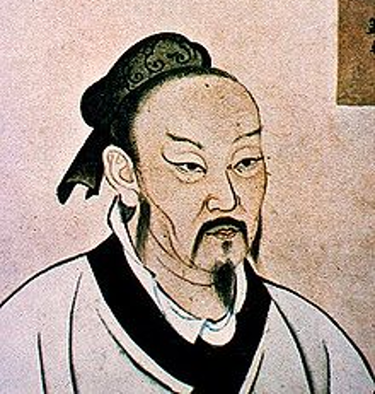 “Good morning Fred Are you ready to begin our discussion of Mozi?” “I certainly am, but he is rather new to me. I mean, everyone has heard of Confucius and Laozi.” “It's true. Mozi is not as well known as the other two. Mozi lived around 479 to 381 B.C.--somewhere in that range. We really don’t know too much about him. We have a 53-chapter book called the “Mozi” which is made up of his writings and those of some of his followers. He lived at the end of the feudal period of the Zhou Dynasty a little after the time of Confucius and was in the ‘warrior class.’ This class somewhat resembled and probably inspired what the Japanese developed as the class of the Samurai. Mo, (the “zi” is an honorific suffix meaning “master”—i.e., “teacher”) thought up a philosophy contrary to the Confucians and which he hoped would solve all the practical problems of humanity. He was the leader of a band of warriors--such bands were quite common in those days--but he would only go into action to try and prevent war or to protect the underdog who was being unjustly attacked. This was not common for those days or any days including our own (with the possible exception of the type of military aid given by the Cubans).” “Well, Karl, I have my copy of Chan [W.T. Chan, A Sourcebook in Chinese Philosophy] which starts with Chapter 15 on ‘Universal Love’. It begins with a question ‘But what are the benefits and harm of the world?’ To which Mozi responds, “Take the present cases of mutual attacks among states, mutual usurpation among families, and mutual injuries among individuals, or the lack of kindness and loyalty between ruler and minister, of parental affection and filial piety between father and son, and of harmony and peace among brothers.’” “OK Fred, that pretty much sums up the ‘harm of the world’ and it is as true of our times as it was in Ancient China even if Mo only makes male references due to his patriarchal culture. We will have to add ‘mothers and daughters’ as well as ‘sisters’ to the mix.” “Mozi next explains why the world is in such sad shape, that is, where did all these problems come from. Mo says “They arise out of want of mutual love. At present feudal lords know only to love their own states and not those of others. Therefore they do not hesitate to mobilize their states to attack others. Heads of families know only to love their own families and not those of others. Therefore they do not hesitate to mobilize their families to usurp others. And individuals know only to love their own persons and not those of others. Therefore they do not hesitate to mobilize their own persons to injure others.’” “So, ‘want of mutual love’ is the source of our woes!” “Exactly, he says ‘Because of want of mutual love, all the calamities, usurpations, hatred, and animosity in the world have arisen. Therefore the man of humanity condemns it.’” “And with what is he going to replace it?” “'It should be replaced by the way of universal love and mutual benefit.’” “Which is?” "'It is to regard other people’s countries as one’s own. Regard other people’s families as one’s own. Regard other people’s person as one’s own. Consequently, when feudal lords love one another, they will not fight in the fields.... Because of universal love, all the calamities, usurpations, hatred, and animosity in the world may be prevented from arising. Therefore the man of humanity praises it.’” [“Universal love” is a traditional translation of the Chinese jiān'ài, 兼愛 which is also rendered “impartial care.”] “You know, many great philosophers and some, but not all, religious leaders have said more or less the same thing. I think all the great humanist thinkers, West or East, would be in general agreement. But they will differ with Mo about the practicality of his proposal and if there should be some distinctions within his concept of ‘universal’. This will be the ‘battle line’. Mo will want absolute universality which he thinks is the only way peace and harmony will come about.” “That is right, Karl, and Mo takes up the challenge as I will now read. Here is the objection: ‘But now gentlemen of the world would say: Yes, it will be good if love becomes universal. Nevertheless, it is something distant and difficult to practice.’ To which Mo responds, ‘This is simply because gentlemen of the world fail to recognize its benefit and understand its reason.’” “I remember Chan’s comment on this passage. That Mo used ‘benefits’ or ‘results’ as the motivation for his doctrines. This is similar to our philosophy of pragmatism. C.S. Peirce had something called the ‘pragmatic maxim’ his own Prime Directive as it were: ‘Consider what effects, that might conceivably have practical bearings, we conceive the object of our conception to have. Then, our conception of these effects is the whole of our conception of the object.’ Granted that this is a theory of meaning but we can see its relation to Mo. Mo is saying, the ‘Mohist Maxim’: ‘Consider what benefits we conceive our belief to have. Then, our conception of the benefits is the whole of our conception of the rightness of our belief.’ This is the theory of truth of Mohism.” “I have the Chan comment right here Karl. He doesn’t make the point you do but does contrast the ‘Mohist Maxim’ of yours with Confucianism. The Confucian thinks the ‘inferior’ man is after ‘benefits’. The Confucian is interested in ‘righteousness.’ “ “Does he give references?” “He cites the Analects 4:11,16; 15:17; 17:23” “Let me see.” Karl took Chan’s book and looked through it. “The last two are not in here,” he said. He then pulled down a copy of the complete work (the “Analects”) and looked at it. “Well, none of these references are quite on the mark. Confucius is really condemning material goodies and profit. I think the ‘Mohist Maxim’ goes way beyond this limited conception of ‘benefits.’ World peace would be a Mohist ‘benefit’ and that is not the same as ‘profit’. World peace would even be a motivation to action for a Confucianist who could interpret it as ‘righteousness’ to benefit humanity (ren).” “I will continue with the Mo quote. In this passage he explains how universal love even though difficult can be brought about. ‘Formerly Duke Wen [ruled 636 to 628 B.C.] of Jin liked his officers to wear coarse clothing. Therefore all his ministers wore [simple] sheepskin garments, carried their swords in [unadorned] leather girdles, and put on hats of plain cloth. Thus attired, they appeared before the ruler inside and walked around the court outside. What was the reason for this? It was because the ruler liked it and therefore the ministers could do it. Formerly, King Ling of Chu [ruled 530 to 527 B.C.] wanted people to have slender waists. Therefore all his ministers limited themselves to one meal a day. They exhaled before they tied their belts.... What was the reason for this? It was because the ruler liked it and therefore the ministers could do it.” “This looks like ‘revolution from above’!” “Wait! There is more. ‘Therefore Master Mo said: Now to eat little, to wear coarse clothing and to sacrifice one’s life for fame are things all people in the world consider difficult. But if the ruler likes them, the multitude can do them.... What difficulty is there in this (universal love)? Only the ruler does not make it his governmental measure and officers do not make it their conduct.’” “This is definitely ‘revolution from above’! The Ruler only has to desire that a policy be carried out and voilà! He also mixes up the ‘ministers’ with the ‘multitude’. It's one thing to order the ministers to implement a policy, it's really quite another to think that the people will just obey and carry out the directions because ‘the ruler liked it.’ “Chan has a comment about this too Karl. He says “Universal love is promoted by Mohism because of its beneficial results. There is no conviction that it is dictated by the inherently good nature of man or by the inherent goodness of the act. Although Confucianism teaches love with distinctions, it also teaches love for all, but it does so on the grounds of moral necessity and of the innate goodness of man.’” “Well that’s interesting. There seems some confusion in what Chan says, however. I can agree that the Mohist Maxim is at work here and not a belief in the innate goodness of humans but I must demur concerning Chan’s comment about the ‘inherent goodness of the act.’ That comment makes no sense to a Mohist because the ‘inherent goodness’ of an act just is the ‘benefits’ that result from it. The real question revolves around the nature of man, which is the basis for the Confucian critique. “Mo thinks that there are historical examples of the practice of his philosophy. To the objection that his theory is impracticable, and that universal love and mutual benefit cannot be put into action he replies, “Ancient sage kings did practice them. How do we know this to be the case? In ancient times, when Yu [first ruler of the Xia Dynasty, he ruled c. 2183-2175 BC] was ruling the empire, he dug the West and the Yu-tou rivers in the west to release the water from the Chu-sun-huang River [he did similar works in the east, north and south]...in order to benefit the peoples of Ching, Chu, Kan, and Yueh and the barbarians of the south. This is the story of Yu’s accomplishments. This shows that my doctrine of universal love has been practiced.’” “Weak!” “Chan finds another contrast with the Confucians here. ‘While Confucianists cited historical examples for inspiration and as models, Mozi cited them to show that his teachings had been demonstrated. The difference between the idealistic and practical approach is clear.’” “For whatever reason it seems like a common practice to refer to tradition for authority even if your ideas are new. This is not a uniquely Chinese practice.” “Here is another of Mo’s arguments: ‘In ancient times, when King Wen [first ruler of the Zhou Dynasty who ruled c. 1751-1739 BC] ruled the Western Land, he shone like the sun and the moon all over the four quarters as well as the Western Land. He did not permit a big state to oppress a small state, or the multitude to oppress the widow or widower, or the ruthless and powerful to rob people’s grains or livestock. Heaven recognized his deeds and visited him with blessings. Consequently, the old and childless were well adjusted and enjoyed their full life span, the lonely had opportunity to fulfill their work among mankind, and the orphaned had the support to grow up....It shows that my doctrine of universal love has been practiced.’” “I need to make two comments here. ‘Heaven recognized his deeds, etc...’ seems too anthropomorphic for Chinese thought at least on the ‘sage’ level....” “Wait up, Karl, the next section is all about ‘The Will of Heaven.” “OK, then. My second comment is that it seems that universal love is just the construction of a welfare state. There is obviously more to it than that or the Confucians would not be so upset with Mo.” “OK Karl, before turning to ‘The Will of Heaven”, Chapter 26 of the Mozi, I’ll let Mo have the last word on ‘Universal Love’: ‘If rulers of the world today really want the empire to be wealthy and hate to have it poor, want it to be orderly and hate to have it chaotic, they should practice universal love and mutual benefit. This is the way of the sage-kings and the principle of governing the empire, and it should not be neglected.’” “Even today Mo’s words are worth listening to. The ‘rulers of the world today’ have no concern for these ideas. Instead, with their aggressive military plans, their failure to help the poor and starving throughout the world, their do nothing environmental and AIDS policies, they seem to be just like the rulers of Mo’s day, only out to aggrandize their own selfish interests (Cuba excepted since its history of extension of medical aid and moral support to oppressed people everywhere is well known). “Here is what Mo has to say about ‘righteousness’ and ‘heaven’. ‘Now what does heaven want and what does heaven dislike? Heaven wants righteousness and dislikes unrighteousness. Therefore, in leading the people of the world to engage in practicing righteousness, I should be doing what heaven wants.’” “We must, Fred, keep in mind that, ‘righteousness’, for Mo means his doctrine of Universal Love. This is not the same meaning that Confucius gave to the term. As Fung points out [Fung Yu-lan, A Short History of Chinese Philosophy], the term for Confucius was a ‘categorical imperative’ (although this is not the correct term). Confucius just meant there are unalterable moral duties which must be done out of duty regardless of consequences. Of course, other considerations, as long as they are moral, can override what may seem to be, at first glance, a particular duty. Notice also Mo’s appeal to ‘heaven’. This is similar to claims made by Western religious leaders, usually when reason is not on their side.” “Mo continues: ‘I say: With righteousness the world lives and without righteousness the world dies, with it the world becomes orderly and without it the world becomes chaotic. Now, Heaven wants to have the world live and dislikes to have it die, wants to have it rich and dislikes to have it poor, wants to have it orderly and dislikes to have it chaotic. Therefore I know Heaven wants righteousness and dislikes unrighteousness.’” “This expresses Mo’s view all right, but is not a very good argument despite the ‘therefore.’ How do you know Heaven wants righteousness? Because righteousness makes the world live and Heaven wants the world to live, ergo. This is R=L, H=L | H=R. Something like Nazis like their mothers, so do communists, therefore communists like Nazis. So, besides being a poor argument, even were it a good argument it just pushes the problem back a step--i.e., how do you know Heaven wants the world to live (as opposed to being indifferent). Because Heaven likes righteousness? And Heaven likes righteousness because it wants the world to live? He is running around in a circle here. His argument for Universal Love will have to stand on its own merits which right now means an appeal to the benefits it will bring the world. Despite Mo’s plans there is no ‘divine’ or ‘heavenly’ sanction for the Mohist Maxim.”  “And Chan makes the following observation: ‘Even the will of Heaven and righteousness are explained in terms of practical results.’” “Yes, but I think it important to look at the logic involved as well.” “Now he says, ‘Moreover, righteousness is the standard. It is not to be given by the subordinate to the superior but be given from the superior to the subordinate. Therefore the common people should attend to their work with all their might, and should not forthwith set up the standard themselves.’” “I am afraid we are about to discover the feudal limitations to Mo’s views.” “Well Karl, he says, ‘Gentlemen of the world of course clearly understand that the emperor gives the standard to the three ministers, the several feudal lords, the minor officials, and the common people, but the common people of the world do not clearly understand that Heaven gives the standard to the emperor. Therefore the ancient sage-kings of the Three Dynasties [Xia, Shang, and Zhou]. Yu, Tang, and Wu, desiring to make it clear to the common people that Heaven gives the standard to the emperor, all fed oxen and sheep with grass and dogs and pigs with grain, and cleanly prepared pastry and wine to sacrifice to the Lord on High and spiritual beings and pray to Heaven for blessing. But I have not heard of Heaven praying to the emperor for blessing. I therefore know that Heaven gives the standard to the emperor. Thus the emperor is the most honorable in the world and the richest in the world. Therefore those who desire honor and wealth cannot but obey the will of Heaven.’” “I don’t know about feeding grain to dogs, but this sounds like an accurate view of the feudal mentality at this time in China and even right up until a hundred or so years ago. At this time the Greeks already were experimenting with democracy and letting the common people [hoi polloi] have their say. The Chinese are thinking more along the lines of the Persians. I think this shows the advantages of the city state or polis over larger territorial entities. Meanwhile notice all this ‘Heaven’ and ‘spiritual beings’ talk. Unlike Confucius, Mo is trying to give an aura of popular religion, quite foreign to the sentiments of most educated Chinese, to his philosophy. This is a real violation of the Prime Directive of Philosophy [only use Reason].” “The Mozi goes on: ‘Well, how did Yu, Tang, Wen, and Wu obtain rewards? Mozi said: On the highest level they honored Heaven, on the middle level they served spiritual beings, and on the lower level they loved the people. Therefore the will of Heaven proclaimed, “They love universally those whom I love. They benefit universally those whom I benefit. Such love of people is really universal and such benefit to people is really substantial.” Therefore Heaven caused them to have the honor of being Sons of Heaven and possess the wealth of the whole empire.’” “More religious coloring.” “Even more coming up because now we see what happens to bad rulers! ‘Well how did Jie [last of the Xia dynasty], Zhou, Yu [R. 781-771 BC], and Li [R. 878-842 BC] incur punishment? Mozi said: On the highest level they blasphemed against Heaven, on the middle level they blasphemed against spiritual beings, and on the lower level they injured the people. Therefore the will of Heaven proclaimed, “They set themselves apart from those whom I love and hated them. They injure all those whom I benefit. Such hatred of people is really universal and such injury to people is really substantial.” Therefore Heaven caused them not to live out their life-span or to survive their generation.’” “And what conclusions can be drawn from all this?” “It's as Mo says--the ruler must follow righteousness i.e., practice universal love. Not doing so means that one has to rule by means of violence against the people! This leads to your undoing. Therefore following Mo’s philosophy ‘is beneficial to Heaven on the highest level, beneficial to spiritual beings on the middle level, and beneficial to man on the lower level. Being beneficial to these three means being beneficial to all. Therefore the whole world gives them a good name and calls them sage-kings.’ As for those bad rulers that go against Heaven, spiritual beings, and the people, ‘Not being beneficial to these three means not being beneficial to all. Therefore the whole world gives them a bad name and calls them wicked kings.’” “I can’t think of any other Chinese philosopher who made such a pitch to religion. Mo was obviously trying to spread his ideas to the common people, not the educated elite!” “Chan would agree with you Karl. His comment on all this is as follows: ‘In teaching obedience to the will of Heaven, Mozi was the most religious of ancient Chinese philosophers’” “Unless he was a hypocrite.” “A hypocrite? Why would you say that?” “Listen to what Fung says about this. ‘Mozi’s proof of the existence of spirits is done primarily in order that he may introduce a religious sanction for his doctrine of all-embracing love, rather than because of any real interest in supernatural matters.’ He then quotes a passage not found in Chan’s book. This is from Chapter 31 of the Mozi: ‘If now all the people of the world could be made to believe that the spirits can reward the good and punish the bad, would the world then be in chaos?’ On the basis of this Fung concludes that Mo’s ‘doctrine of the Will of God and the existence of spirits is only to induce people to believe that they will be rewarded if they practice all-embracing love, and punished if they do not. Such a belief among the people was something useful; hence Mozi wanted it.’” “That is highly speculative. Fung can’t know what Mo really thought. Are we not bound to respect the text, everything else being equal?” “Oh, I think so. The Prime Directive and the text are all we have to go on. But it would not be, if Fung is right anyway, the only instance of a philosopher, or religious leader, telling one thing to hoi polloi while having another doctrine--the ‘real’ doctrine--for his followers.” “The next selection in Chan is from Chapter 35 and he calls it ‘Attack on Fatalism. Pt. 1’. “ “This is the Chinese word “ming” which we translate as fate. “ “Yes, and Mozi used it to describe people both he and we would call ‘fatalists.’ Why do anything since Fate has already determined everything that will happen?” “Those people are like those who think that since God is all powerful everything that happens happens according to His will. Some Marxists are like that too. Since ‘socialism’ is inevitable all we have to do is sit back and wait for it to happen. Another word we could use is ‘determinism.’ Everything is determined by the laws of nature and the previous state of the universe so we really can’t do anything except what has been predestined or predetermined. That, Fred, pretty much catches what Mo means by ming.” “Well Mo does not approve of them. He says, ‘With this doctrine they tried to persuade the kings, dukes, and great officials above and to prevent the common people from doing their work. Therefore the fatalists are not men of humanity. Their doctrine must be clearly examined.’” “I remember this. Mo puts forth a scientific procedure for looking at knowledge claims. Very advanced for his time.” “That it is. He says that in order to examine a doctrine or knowledge claim some ‘standard’ must be adopted. Actually, he will have three standards. ‘For any doctrine some standard must be adopted. To expound a doctrine without a standard is like determining the directions of sunrise and sunset on a revolving potter’s wheel. In this way the distinction of right and wrong and benefit and harm cannot be clearly known. Therefore for any doctrine there must be the three standards. What are the three standards? Mozi said: [1] There must be a basis or foundation. [2] There must be an examination. [3] And there must be practical application. [1] Where to find the basis? Find it in the [will of Heaven and the spirits] the experiences of the ancient sage-kings above. [2] How is it to be examined? It is to be examined by inquiring into the actual experience of the eyes and ears of the people below. [3] How to apply it? Put it into law and governmental measures and see if they bring about benefits to the state and the people. These are called the three standards.’” “This is a very good passage Fred. It could be updated to apply to the Chinese government today .” “How so?” “Well, [1] would be replaced by the experiences of the international communist and worker’s movements as well as what happens when you join the World Bank and the IMF. [2] This means that there should be more democratic procedures by which the masses of the Chinese people can get their opinions taken into consideration. I’m not saying the Party has to back off, but that it should be more inclusive and democratic. [3] This can stand as it is!” “Chan agrees with this procedure. I think he calls it ‘pragmatic’. You can see the Mohist Maxim at work in [3] and his religious views in [1]. I can see why the Chinese government of today would have to change that. Chan actually says this is a ‘surprisingly scientific procedure: basis, examination, and application.’” “Does he say anything else about fatalism, Fred?” “He ends the discussion by reiterating the dangers of the idea and that human action is not all that important. He really opposes the “que será,será” attitude. ‘If the doctrine of the fatalist is put into practice, the ruler above would not attend to government, and the people below would not attend to their work.’ He is also upset because he says the religious duties won’t be carried out either. Why bother if you are a fatalist? ‘Therefore on the higher level fatalism is not beneficial to heaven, on the middle level it is not beneficial to spiritual beings, and on the lower level it is not beneficial to men. The unreasoning adherence to this doctrine is the source of evil ideas and the way of the wicked man. Therefore Mozi said: If the gentlemen of the world today really want the world to be rich and dislike it to be poor, and want the world to be orderly and dislike it to be chaotic, they must condemn the doctrine of fatalism. It is a great harm to the world.’” “I can tell you that if you were a contemporary Mohist you would think the gentlemen of today in our new century do not really want the world to be rich rather than poor, nor do they dislike its being chaotic.” “How so, Karl?” “Because our so-called leaders don’t apply the Mohist Maxim to the problems confronting mankind today. Take the position of universal love for example. We have to think of all peoples and nations the same way--try to show love and understanding to everyone. This would mean in our own country that Blacks and Hispanics as well as whites, Amerindians, and others would all be the same--really not in just theory. Yet our leaders are still playing games with affirmative action, equal access to jobs and education. This shows they prefer evil ideas to universal love. There would also have to be an end to all the nonsense about ‘illegal aliens’ and hunting poor people down on the borders and trying to deport them. That doesn’t show any kind of universal love. The leaders would have to provide medical care and medicines, and housing, and education, and decent food for everyone without worrying that this might conflict with the so-called ‘rights’ of certain people or corporations to make money at the expense of these services not being available to everyone on an ‘as needed’ basis. This is all demanded in the name of ‘universal love.’ The military would have to go too. We have to share all the world's goodies with all the people of the world--love demands nothing less. That means the Arabs and the Jews in the Middle East have to start loving each other--and it is up to the leaders to set the example for the people to follow. The land has to be shared and in fact, Jews, Muslims and Christians, as well as Buddhists and others have to get together on one religion for everyone.” “Oh Boy!” “What can I say. Anything that divides the people and causes hatred and violence contradicts universal love and must go. Different religions do just that. Remember the Mohist Maxim. ‘Consider what benefits we conceive our belief to have., etc.’ If the gentlemen of today really want a peaceful and caring world they have to get together and start practicing universal love. But I think you would agree that they really only care about their own nations and groups and within their own groups and the rich and powerful only want to perpetuate their own selfish interests. Therefore a contemporary Mohist would be most upset with the gentlemen of today.” “Did you say ‘Mohist’ or ‘Maoist’?” “I know. But I said ‘Mohist.’ We will discuss Mao some other time and see if your snide comment is justified.” “Now there are six more points which Chan thinks are important for a good understanding of Mohism.” “So let’s get on with it. What is the first?” “We discussed his ‘utilitarianism’ or ‘pragmatism’ before, but we should note these additional quotes. ‘Mozi said: Any word or action that is beneficial to Heaven, spiritual beings, and the people is to be undertaken.... Any doctrine that can elevate conduct should be perpetuated....In issuing orders, promoting any undertaking, employing the people, or expending wealth, the sage-kings in their administration never do anything that is not useful. Therefore re- sources are not wasted and the people can be freed from being overworked, and many benefits will be promoted....’” “Again, this shows the Chinese penchant of trying to justify the ideas of the present by an appeal to the way things were done in the past. This is not just a Chinese trait! I think this quote agrees with my views about contemporary Mohism expressed a little while ago. What is the second point?” “The second point is his condemnation of war. Mo hated war even though he was in the professional mercenary class! He would only fight defensive wars. As far as war is concerned, He wrote: ‘The multitude are injured and oppressed and the people are scattered.... Does it mean to benefit the people? The benefit to the people from killing the people of Heaven is slight indeed! And calculate the cost! This is the root of destruction of life. It exhausts the people to an immeasurable degree. Thus... no benefit to the people can be attained.’” 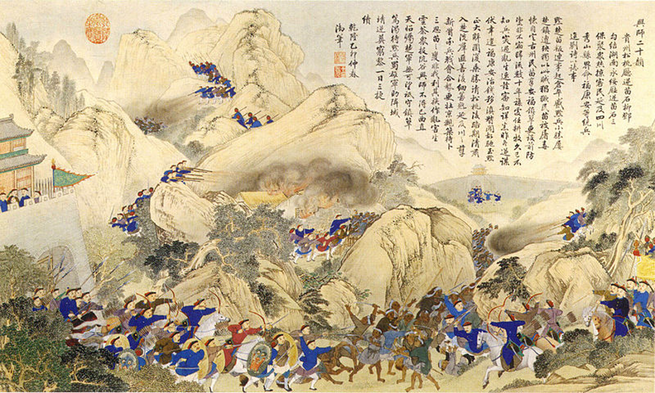 “Mo may have been the most concerned for the welfare of the common people, at least in this respect, than any of the ancient philosophers--east or west! What is the third point?” “This is his condemnation of music. He talks about music, but you could extend his critique to art as such, all forms of art. Again he sounds like Mao. That’s why I asked you ‘Mo or Mao’?” “Ok, Ok! What’s the passage?” “’The reason why Mozi condemns music is not because the sounds of the big bells, resounding drums, harps and pipes are not delightful.... But set against the past it is not in accord with the deeds of the sage-kings and checked with the present it is not in accord with the benefits of the people. Therefore Mozi said: To engage in music is wrong.... To levy heavy taxes on the people in order to produce the sounds of big bells, resounding drums, harps, and pipes does not help the promotion of benefits and the removal of harms in the world.... Now kings, dukes, and great officials engage in music. To strike musical instruments they loot the people’s resources for food and clothing to such an extent.... Now kings, dukes, and great officials love music and listen to it, they certainly cannot go to court early and retire late in order to listen to litigations and administer the government. Therefore the country is in chaos and the state in danger.... Therefore Mozi said: To engage in music is wrong.’” “Well, Fred, the condemnation is not against music per se. I can see no objection to folk music or the music the peasants might be playing in the villages. He is attacking the exploitation of the people by the court in order to support the official music [and art] productions of the state. This even sounds a little Daoist. Under appropriate non-exploitative social arrangements, even Mo would approve of music as ‘delightful’. This is the Mohist Maxim again. If we could create a society where music was beneficial and not based on exploitation of the people, I can’t see why a modern Mohist would object. As far as your reference to Mao, this was the original intention of Mao, however it may have turned out.” “The fourth point is the condemnation of elaborate funerals. ‘Now the gentlemen of the world still doubt whether elaborate funerals and extended mourning are right or wrong, beneficial or harmful. Therefore Mozi said: I have inquired into the matter.... So, much wealth is buried in elaborate funerals and long periods of work are suspended in extended mourning. Wealth that is already produced is carried to be buried and wealth yet to be produced is long delayed. To seek wealth in this way is like seeking a harvest by stopping farming....’” “This is very much in tune with his condemnation of music. Archaeologists won’t like this point! What’s the fifth point?” “This is a point about who should be getting government positions. ‘How do we know elevating the worthy is the foundation of government? The answer is: When the honorable and the wise run the government, the ignorant and the humble remain orderly, but when the ignorant and the humble run the government, the honorable and the wise become rebellious. Therefore we know that elevating the worthy is the foundation of government.’” “Very good, Fred. But who are the ‘honorable and wise’?” “Who? I’ll tell you. They are the practitioners of universal love. That is, they should be. They should be true sages and philosophers. So Mo is saying just what Plato said. Philosophers should be the ones running the show! And of course the Confucians would be in agreement with Mo. Only instead of Mohist sages, Confucian sages would be in charge.” “But who would be the true sages?” “I’ll let you decide. We have covered some Confucians: Kongzi (Confucius) himself, Mengzi (Mencius) and he attacked Mo’s views on universal love, and we have discussed Xunzi to see whose arguments appear the better.” “Well, Karl, here is our sixth and last point. Chan calls it ‘Agreement with the Superior.’ I’m not sure Mo looks too good in this section.” “Let’s get with it!” “He says: ‘Now, the frequent arrival of hurricanes and torrents are the punishment from Heaven upon the people for their failure to agree with Heaven....’” “Yes, that is very bad, very superstitious. Like blaming God for the Lisbon earthquake in Voltaire’s day. This is retrograde compared to Confucius and Xunzi. This really calls in question Fung’s apologetics concerning Mo’s belief in the supernatural.” “Now we get an answer to the question ‘How do we know that the principle of agreement with the superior can be used to govern the empire?’ This principle is important to Mo who after all was the supremo of a band of warriors and who definitely thought in terms of military obedience to the ‘superior.’ We get this answer from a consideration of Mo’s theory of the beginning of government.” “This should be interesting!” “Mo thinks that originally people did not have rulers. Everybody had their own way of doing things and their own moral and ethical system. ‘All of them considered their own concepts of right as correct and other people’s concepts as wrong. And there was strife among the strong and quarrels among the weak. Thereupon Heaven wished to unify all concepts of right in the world. The worthy were therefore selected and made emperor.’ The emperor then selected the ministers who then divided up the land and created the feudal lords all in the furtherance of better government since the emperor could not do everything by himself.” “This sounds like the ‘Divine Right of Kings’ in so far as it appears that ‘Heaven’ somehow chose the emperor and while all other authority is delegated from him, his rests on that original choice. The ‘Mandate of Heaven’ is due to the desire of ‘Heaven’--Mo’s anthropomorphic god concept-- to have only one universal standard of ‘right’ prevail. Just like the Christians and others following Augustine’s views that there is a universal standard ‘God’s Will’. “Muslims and Jews too, Karl.” “Everybody gets into the act. At least Mo appeals to his utilitarian principles of benefit so that the sages have to figure out Heaven’s will. He doesn’t maintain that ‘Heaven” or its representatives came down and told him what its will was.” “Yes, but if the sage gets it wrong there is Zeus with his thunderbolt!” “Finish the passage.” “’The feudal lords, realizing their inadequate wisdom and ability to govern the lands within the four borders by themselves, selected the next best in virtue.... Therefore, in appointing the three ministers, the feudal lords, the great officers, the prime minister, the village elders, and the heads of households, the emperor of old did not select them because of their wealth, high position, or leisure, but employed them to assist in bringing political order and administering the government.... When order prevails in the empire, the emperor further unifies all concepts of right as one in the empire and makes it agree with [the will of] Heaven. Therefore the principle of agreement with the superior can be applied by the emperor to govern the empire, by the feudal lords to govern the state, and the heads of households to govern the family....’” “I remember Chan’s saying that many thought this smacked of absolutism. It reminds me of the Führerprinzip in a way, only it’s Heaven rather than a plebiscite that determines the ruler--but then vox populi, vox dei.” “I thought you liked Mo’s views.” “I like some of them. This Führerprinzip is not one of them. But, I suppose that it derives from the ideal of a sage king who understands the will of Heaven. This could also reflect back negatively on Plato’s philosopher kings.” “Listen, Karl, Chan plays down the absolutism. After all, that's a concern of modern times not ancient China with its emperor system. Although I can see how some people might think of Mao again--with the will of the Party rather than the will of Heaven. Or was Mao’s will the will of the Party rather than the other way around?” “Well, I suppose the saving grace here is that it is not a subjective will which is at stake. Philosophy is called in to determine what is the best thing to do to promote the general good (by definition the will of Heaven) and this is to be objectively determined by the sage or philosopher king. So it’s really not absolutism in the sense of the personal will of the ruler. So Mo, Mao and Plato may be off the hook!” “Well, that's it for the Mozi selections in Chan. Who's next?” “I think we should look at Daoism and discuss Laozi.” “Fine. Let's do him next" AuthorThomas Riggins is a retired philosophy teacher (NYU, The New School of Social Research, among others) who received a PhD from the CUNY Graduate Center (1983). He has been active in the civil rights and peace movements since the 1960s when he was chairman of the Young People's Socialist League at Florida State University and also worked for CORE in voter registration in north Florida (Leon County). He has written for many online publications such as People's World and Political Affairs where he was an associate editor. He also served on the board of the Bertrand Russell Society and was president of the Corliss Lamont chapter in New York City of the American Humanist Association. 4/2/2021 Marx on The Metabolic Rift: How Capitalism Cuts Us off from Nature. By: Anita WatersRead Now Rebecca Wilson, “Ticky Tacky.” Used under CC BY-2.0. Although Karl Marx is not known first and foremost as an environmental theorist, in recent decades students of his work have argued that Marx had a systematic approach to environmental protection, that he recognized the key connections among labor, technology, and nature, and, according to sociologist John Bellamy Foster, that his discussions of the environment “prefigured some of the most advanced ecological analysis of the late 20th century.” By analyzing the distorted relationship that capitalism imposes between humans and the rest of nature, Marx used developments in the agricultural science of his day to argue that by radically transforming socio-economic relations, it is possible to repair the rift between humans and nature. A path to sustainability and environmental protection is possible. Marx and Engels were witnesses to and keen analysts of the environmental problems inherent in nineteenth-century capitalism. They wrote about the depletion of coal reserves, the destruction of forests, and, especially, about diminishing soil fertility, which Foster recognizes was the most pressing issue of the day. Given breakthroughs in soil chemistry, large-scale land owners in the 1800s became aware of the value of additives like potassium salts, phosphates and guano (sea bird dung that accumulated in great quantities in South American and the Caribbean) to improve “exhausted soil.” At the same time, farmers realized that mineral deposits that could be used for soil enhancement were expensive and in short supply. One of the foremost agricultural chemists of his time, Justus von Liebig (1803-73), criticized agricultural practices that relied on highly limited resources like guano. Such temporary fixes cannot restore the “conditions of reproduction” of the soil. “Rational agriculture,” Liebig wrote in 1859, demanded a radical recycling plan that would return the nutrients of town inhabitants’ waste back into the soil of the countryside. Only this could ensure sustainability. Liebig called it “the principle of restitution; by giving back to the field the conditions of their fertility, the farmer insures the permanence of the latter.” In his discussions of nature in Capital, Marx relies heavily on Liebig’s work and shows that the divide between urban and rural concerns in Liebig’s work echo the “greatest division of material and mental labor” — that is, the separation between town and country. Capitalist production concentrates populations in cities, estranged from the natural foundations of human existence. Capitalism, Marx wrote, “disturbs the metabolic interaction” between human beings and the planet on which they live; this is known as the concept of “metabolic rift.” As he wrote in Capital (vol. 3): Large landed property reduces the agricultural population to an ever decreasing minimum and confronts it with an ever growing industrial population crammed together in large towns; in this way it produces conditions that provoke and irreparable rift in the interdependent process of the social metabolism, a metabolism prescribed by the natural laws of life itself. Here, Marx used the organic analogy of metabolism, referring to the biological systems in which an organism takes in nutrients from its environment and expels wastes, enabling it to grow and reproduce. Metabolism can be used to describe regulatory processes of a single cell, an organism, an ecosystem, or indeed the whole planet. Furthermore, Marx focused on social metabolism, in which the systems that connect humans with nature are mediated by productive forces. The “metabolic rift” refers to the way human labor becomes alienated from its natural resources. Marx here drew the parallel between capitalist exploitation of laborers in urban areas with capitalist agriculture’s depletion of natural resources like soil fertility in the countryside. Large-scale industry impoverishes workers, and large-scale agriculture impoverishes the soil. The metabolic rift on a global level is seen in the way imperialist nations rob colonized areas of natural resources, including depleting their soil. Mining guano in Peru or collecting Chilean nitrates are temporary and false solutions to the problem of soil exhaustion. (In fact Liebig said English agriculture would need to find guano deposits about the size of English coalfields to use it effectively). For Marx, the only lasting path to sustainability is the “conscious and rational treatment of the land as permanent communal property” – i.e. the abolition of private landed property. Ecological sustainability is only a possibility in “a future society of associated producers,” a socialist society, which could bring about a new and higher synthesis, a union of agriculture and industry. However, a transition to socialism alone doesn’t guarantee that the antagonism between town and country will be overcome automatically. According to Foster, Marx emphasized the need for careful planning, for a more even dispersal of people over rural and urban areas, and for recycling of soil nutrients from town to countryside. The early Soviet Union, especially during Lenin’s time, had more deliberate concern for the scientific management of natural resources and natural preservation. Later, other priorities would cause late 20th century Soviet leaders to pursue policies that have been characterized as “ecocide,” losing sight of Marx’s argument about the metabolic rift. A better model of the potential of a society that is not dominated by huge private corporations can be found in Cuba, whose advances in coastal management, urban farming, and sustainable agriculture are well known. These achievements are impossible when short-term profit for private owners is the primary goal. John Bellamy Foster believes that we usually don’t see Marx as an environmental theorist because our definition of environmental thought is too narrow, contrasting ecocentrism (focusing on the natural world) and anthropocentrism (focusing on humans), while leaving out the interaction between society and the natural world. While capitalism sees nature as something separate from humanity, something that can and should be dominated by humans and that is even a “free gift” to capital, Marx advanced a more profound viewpoint. Even soil fertility, Marx wrote in The Poverty of Philosophy, “is not so natural a quality as might be thought; it is closely bound up with the social relations of the time.” The key to the mediation between humans and nature is found in technology, which is shaped by both natural conditions and social relations. As Foster points out, advances in agricultural techniques created the new social relations that are inherently incompatible with sustainable agriculture. What have to change are not more and different technical developments as much as change in the social relations themselves. At a recent Youth Climate Strike March, a young man carried a sign that said “The only solution to the climate crisis is an end to capitalism.” Marx would agree. Structural change, a reining in of corporate power, will be the only effective way to protect the earth, which Engels wrote “is our one and all, the first condition of our existence.” Citations John Bellamy Foster. “Marx’s Theory of Metabolic Rift: Classical Foundations for Environmental Sociology.” The American Journal of Sociology, Vol. 105, No. 2. (Sep., 1999), pp. 366-405. Karl Marx and Frederick Engels. The German Ideology. New York: International Publishers, 1970 [1846]. Full text available at http://www.marxists.org/archive/marx/works/1845/german-ideology/ Karl Marx 1981. Capital vol. 3. NY: International Publishers. AuthorAnita Waters is Professor Emerita of sociology at Denison University in Granville, Ohio, and an organizer for the CPUSA in Ohio. This article was first published by CPUSA
 Two books by Slavoj Zizik (“Less Than Nothing: Hegel and the Shadow of Dialectical Materialism”, 1038 pp., and “Living in the End Times”, 504 pp.) were reviewed by John Gray ("The Violent Visions of Slavoj Zizek") in the July 12, 2012 issue of The New York Review of Books. Professor Gray is to be commended for wading through 1500 pages of undiluted Zizek (and perhaps saving some of us from having to do so). I propose to review Gray's article and thus give a meta-critique, as it were, of some of Zizek's views as presented by Gray. If anyone is stimulated to go on to read Zizek so much the better, or worse as the case may be. You can find Gray's original article here:The Violent Visions of Slavoj Žižek by John Gray | The New York ...…. My reflections are divided into five parts. 1.) Zizek has produced over 60 books in the last two decades or so and has become one of the most famous public intellectuals in the West; propounding a sort of non-Marxist Marxism. The NY Review article has a picture of the philosopher sitting up in his bed in Ljubljana, Slovenia with a framed picture of Stalin on the wall behind him. New Yorkers may remember that he addressed the OWS movement in Zuccotti Park. So what is Zizek's message? At one time he was a member of the Communist Party of Slovenia but he quit in 1988 and has since articulated a critique of capitalist society more influenced by a strange version of Hegel than by Marx. Gray says a CENTRAL THEME of ZZ's work "is the need to shed the commitment to intellectual objectivity that guided radical thinkers in the past." Intellectual objectivity is a BOURGEOIS ILLUSION and most radicals, at least most Marxists, have always been partisans for the working class. Gray should be clearer about what ZZ is trying to express with this criticism. ZZ wants to, in his own words, "repeat the Marxist 'critique of political economy', without the utopian-ideological notion of communism as its inherent standard." We had better be pretty familiar with, at least, the three big volumes of Das Kapital before we decide on accepting ZZ's "repeat" of Marx's project! ZZ doesn't think the world communist movement was radical enough. He writes, "the twentieth-century communist project was utopian precisely insofar as it was not radical enough." What does this mean? "Marx's notion of the communist society," ZZ writes, "is itself the inherent capitalist fantasy; that is, a fantasmatic scenario for resolving the capitalist antagonisms he so aptly described." 2.) It is all very well for ZZ to put down what he thinks is Marx's notion of communist society, but as a matter of fact neither Marx nor Engels spent much time speculating about a future communist society precisely because they thought such idle speculation unwarranted; they were more interested in dissecting the nature of capitalism and the methods needed to overthrow it. ZZ at least follows their example as Gray points out that nowhere in the 1000+ pages of “Less Than Nothing” does ZZ discuss what he thinks a future communist society would/should be like. What he does discuss says Gray (who calls the book a "compendium" of all ZZ's past work) is his new and unique interpretation of Hegel (by way of Jacques Lacan's unscientific reinterpretation of Freud) and its application to a new reading of Marx. In other words, the arch-rationalist Hegel is viewed from the point of view of the irrationalist Lacan and this mishmash of misinterpretation is used to explain Marx to us. One of Lacan's teachings is that REALITY cannot be properly understood by LANGUAGE. Which, if true, would make science impossible and bar us from ever understanding the nature of the world we live in. But it is language that Lacan uses to tell us something about the nature of reality, i.e., that language can't do that! Lacan also rejected Hegel's view that Reason is imminent in history. Big deal-- Marx and the entire history of post-Hegelian materialism has rejected this notion of Absolute Idealism for the last 150 years or more and no one needed Lacan to tell us about the outmodedness of this Hegelian notion. But ZZ thinks that Lacan has shown more than just that Hegel was wrong to think that Reason Rules the World. ZZ, says Gray, thinks that Lacan has shown "the impotence of reason." This is a fundamental attack on the legacy of the Enlightenment upon which all attempts to understand the world scientifically and rationally are based; it is ultimately a fascist outlook. ZZ has also been influenced by the contemporary French philosopher Alain Badiou (who has been himself influenced by Lacan and, shudder, Heidegger and has developed a form of Platonic Marxism). Using some of Badiou's ideas ZZ constructs his own view of "dialectics" as being based, Gray says, on "the rejection of the logical principle of noncontradiction." ZZ imputes this view to Hegel and thus claims Hegel rejected reason. ZZ writes that for Hegel a (logical) proposition "is not really suppressed by its negation." ZZ credits Hegel with the invention of a new type of logic: "paraconsistent logic." This is really confused. We have to distinguish between FORMAL LOGIC where the law of non-contradiction reigns, and Hegel's metaphysics or ontology of Being where there are different sorts of logic at work-- subjective logic (thoughts) and objective logic (the external world). But even here it is not a question of a "proposition" being suppressed. Hegel says neither things nor thoughts care for contradictions and when contradictions appear there is a movement to overcome and resolve them on higher levels of understanding and reason-- this is the inherent motion driving the "dialectic" a motion to overcome and eliminate contradictions. Despite these considerations, ZZ forges ahead with his ill conceived "paraconsistant logic." "Is not," he writes, "'postmodern' capitalism an increasingly paraconsistant system in which, in a variety of modes, P is non-P: the order is its own transgression, capitalism can thrive under communist rule, and so on?" At this point Gray quotes a long passage from “Less Than Nothing” in which ZZ lays out the main theme of his book dealing with the response needed to "postmodern" capitalism: "The underlying premise of the present book is a simple one: the global capitalist system is approaching an apocalyptic zero-point. Its 'four riders of the apocalypse' are comprized by the ecological crisis, the consequences of the biogenetic revolution, imbalances within the system itself (problems with intellectual property; forthcoming struggles over raw materials, food and water), and the explosive growth of social divisions and exclusions." ZZ misses here the fact that the four horsemen of the capitalist apocalypse are simply four manifestations of the same fundamental contradiction underpinning the entire capitalist system, namely, the private appropriation of socially created wealth. At this point Gray launches an unjustified attack on ZZ, accusing him of ignoring "historical facts" such as the environmental damage done by the Soviet Union and to the countryside by Mao's "cultural revolution." You can't just blame capitalism since both the SU and China had centrally planned economies. History, Gray says, does not provide any evidence that replacing capitalism by socialism will better protect the environment. What does "history" really show? Just take the case of the Soviet Union. The soviets tried to build socialism but were attacked by the western capitalist powers from day one. They had to take short cuts to industrialize and fend off the Nazi attack, and then the Nazi successor state as US imperialism took up the anti-communist crusade. China has a similar history. All parties in this conflict were societies still under the rule of the law of value, the reigning economic force in commodity producing economies. Socialism did not thrive (nor could it have thrived) in the primitive backward conditions it developed under in the 20th century. If socialist central planning were to replace the social anarchy of capitalism in the advanced capitalist states of the west (including Japan) where production could be based on need not profit (thus overcoming the law of value) we would be able to reign in our four apocalyptic horsemen and literally save the planet. This is what "history" really suggests and Gray's attack on ZZ on this issue is unjustified. However, his next attack on ZZ has merit. ZZ's "Marxism" lacks any relation to the actual class struggle and does not reflect Marx's commitment to a materialist dialectic grounded in the empirical reality of day to day economic struggle. Here is what ZZ says: "Today's historical juncture does not compel us to drop the notion of the proletariat, or of the proletarian position--- on the contrary, it compels us to radicalize it to an existential level beyond even Marx's imagination. We need a more radical notion of the proletarian subject [i.e., the thinking and acting human being], a subject reduced to the evanescent point of the Cartesian cogito, deprived of its substantial content." This is just ridiculous. The worker treated in complete isolation from his/her class and relation to the means of production, treated as an isolated human being, is simply retrograde bourgeois idealism and in no way a more radical conception than that of Marx. It is an abandonment of the concept of the proletariat, or working class, as understood by Marxists. 3.) ZZ in fact abandons objectivity for a completely subjective position. "The truth we are dealing with here," he writes, "is not 'objective truth' but the self-relating truth about one's own subjective position; as such it is an engaged truth, measured not by its factual accuracy but by the way it affects the subjective position of enunciation." In other words, "truth" is what inspires me to feel good about my chosen path-- my "project" and reinforces me in my actions to attain the fulfillment of my "project." ZZ thinks a communist society would be nice but doesn't think it's really possible to attain but that doesn't mean we should not act up and agitate against the status quo. ZZ also thinks it’s ok to engage in terror if it helps my subjective enunciation. He supports Badiou's position in favor of "emancipatory terror" and lauds Mao's Great Proletarian Cultural Revolution. To top off this witch's brew of petty bourgeois pseudo-revolutionary clap-trap, ZZ, Gray points out, "praises the Khmer Rouge." For all the meaningless killings Pol Pot and his gang indulged in ZZ does not blame their fall from grace as related to their barbarity. "The Khmer Rouge, were," he says, "in a way, not radical enough: while they took the abstract negation of the past to the limit [this is how a "Hegelian" refers to the killing fields!-tr] they did not invent any new form of collectivity." Would a new form of collectivity have justified their actions? [As we shall see ZZ rejects these criticisms by Gray on the grounds that his theory of violence has been misunderstood]. ZZ even goes so far as to call himself a Leninist. Gray gives a quote from a 2009 interview where ZZ remarks that: "I am a Leninist. Lenin wasn't afraid to dirty his hands. If you can get power, grab it." Gray is right to think that Lenin (as well as Marx) would hold ZZ's views in contempt. Lenin recognized the need for violence, it would be forced upon the workers by the ruling class, but he never celebrated it in the manner of ZZ who thinks it should be applied in a terrorist manner as a morale booster for the radical movement even though a successful revolution to get rid of capitalism is impossible. Gray gives another gem from ZZ on this topic: "Francis Fukuyama was right: global capitalism is 'the end of history.'" Very few, if any, people claiming to be Leninists believe that Fukuyama was right; I don't think, based on some of his current writings, that even Fukuyama thinks he was right. 4.) In this section I will deal with some valid points Gray makes against ZZ's fascination with the cult of violence, but points that are tarnished by Gray's own hyper cold war anti-communism and distortion of facts. ZZ does not think class conflict has an objective basis, according to Gray, who produces this quote from ZZ maintaining that class war is not "a conflict between particular agents within social reality: it is not a difference between agents (which can be described by means of a detailed social analysis), but an antagonism ('struggle') which constitutes these agents." It is therefore ultimately subjective-- just the opposite of what Marx and Lenin held. To illustrate his position ZZ discusses the collectivization of agriculture and the struggle against the kulaks in the USSR in the 1920s and 30s. ZZ makes a valid observation that often non-Kulak poorer peasants joined with the kulaks in opposing collectivization. This was a case of false consciousness. Americans are familiar with this phenomenon when they observe working people and minorities voting for the Republican Party and conservative candidates. ZZ says the Kulak non-Kulak boundary was often "blurred and unworkable: in a situation of generalized poverty, clear criteria no longer applied and the other two classes of peasants (poor and middle peasants -tr) often joined the kulaks (rich peasants- tr) in their resistance to forced collectivization." ZZ goes on to say, " The art of identifying a kulak was thus no longer a matter of objective social analysis; it became a kind of complex 'hermeneutics of suspicion," of identifying and individual's 'true political attitudes" hidden beneath his or her deceptive public proclamations." This is, by the way, the same "hermeneutics" Americans have to use, following the maxim that "all politicians are liars and say one thing but do another," when they try to figure out what candidates are saying and how they will actually behave once in office. ZZ is wrong to think of this as a subjective process of self identification. Cases of false consciousness have objective social conditions (miseducation, prejudicial propaganda, poverty, illiteracy) as their causes. Gray is wrong, I think, to call ZZ's view "repugnant and grotesque" because he appeals to hermeneutics and doesn't criticize Stalin for killing millions of people but for using Marxist theory to try and explain what the actions of the USSR were with respect to collectivization. The idea that Soviet policy was to bring about forced collectivization by killing millions of people is a relic of cold war bunko. I recommend Michael Parenti's “Blackshirts & Reds: Rational Fascism & the Overthrow of Communism” for a balanced discussion of the role of violence in Soviet history. However, ZZ is to be faulted for rejecting using Marxist theory to understand and explain political actions. He says that a time comes to junk theory because "at some point the process has to be cut short with a massive and brutal intervention of subjectivity: class belonging is never a purely objective social fact, but is always also the result of struggle and social engagement." But you cannot have a successful people's movement (struggle and engagement) without a correct analysis of the purely objective social facts-- otherwise the movement has to rely on spontaneity and no movement has grown and prospered that based itself on spontaneity. An idea of how far down the wrong road a social theorist calling him/herself a "Leninist" can wander is revealed by ZZ's attitudes towards Hitler and the Nazi apologist Martin Heidegger. Concerning Heidegger, ZZ writes, "His involvement with the Nazi's was not a simple mistake [of course not-- it was the essence of his world view-- tr] , but rather a 'right step in the wrong direction.'" How does ZZ arrive at this? He has a new reading of Heidegger to propose. He says, "Reading Heidegger against the grain, one discovers a thinker who was, at some points strangely close to communism…." Gray points out that ZZ claims that the radically pro-Hitler Heidegger of the mid 1930s could even be classified as "a future communist." Indeed. What future does ZZ have in mind? Heidegger died in 1976 without ever, to my knowledge, having become any kind of communist. ZZ thinks Heidegger was wrong, but also kind of right, in being a follower of Hitler, because there was a big problem with Hitler. Here is what it was, according to ZZ's own words quoted by Gray: "The problem with Hitler was that 'he was not violent enough,' his violence was not "essential" enough. Hitler did not really act, all his actions were fundamentally reactions, for he acted so that nothing would really change, staging a gigantic spectacle of pseudo-Revolution so that the capitalist order would survive…. The true problem of Nazism is not that it 'went too far' in its subjectivist-nihilist hubris [ I am tempted to say it takes one to know one- tr] of exercising total power, but that it did not go far enough, that its violence was an impotent acting-out which, ultimately, remained in the service of the very order it despised." There is so much wrong with this that I hardly know where to begin. In the first place there was only one socio-economic order at any rate that Hitler "despised" and wanted to destroy-- that was the order represented by the Soviet Union (he also despised and wanted to destroy the Jews.) Hitler used all the power at his disposal to accomplish his aims. It is impossible to conceive of what destruction Hitler could have wrought if had used (and had) the means to wreak even more violence on the world that he in fact did. He would not have destroyed capitalism as that was the economic order he furthered in Germany-- it was socialism, Marxism that he wanted to destroy. The Nazi's also rejected bourgeois democracy-- but because it was too weak to save the West from the hoards of semi-barbaric Bolshevik Untermenshen waiting to burst out of the Soviet Union and inundate Aryan Europe. If World War II was an impotent acting-out, I shudder to think what Hitler could have achieved if he was on ZZ's political viagra. But what about the Jews? What about anti-Semitism? Gray suggests that ZZ's attitude towards eliminating anti-Semitism from the world would also involve eliminating the Jews. This may or may not be so but it does not make ZZ an anti-Semite; it only shows, if that is what he means, that he accepts the ultra-right Zionist view that non Jews will always be against Jews and the only solution is an exclusively Jewish state. Well, what does ZZ say about all this? He states that "The fantasmatic [ZZ's own word for "fantastic"- tr] status of anti-Semitism is clearly revealed by a statement attributed to Hitler: 'We have to kill the Jew within us.'" He continues: "Hitler's statement says more than it wants to say: against his intentions, it confirms that the Gentiles need the anti-Semitic figure of the "Jew" in order to maintain their identity. [Oh my! I hope Herr Hitler is not the representative spokesperson for the "Gentiles." Hitler's statement doesn't confirm anything other than his own personal anti-Semitism-tr] It is thus not only that 'the Jew is within us'-- what Hitler fatefully forgot to add is that he, the anti-Semite, is also in the Jew. What does this paradoxical entwinement mean for the destiny of anti-Semitism?" Gray admits to having problems trying to figure just what ZZ means (he is too prolix and uses terms out of context from different philosophies to describe his own quite different views) but it seems quite a stretch to suggest that ZZ may be soft on anti-Semitism. ZZ himself has taken great umbrage at Gray's comments in this review and has penned a response that it is well worth reading and claims to set the record straight on this issue. [“Slavoj Zizek Responds to His Critics”] 5.) An example Gray gives of using terms out of context is ZZ's assertion that one may say that Gandhi was more violent than Hitler. Why would anyone want to say that except for "shock value?" ZZ says, in his reply to Gray, that Gray has misinterpreted him. ZZ believes in a type of violence in which "no blood is shed" and then refers to Gandi's struggles against the British in India-- usually referred to as based on "nonviolence." Since "nonviolence" is a special sort of "violence" it appears that since Ghandi was more nonviolent than Hitler he was more violent than Hitler. This is the "Hegelian" dialectic run amuck. Here is another example of ZZ, saying nothing according to Gray, engaging in meaningless wordplay. "The … virtualization of capitalism is ultimately the same as that of the electron in particle physics. The mass of each elementary particle is composed of its mass at rest plus the surplus provided by the acceleration of its movement; however, an electron's mass at rest is zero [sic], its mass consists only of the surplus generated by the acceleration, as if we are dealing with a nothing which acquires some deceptive substance only by magically spinning itself into an excess of itself." I'm not sure what ZZ is trying to say here about electrons, let alone capitalism (is surplus value "magical") but I don't think the rest mass of an electron is zero in the first place. For what it is worth Wikipedia says "The electron rest mass (symbol: me) is the mass of a stationary electron. It is one of the fundamental constants of physics…. It has a value of about 9.11×10⁻³¹ kilograms or about 5.486×10⁻⁴ atomic mass units, equivalent to an energy of about 8.19×10⁻¹⁴ joules or about 0.511 megaelectronvolts." Granted it is a very small mass, an electron is, after all, a very small particle-- but it is not zero. ZZ expects us to read 1038 pages of this stuff! It might be a good reference book to ZZ ideas-- which don't seem to be very Leninist-- the index has 10 references to Lenin while Lacan has over 2 columns devoted to his views! Gray is a hostile reviewer, but he is also hostile to Marxism, nevertheless, his review calls into question ZZ's basic methods of thinking and expressing himself (Gray says he represents "formless radicalism"). To get some idea of where Gray is coming from (I don't think it's a very nice place since it's anti-Enlightenment) check out the following: John N. Gray - Wikipedia, the free encyclopedia. AuthorThomas Riggins is a retired philosophy teacher (NYU, The New School of Social Research, among others) who received a PhD from the CUNY Graduate Center (1983). He has been active in the civil rights and peace movements since the 1960s when he was chairman of the Young People's Socialist League at Florida State University and also worked for CORE in voter registration in north Florida (Leon County). He has written for many online publications such as People's World and Political Affairs where he was an associate editor. He also served on the board of the Bertrand Russell Society and was president of the Corliss Lamont chapter in New York City of the American Humanist Association. Modified and republished from Political Affairs.
3/20/2021 Book Review: David Smith and Phil Evans – Marx’s Kapital for Beginners (1982). Reviewed by: Jymee CRead Now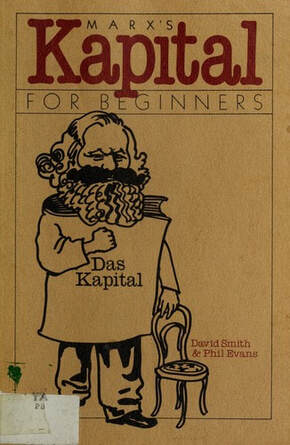 It is of no question that we as Communists should be studying history and theory as much as possible. Such regular study strengthens our ability not only to objectively analyze the conditions of capitalism in both a historical and contemporary context, it also gives us the tools, at least in most cases, to educate others and engage in principled and organized struggle. Some works, however, present an obstacle in building one’s understanding of class struggle, the inner-workings of capitalism, and similar concepts. One of the most commonly referenced books in regards to the sheer density and difficulty of the text is also one of the most important works for understanding capitalism; Marx’s Capital. The size of the text alone is enough to deter one from even attempting to read it, let alone the dense nature present in many of Marx’s works. Though we should still be encouraging people to read Marx, Engels, Lenin, Mao, Newton, Fanon, and other essential works, there are times where we must utilize works that aim to simplify the content of such figures so that the struggle against capitalism, white supremacy, imperialism, colonialism, and other reactionary tendencies can reach a broader audience. Written by David Smith and illustrated by Phil Evans, Marx’s Kapital for Beginners has proven to be of great significance in relieving the stress of attempting to understand the complexities of the fundamental text. Essentially a graphic and abridged version of Capital, Smith and Evans provide an easy to understand and lighthearted means of aiding those that have struggled with understanding what is considered by some to be Marx’s magnum opus. This work breaks down the vital foundations for understanding the mechanisms of capitalism; the accumulation of capital, wage-labor, surplus value, and other such vital concepts. Accompanied by illustrations both humorous and informative, broken down equations, and similar types of supplemental materials, Marx’s Kapital for Beginners explains easily and efficiently the intricate workings of Capital. For example, I personally had trouble understanding the M-C-M and C-M-C equations relating to commodities and money. Upon studying this book, however, I believe that I have gained a more firm grasp on the theory, albeit one that requires further studying of the text to truly crystallize my understanding of capital. This book serves as a great means of untangling Capital, however this it does have some issues. David Smith of the University of Kansas seems to contradict himself in his assessment of how to go about abolishing wage-labor and overthrowing the capitalist system. Smith expresses the benefits of worker’s democracy and cooperative control over the means of production and society itself. These cannot be denied by any means, but the ultimate contradiction in Smith’s presentation is that he simultaneously denounces at least in some form both the Soviet Union and socialist Cuba, while in a sense praising the Paris Commune and Rosa Luxemburg with an aura of fetishism. Mind you that the Paris Commune indeed is a great lesson in the need to establish a true proletarian government, and Rosa Luxemburg is indeed an admirable historical socialist figure with important works in her own right, but Smith’s application of this odd, pseudo-anti-authoritarianism is one of the more puzzling aspects of this book. The following images of these contradictions are subsequently laid out as such: Smith is in essence describing the practices and the fruits of the Russian and Cuban revolutions, respectively, elitist movements masked in socialist rhetoric, citing an Engels quote regarding French revolutionary Louis Blanqui and his approach to socialism. This analytical approach builds off of criticisms of Leninism made by Rosa Luxemburg before her death. As stated previously the importance of Luxemburg and the lessons of the Paris Commune cannot be understated, but Smith’s ahistorical analysis of the Soviet Union from Lenin to Stalin and socialist Cuba fails to take into account the mass support the workers held for the Soviet and Cuban governments, in addition to the mass participation in politics and socialist construction laid out in both Soviet and Cuban society. As seen in the book’s graphics, the cartoon workers are expressing a desire to take control of the means of production and establish a worker controlled government. Was such a task not undertaken by the Soviet Union under Lenin and Stalin? Has the Cuban revolution not upheld the desires of the workers, making numerous strides in socialist construction since the overthrow of the Batista regime? Smith even acknowledges the lesson that the Paris Commune presented, the need to overthrow the capitalist machinery as laid out by Marx in his critiques of the Commune. Is this not what Lenin expanded upon throughout State and Revolution? In his odd brand of anti-authoritarianism, Smith basically dismisses the entire structure of Lenin’s definition of the dictatorship of the proletariat, solely based on a perceived disdain for the idea of a dictatorship, at least from what can be inferred. Despite these flaws in their analysis of doing away with wage-labor and the mechanisms of capitalism, the significance of this abridged version of Capital cannot be undersold. Contradictions aside, Marx’s Kapital for Beginners provides a service of the utmost importance in making it easier for most if not all people to construct a more concrete analysis of capitalism and its inner-mechanisms. Should it serve as a replacement for reading the work that it seeks to simplify? Perhaps for some, though it should still be encouraged by all to read the original Capital. For those that are already versed in Marx’s lessons on the history and function of capitalism, or those that have studied more in-depth companions to Marx’s work such as David Harvey’s series “Reading Marx’s Capital,” Smith and Evan’s work can serve as an excellent and quick refresher. With an easy to understand presentation of Capital, accompanied by often humorous and clarifying visuals that provide further description and analysis of the societal, political, and economic functions of capitalism, Marx’s Kapital for Beginners wields a dual service in being an essential work for both the newest leftists and a supplemental work for the established Communists. Though the end of the book paints an odd picture regarding supposed authoritarianism and a misrepresentation of the lessons of the Paris Commune, this book from David Smith and Phil Evans nonetheless is significant in presenting the lessons of Capital in a more digestible fashion. AuthorJymee C is an aspiring Marxist historian and teacher with a BA in history from Utica College, hoping to begin working towards his Master's degree in the near future. He's been studying Marxism-Leninism for the past five years and uses his knowledge and understanding of theory to strengthen and expand his historical analyses. His primary interests regarding Marxism-Leninism and history include the Soviet Union, China, the DPRK, and the various struggles throughout US history among other subjects. He is currently conducting research for a book on the Korean War and US-DPRK relations. In addition, he is a 3rd Degree black belt in karate and runs the YouTube channel "Jymee" where he releases videos regarding history, theory, self-defense, and the occasional jump into comedy https://www.youtube.com/c/Jymee 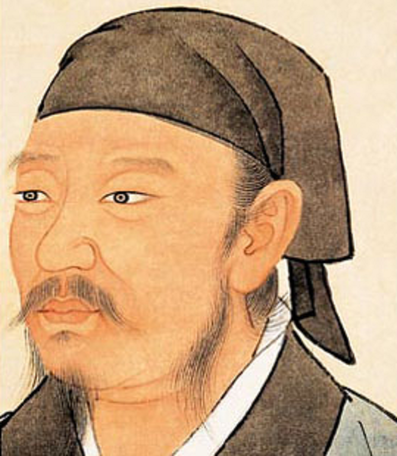 After a restful evening, Karl and Fred were together again in Karl’s study for an early morning discussion of the philosophy of Xunzi. “I see you have Chan’s text [Sourcebook in Chinese Philosophy] of The Xunzi open before you Fred. Are you ready to begin our discussion? Let's find out if his views are compatible with Marxism or, as they say: Socialism with Chinese Characteristics." “Ready and willing Karl.” “Well then, let's begin.” “What do you know about Xunzi?” “Only that he lived a couple of generations after Mencius. I remember that Mencius was born around 371 and died around 289 BC, while Xunzi lived from about 298 to 238 BC. I also know that he is usually considered the anti-Mencius because, as opposed to Mencius’ view that people are born naturally ‘good’, he said they are naturally ‘evil’. And I do remember reading in Chan that ancient Confucianism is seen as developing along two different roads leading away from Confucius himself. Namely, the Idealist School or Road of Mencius and the Naturalistic School or road of Xunzi. “What else do you remember?” “Let’s see. You better help me out.” “Ok. Chan remarks that 1. His philosophy was dominant over that of Mencius up until and throughout the Han period--206 BC to 220 AD. He is also said to have been partially responsible for the Qin Dynasty and the repressive dictatorship of the ‘First Emperor’. That must be the first ‘modern’ emperor as we have those olden time emperors the sages are always talking about. The Qin Dynasty was short lived--221-206 BC....” “Don’t forget we have Goodrich’s Short History here [L. Carrington Goodrich, A Short History of the Chinese People]. Qin unified China under the First Emperor (Qin Shi Huang). The first one to unify China into a large empire--a unification that has lasted until modern times. He was a real tyrant, and his empire was overthrown a few years after his death by the people who founded the Han Dynasty. He is, as I recall, best known to most people today as the emperor who had all those terracotta warriors made that are such a tourist attraction in modern day China. He also has an opera written about him named “The First Emperor.’” “That’s right Karl. And Chan says two of Xunzi’s students Han Fei and Li Si were ministers of Qin.” “I don’t see how Xunzi can be tarred with the brush of Qin totalitarianism. He died before the rise of the Qin to total control of China. Anyway, he was honored as the greatest Confucianist until the end of Han times and the Han would never have allowed him that status if they considered him as an ideological forerunner of their mortal enemies the Qin.” “That sounds right. But to continue. Chan points out that he was a native of Zhao one of the seven major states of ancient China and moved to Qi when he was fifty so he could hang out with other scholars. Later he went to Chu, served briefly as a magistrate, taught students, and then died there. He wrote his own book rather than relying on his students to make a compilation of his sayings. Chan writes that he ‘was contemporaneous with Mencius but there is no evidence that the two ever met.’” “Which is not too strange as by Chan’s own dates for these two Xunzi would have been nine years old when Mencius died!” “Chan has translated three of the most important chapters of the Xunzi which covers all the main points of Xunz’s philosophy. There are thirty-two chapters in the Xunzi, but these are the big one’s for philosophy. Ready?” “Ready!” “We begin with chapter seventeen, ‘On Nature.’ Xunzi says, ‘Nature (Tian, Heaven) operates with constant regularity.... Respond to it with peace and order, and good fortune will result. Respond to it with disorder, and disaster will follow.... If the Way is cultivated [followed?] without deviation then Nature cannot cause misfortune. Therefore flood and drought cannot cause a famine, extreme cold or heat cannot cause illness, and evil spiritual beings cannot cause misfortune. But if the foundations of living are neglected and used extravagantly. the Nature cannot make the country rich.’” “It is obvious that this is an advanced view for the times Fred. The laws of nature are invariable and if human beings learn them and work with them all will be well. Nature does not cause famines is a good example of this. We can figure out the cycles of Nature, knowing that droughts, etc., are common, that floods occur, etc., we make sure we plan on storing up food for the lean years. If we fail to take proper actions we will have a famine. It is not to be blamed on Nature but on our lack of foresight and knowledge.” “That makes sense, he continues saying famines, sickness, etc., ‘cannot be blamed on Heaven: this is how the Way works. Therefore one who understands the distinctive functions of Heaven and man may be called a perfect man.’ But you know, this sounds like ‘guns don’t kill people, people kill people.’” “It certainly does. I think Xunzi would agree with that. But note, since we know that people use guns to kill people and there are many irresponsible people, it would make sense to limit the gun supply. This would be knowing ‘the distinctive functions of Heaven and man.’” “Chan’s comment is interesting. ‘Xunzi’s concept of Heaven is obviously closer to the Dao of the Daoists than to the Tian (Heaven) of Confucius and Mencius. Their Tian is still purposive, and the source and ultimate control of man’s destiny, but Xunzi’s Tian is purely Nature so that in most cases the word has to be translated as Nature rather than as Heaven. The marvelous thing is that while he accepted the Daoists’ naturalistic view, he was not influenced by their intuitionism and mysticism. In Xunzi, we have rationalism and empiricism instead.’” "While there may be relics of ‘purpose’ in the Tian of Confucius and Mencius it is nothing like we would find Mozi. I think the position adopted by Xunzi is the culmination of tendencies already at work in Confucius and Mencius. This naturalistic way of thinking has simply become more completely manifest in Xunzi. His concept of Heaven is similar to Spinoza’s concept of God. Where Spinoza says ‘Deus siva Natura’, Xunzi says ‘Heaven or Nature’." “We see this naturalism pretty well in the next quote Karl. Xunzi says, ‘Each of the ten thousand things [idiom for ‘everything’] attains its harmony, and thus grows. Each obtains its nourishment and thus achieves full development.... The heart (mind) occupies the cavity in the center to control the five organs. This is called the natural ruler.... The sage purifies his natural ruler, rectifies his natural organs, sufficiently provides for his natural nourishment, follows the natural government, and nourishes his natural feelings so as to bring to completion the work of Nature. In this way he knows what to do and what not to do. Thus he rules heaven and earth and directs the ten thousand things.’” “Except for the usual ancient mix up of the heart and brain, this is well said: an appeal to the use of our reason to guide both our social life and our understanding of Nature.” “He then goes on to say, ‘Therefore great skill consists in not doing certain things, and great wisdom consists in not debating over certain things.’ He illustrates this by pointing out that we should study the stars and the earth and the four seasons, the yin and yang [positive and negative forces], etc., in order to discover the regularities of Heaven/Nature. And Chan adds, ‘Most ancient Confucianists either emphasized humanity (ren) and wisdom equally or stressed humanity. Xunzi, however, emphasizes wisdom. Obviously, inborn humanity has no room in his theory of the innate evil nature of man. As an acquired virtue, humanity is valued. But being a tough-minded realist, he relies on wisdom rather than such an idealistic quality in humanity.’” “Please note that he is not saying that there are no inborn qualities, what today would be called instincts, but that the Confucian idea of ren is not inborn. Specifically he is rejecting the Mencius’ notion of ‘The Four Beginnings’.” “Xunzi also sounds very modern when he proclaims that Heaven’s laws are not designed with humanity in mind. ‘Heaven does not give up winter because people dislike cold.’ And, ‘Heaven has a constant way of action, earth has a constant size, and the superior man has a constant personal demonstration of virtue. The superior man pursues the constant principle, but the inferior man calculates results.’ How does this jive with what you said in our Mencius discussion about Fletcher and situation ethics?” “What do you mean?” “I mean, does not the ‘constant principle’ put Xunzi in the Kantian camp. Wouldn’t he have to be for ‘calculating results’ if he was for situation ethics? So this seems to be another big difference between him and Mencius.” “Wait a minute Fred. I don’t want to concede this point. Let’s look a little more closely at this quote. I think it can be legitimately interpreted to show that Xunzi and Mencius are not really in disagreement.” “I’m all ears.” “Xunzi says what is constant is ‘personal demonstration of virtue’. This amounts to doing the right thing in every circumstance or situation. This is what he means by the ‘constant principle’. The non-philosopher ‘calculates results.’ I take this to mean that he looks for personal advantage and not necessarily what is the right thing to do. Morality is not something you just look up in a book or some iron clad rule [never have an abortion, never mislead someone, etc.] it does depend on results. So when Xunzi says the inferior man ‘calculates results’ he means how the ‘results’ relate to him personally or some plan of his that he wants to accomplish. It can’t mean that the philosopher does not also calculate results. He does. He calculates if his action furthers virtue or not.” “What about this then? ‘As to cultivating one’s will, to be earnest in one’s moral conduct, to be clear in one’s knowledge and deliberations, to live in this age but to set his mind on the ancients (as models), that depends on the person himself. Therefore the superior man is serious (jing) about what lies in himself and does not desire what comes from Heaven. The inferior man neglects what is in himself and desires what comes from Heaven.’ I would think Xunzi would say just the opposite. Heaven’s laws are constant or the same thing, Nature’s. We are part of Nature so we should follow what comes from Nature and just do it. This would be following the Way. The inferior man would try to get out of it and just do what he wants to do--what ‘lies in himself.’” “Hmmm! I see the difficulty, but I think there is an easy explanation of this seeming conundrum. Look back at the word ‘seriousness’ in the quote, the word ‘jing.’ If I remember correctly that word conjures up the idea of ‘effort’ of working hard at attaining something. This is the clue to Xunzi’s meaning. Heaven is neutral, remember, no ‘Four Beginnings’, so we have to work at cultivating virtue. What ‘lies in himself’ is the product of one’s education and struggle to attain virtue. For example, some knowledge of Chinese philosophy now lies within you Fred. This is because you are making efforts to learn about it. What lies in you is a desire to improve yourself and work hard to attain wisdom. The inferior man does not delve into his internal resources to make this effort. He just expects to attain what he wants out of life automatically without making much effort, without seriousness. This is what Xunzi means by saying the inferior man neglects what is in himself and just wants what comes from Heaven.” “Well, that makes sense but seems a little forced to me. But let’s proceed. Things will become clearer as we go along, I’m sure.” “Ok!”  “I think we are getting into his naturalism in these next quotes. ‘When stars fall or trees make a [strange] noise, all people in the state are afraid and ask, “Why?” I reply: There is no need to ask why. These are changes of heaven and earth, the transformation of yin and yang, and rare occurrences. It is all right to marvel at them, but wrong to fear them. For there has been no age that has not had the experience of eclipses of the sun and moon, unseasonable rain or wind or occasional appearance of strange stars.” “It is obvious Fred, that Xunzi doesn’t believe in portents and the like. There is no supernatural message to be conveyed by what happens in nature.” “And this reinforces his views, ‘When people pray for rain, it rains. Why? I say: There is no need to ask why. It is the same as when it rains when no one prays for it. When people try to save the sun or moon from being eclipsed, or when they pray for rain in a drought, or when they decide an important affair only after divination, they do so not because they believe they will get what they are after, but to use them as ornament (wen) to governmental measures. Hence the ruler intends them to be an ornament, but the common people think they are supernatural. It is good fortune to regard them as ornamental but it is evil fortune to regard them as supernatural.’” “Meaning that if you realize they are ornamental you are one of the educated people and have some idea as to how the world is actually constituted--otherwise you are hoi polloi and will be a manipulated fool for your whole life!” “That is a bit strong don’t you think?” “Not at all Fred. The common people have been manipulated by their rulers since the beginning of history by means of religion and other superstitious beliefs. Even today the government makes sure it has religious professionals on its staff in the armed forces to reinforce and bolster up the superstitious ideas of the soldiers and other cannon fodder it recruits. You see religion being encouraged everywhere. It’s a method for keeping people stupid and docile. Xunzi realizes that and simply explains it so his fellow Confucians will be free from its baneful influence, having as he says ‘good fortune.’ I needn’t tell you how stupid people can be manipulated by religion Fred, just look out of the window at our altered New York skyline after 9/11. “Well, Chan says about the same thing but he is not as vitriolic as you Karl. His comment is as follows, ‘The influence of supernatural forces over man is completely ruled out by Xunzi. What he called spirit is but cosmic change and evolution. To him, in religious sacrifice, whether there are really spiritual beings to receive them does not matter. The important thing is one’s attitude, especially sincerity, in the performance. The sacrifices are “ornaments,” or refined manifestation of an inner attitude.’” “I don’t know if that is really the ‘important thing’ i.e., a refined inner attitude. I don’t know what to make of that. I agree that attitude is important--the attitude of not really believing in the efficacy of the ceremonies. This is what Fung [A Short History of Chinese Philosophy] says in the passage, ‘We pray for rain, and divine before we make any important decision, because we want to express our anxiety. That is all. If we were to take prayer as really able to move the gods, or divination as being really able to make predictions about the future, this would result in superstition with all its consequences (p.150).’” “There is a problematic quote coming up which Chan says looks like it contradicts what has gone before.” “That is just great. There is nothing like an inconsistent opinion to knock over a nice tidy interpretation. Let’s hear it.” "'If propriety and righteousness are not applied in the country, then accomplishments and fame would not shine. Therefore the destiny of man lies in Heaven, and the destiny of the state lies in propriety.’” “I see. This looks like the inferior man is right after all--to want what comes from Heaven since that is where his destiny lies.” “So we do have a contradiction! “ “What does he say next? Maybe that will clear up this problem.” “He lists six questions he thinks we should consider. I think these two are the most germane. ‘Instead of regarding Heaven as great and admiring it, Why not foster it as a thing and regulate it? Instead of obeying Heaven and singing praise to it, why not control the Mandate of Heaven and use it?’” “This answers our question about a contradiction. Now I don’t see any. If we would view the rule of propriety to be the constitution of the state, then of course the destiny of the state lies in its constitution, in following its fundamental laws. In China these would be based on Confucian philosophy, so we see where Xunzi is coming from in this respect. Heaven or Nature also follows laws, what we think of as the ‘laws of nature.’ If we understand the laws of nature we can use them to enhance our lives, such as knowing how to control floods, have better agricultural yields, cure disease, etc. That is what he means by ‘the destiny of man lies in Heaven’, he means in the study of its laws, in what we call science. When he says the inferior man just relies on what comes from Heaven he means that kind of man does not see Nature as an object to study and manipulation but, as Spinoza said, prefers ‘to gape at it like a fool.’ When Xunzi said the philosopher cares about ‘what lies in himself and does not desire what comes from Heaven’ he means he doesn’t just wait around to see what happens in Nature. Again, as Spinoza said, he ‘desires as a wise man to understand Nature.’ He doesn’t just sit around and ‘desire’ Nature. He works at trying to understand and manipulate it.” “Yes, that must be the meaning for he goes on to say, ‘Therefore to neglect human effort and admire Heaven is to miss the nature of things.’ And Chan follows this up with the comment, ‘Nowhere else in the history of Chinese thought is the idea of controlling nature so definite and so strong. It is a pity that this did not lead to a development of natural science. One explanation is that although Xunzi enjoyed great prestige in the Han dynasty, his theory of overcoming nature was not strong enough to compete with the prevalent doctrine of harmony of man and nature, which both Confucianism and Taoism promoted.’” “I think we have solved this problem of a potential contradiction in the Xunzi.” “Now we have a quote which shows that situation ethics, which you used to explain some of Mencius’ views, won’t do at all with respect to Xunzi. Listen to this: ‘The [moral principles] that have remained unchanged through the time of all kings are sufficient to be the central thread running through the Way. Things come and go, but if they are responded to according to this central thread, one will find that the principle runs through all without any disorder. He who does not know this central thread does not know how to respond to changing conditions. The essential nature of the central thread has never ceased to be. Chaos is the result of a wrong application of the central thread, whereas order is the result of a complete application of it. For what is considered good according to the Way, namely, the Mean, should be followed.’” “I hope we can deal with a work called The Doctrine of the Mean later Fred, but even so I think this quote does not mean that Xunzi and Mencius are not reconcilable. I said Mencius was not an absolutist and you think this passage shows that Xunzi was, but it is more complicated than that.” “How so? Xunzi definitely speaks of unchanged moral principles--that sounds absolutist to me.” “I think ‘absolutist’ should be used to describe positions that consider both the moral position AND its application as unchanging. Xunzi says that there is a ‘central thread’ but also ‘changing conditions’ and that while the ‘essential nature of the central thread’ doesn’t change only the person who knows how to apply it in ‘changing conditions’ really understands it. Say for a Christian that practicing agape is the central thread. That would be the unchanging moral principle. Now take the idea of ‘abortion’. Is it right or wrong to have an abortion? The Christian thinker would have to look at the situation of the person involved. Following agape the Christian might recommend an abortion to person A and not to person B. The central thread and unchanging moral principal isn’t ‘abortions are bad’ or vice versa but what agape requires. This is situational and is exactly what both Mencius and Xunzi would advocate, except that ren (jen) is substituted for agape. In fact, I would maintain that stripped of the mythological shell that has congealed around its essential heart, Christianity boils down to ren and there is a dialectical identity with Confucianism.” “What!” “Confucianism and Christianity are an identity in difference. They are the same in the same way that ice and steam are the same. They appear different but are really the same. I mean in respect to a humanist morality, a Christianity such as Thomas Jefferson indicated without supernatural overtones added to it. “Well, that is a different conversation entirely Karl. But you have at least convinced me that Xunzi is no absolutist in the way I originally thought.” “That’s good.” “Maybe we will get to your great theory after we finish with Chinese philosophy, but now there is one more point to be made regarding this chapter from the Xunzi. Xunzi makes a lot of comments about other philosophers both of his own times as well as the past. I’m not going into specific criticisms, the point to be made is the following observation by Chan ‘that Xunzi was the most critical of ancient Chinese philosophers. [And] that a great variety of thought and extreme freedom of discussion existed in ancient China, a situation comparable to that in ancient Greece.’” “What is the next chapter in Chan’s translation?” “The next one is chapter twenty-two from the Xunzi, Chan’s selection 2, ‘On the Rectification of Names.’” “A major topic for the ancient Chinese. Please begin Fred.” “Xunzi has reference to the olden days of the sage-kings when he writes, ‘Then the people were carefully led and unified. Therefore, the practice of splitting terms and arbitrarily creating names to confuse correct names, thus causing much doubt in people’s minds and bringing about much litigation, was called great wickedness. It was a crime, like private manufacturing of credentials and measurements, and therefore the people dared not rely on strange terms created to confuse correct names. Hence the people were honest.’” “It looks as if this problem originally arose as a practical problem, a problem of the marketplace. Later, however, it became a more abstract philosophical problem of name rectification.” “I agree. Xunzi thinks that there are three issues involved here. He writes, ‘Should a true king appear, he would certainly retain some old names and create new ones. This being the case, [1] the reason for having names, [2] the causes for the similarities and differences in names, and [3] the fundamental principles on which names are instituted, must be clearly understood.’” “What is the reason he gives for having names?” “’ When different forms are separated from the mind and denote each other, and when different things are made mutually identified in name and actuality, the distinction between the noble and the humble is not clear and similarities and differences are not discriminated. Under such circumstances, there is bound to be danger that ideas will be misunderstood and work will encounter difficulty or be neglected. Therefore men of wisdom sought to establish distinctions and instituted names to indicate actualities, on the one hand clearly to distinguish the noble and the humble and, on the other, to discriminate between similarities and differences.’” “That sounds like a good reason Fred. How does he account for the similarities and differences of names?” “He says, ‘It is because of the natural organs. The organs of members of the same species with the same feelings perceive things in the same way. Therefore things are compared and those that are seemingly alike are generalized. ... The mind [actively] collects the knowledge of the senses. ...But the collection of knowledge must also depend on the natural organs first registering it according to its classification. If the five organs register it without knowing what it is, and the mind collects it without understanding it, then everyone says there is no knowledge. These are the causes for the similarities and differences in names.’” “This sounds just like Hume’s theory of the ‘Association of Ideas!’ It is really amazing how philosophical traditions parallel one another!” “What is this reference to Hume all about?” “Hume thought that ideas also naturally associated. They would sort of stick together and the world would appear to us. Hume used Resemblance, Contiguity (in space and/or time) and Cause and Effect. But this even goes back as far as Plato. He spoke of Contiguity and Similarity [Resemblance] in the Phaedo.” “Well, based on this Karl, we come to the third point Xunzi wanted to make. He continues, right after the last quote I read, ‘Then, accordingly, names are given to things. Similar things are given the same name and different things are given different names.’ But it is very important to note the following: ‘Names have no correctness on their own. The correctness is given by convention. When the convention is established and the custom is formed, they are called correct names. If they are contrary to convention, they are called incorrect names. Names have no corresponding actualities by themselves. The actualities ascribed to them are given by convention. When the convention is established and the custom is formed, they are called the names of such-and-such actualities.’” “And yet, Fred, these conventions are not just arbitrary. If the conventions don’t somehow correspond to reality then names won’t be of much help!” “Xunzi next criticizes the ‘School of Names’--i.e., the so-called ‘Logicians.’ There are three big fallacies he wants to expose. So he begins. ‘”It is no disgrace to be insulted.” “The sage does not love himself.” “To kill a robber is not to kill a man.” These are examples of the fallacy of so using names as to confuse names.’ “Mountains are on the same level as marshes. “The desires seek to be few.” “Tender meat adds nothing to sweet taste, and the great bell adds nothing to music.” These are examples of the fallacy of so using actualities as to confuse names.’ And now this most famous example from the School of Names “’A [white] horse is not a horse.’ “Which he says is an example of the fallacy of so using names as to confuse actualities.’ And finally, the chapter ends with Chan’s comment about all this: ‘The rectification of names was a common topic of discussion among ancient Chinese philosophical schools. Only in Xunzi, however, did it develop into some sort of systematic logical theory.... In fact, this is the nearest approach to logic in Ancient Chinese philosophy.’” “Very informative indeed, Fred. So this brings us to the last excerpt from Chan, doesn’t it?”  “That’s right Karl. Chan’s ‘3. The Nature of Man is Evil’ from chapter 23 of the Xunzi.’ “OK, let’s get on with it. What are Xunzi’s reasons for taking this diametrically opposed view to Mencius?” “He says, ‘The nature of man is evil: his goodness is the result of his activity. Now, man’s inborn nature is to seek for gain.... By inborn nature one is envious and hates others.... If these tendencies are followed, lewdness and licentiousness result, and the pattern and order of propriety and righteousness disappear. Therefore to follow man’s nature and his feelings will inevitably result in strife and rapacity, combine with rebellion and disorder, and end in violence. Therefore there must be the civilizing influence of teachers and laws and the guidance of propriety and righteousness, and then it will result in deference and compliance, combine with pattern and order, and end in discipline. From this point of view, it is clear that the nature of man is evil and that his goodness is the result of his activity.’ And, he adds, ‘Crooked wood must be heated and bent before it becomes straight.’” “So much for the ‘Four Beginnings!’ But this is only an assertion, just as in Mencius. Neither Xunzi nor Mencius give any real arguments. Except that Mencius does give some examples such as preventing the child from falling into the well.” “Chan points to another big difference as well. ‘In the Xunzi, rules of propriety and law are often spoken of together, giving the impression that, unlike Confucius and Mencius who advocated propriety (li) as inner control, Xunzi advocated it for external control. Thus rules of propriety shifted from being a means of personal moral cultivation to one of social control.’” “Chan should have re-thought that one Fred. Propriety doesn’t just pop up in a person. These rules are culture specific and learned as we grow up. They are the result of the crooked wood being made straight. One of the ways that social control takes place is by having accepted rules of inner moral cultivation recognized as appropriate--i.e., this is what constitutes propriety.” “I suppose you are right Karl. Now here is a frontal assault on Mencius! ‘Mencius said, “Man learns because his nature is good.” This is not true. He did not know the nature of man and did not understand the distinction between man’s nature and his effort. Man’s nature is the product of Nature; it cannot be learned and cannot be worked for. Propriety and righteousness are produced by the sage. They can be learned by men and can be accomplished through work. What is in man but cannot be learned or worked for is his nature. What is in him and can be learned and accomplished through work is what can be achieved through activity. This is the difference between human nature and human activity.” “I see the distinction Xunzi is trying to make, Fred, but I’m not sure this is really so different from Mencius! The Four Beginnings are, after all, potentialities that have to be cultivated by education. The seed has to be in the right soil.” “Maybe this will make Xunzi’s position clearer. In this passage he further contrasts Mencius’ views with his own. ‘By the original goodness of human nature is meant that man does not depart from his primitive character but makes it beautiful and does not depart from his original capacity but utilizes it, so that beauty being [inherent] in his primitive character and goodness being [inherent] in his will are like clear vision being inherent in the eye and distinct hearing being inherent in the ear. Hence we say that the eye is clear and the ear is sharp.’ “ “So the question is, is this idea of Mencius true or not. Left to his or her own devices a normal baby will grow up with “good” sight and “good” hearing. That is to say, normal senses. They won’t need any special training just to work and do their function. Xunzi seems to think that Mencius’ view is that a baby will grow up morally ‘good’ as well because this kind of ‘goodness’, like the ability to see clearly, is just part of our ‘nature.’ But this is not a good analogy Fred. If you go back and look on page 66 of Chan you will find that Mencius says that when the Four Beginnings are properly developed they will work to protect you in life but if they are not developed they won’t.” Fred flipped back some pages in Chan’s book. “Here is the quote, Karl. I’ll read it. ‘When they are fully developed, they will be sufficient to protect all people within the four seas (the world). If they are not developed, they will not be sufficient even to serve one’s parents.’” “So you see the Four Beginnings are not like clear vision and sharp hearing. They have to be developed by outside means which can only be a Confucian educational program in the last analysis.” “I am forced to agree, Karl. But now let Xunzi continue with his notion of ‘nature’ as he wants to contrast his own opinion to that of Mencius. ‘Now by nature man desires repletion when hungry, desires warmth when cold, and desires rest when tired. This is man’s natural feeling. But now when a man is hungry and sees some elders before him, he does not eat ahead of them but yields to them. When he is tired, he dares not seek rest because he wants to take over the work [of elders].... Deference and compliance are opposed to his natural feelings. From this point of view, it is clear that man’s nature is evil and that his goodness is the result of his activity.’” “It is getting more complicated. Perhaps the word ‘raw’ should be substituted for ‘evil.’ Man’s raw uncultivated nature is egocentric and needs to be socialized. But this isn’t evil, it’s natural. I am surprised that Xunzi, who is otherwise, a naturalist, is still animating Nature with a human moral concept! It is clear that by ‘activity’ he means education. So the practical result of either his view or that of Mencius is that without education we are not going to get deference and compliance. The real question is, is education helped out, given a boost as it were, by something innate such as the Four Beginnings or Four Seeds, or however you want to translate this conception.” “We will have to go more deeply into Xunzi’s thought to determine this Karl. I think he was aware of your kind of comment and has an answer to it.” “OK then. Let’s hear some more of the Xunzi.” “'Someone may ask, “If man’s nature is evil, whence come propriety and righteousness? “I answer that all propriety and righteousness are results of activities of sages and not originally produced from man’s nature.’” “And how did that come about?” “He explains how that came about. ‘The sages gathered together their ideas and thoughts and became familiar with activity, facts and principles, and thus produced propriety and righteousness and instituted laws and systems.’ He goes on to point out the pleasures of the senses ‘are natural reactions to stimuli and do not require any work to be produced. But if the reaction is not naturally produced by the stimulus but requires work before it can be produced, then it is the result of activity. Here lies the evidence of the difference between what is produced by man’s nature and what is produced by his effort. Therefore the sages transformed man’s nature and aroused him to activity.’” “I can see problems with this view Fred.” “Just hold your horses. Xunzi is going to give what he considers some evidence for his view. He thinks loving gain and profit is natural and talks about what would naturally happen if brothers have to divide up some property. ‘If they follow their natural feelings, they will love profit and seek gain, and thus will do violence to each other and grab the property. But if they are transformed by the civilizing influence of the pattern and order of propriety and righteousness, they will even yield to outsiders. Therefore, brothers will quarrel if they follow their original nature and feeling but, if they are transformed by righteousness and propriety, they will yield to outsiders.’” “Are you done?” “Not yet! I want to hammer this home as I think Xunzi is onto something here. He says, ‘Now by nature a man does not originally possess propriety and righteousness; hence he makes strong effort to learn and seeks to have them. By nature he does not know propriety and righteousness; hence he thinks and deliberates and seeks to know them. Therefore, by what is inborn alone, man will not have or know propriety and righteousness. There will be disorder if man is without propriety and righteousness. There will be violence if he does not know propriety and righteousness. Consequently, by what is inborn alone, disorder and violence are within man himself.’” “Well, correct me, but didn’t Mencius only propose with his ‘Four Beginnings’ that the basis or potential for propriety and righteousness was inborn? He didn’t say propriety and righteousness were inborn. They are the result of education, which if neglected will lead to the greedy brothers Xunzi speaks of.” “Xunzi obviously thinks Mencius had a stronger position, but I think you are right, at least from what we read in our Mencius discussion. Nevertheless, I want to continue with Xunzi’s thought. I think you will discover that he anticipates your objection about the status of the Four Beginnings as mere potentialities.” “So then, let us proceed!” “He says, ‘Man’s nature is evil. Therefore the sages of antiquity, knowing that man’s nature is evil, that it is unbalanced and incorrect, that it is violent, disorderly, and undisciplined, established the authority of rulers to govern the people, set forth clearly propriety and righteousness to transform them, instituted laws and governmental measures to rule them, and made punishment severe to restrain them, so that all will result in good order and be in accord with goodness.” “How nice. The Hobbesian rabble are running about unrestrained in a state of nature giving vent to their true inborn natures until they are domesticated by the sages. Only how did sages develop? How did they overcome their Hobbesian natures and arrive at propriety and righteousness? Who broke the natural order and taught them?” “Before that can be answered, Xunzi’s position must be further developed. ‘In any discussion, the important things are discrimination and evidence. One can then sit down and talk about things, propagate them, and put them into practice. Now Mencius said that man’s nature is good. He had neither discrimination nor evidence. He sat down and talked about the matter but rose and could neither propagate it nor put it into practice. Is this not going too far? Therefore if man’s nature is good, sage-kings can be done away with and propriety and righteousness can be stopped.’ And he goes on again about how bent wood has to be made straight while straight wood is naturally so.” “These facile analogies go both ways. The bent wood could not be made straight if being straight was not potentially in it. Anyway, Xunzi may have been correct about the propagation of Mencius’ view in his day, but as history developed Mencius’ view trumped the view of Xunzi. This is not an argument in favor of the truth of a view. Aristarchus of Samos developed what later became the Copernican view of the heliocentric solar system back in the Ancient World, but he could not propagate it and Ptolemy’s geocentric view won out until the time of the scientific revolution in the Seventeenth Century. Mencius did have evidence. Just remember the example of the child about to fall in the well--the most famous--and he gave other examples as well. So I don’t think this passage from Xunzi holds water.” “Now you will see Karl, that Xunzi was aware of your type of critique, but did not accept it. He says, ‘The questioner may say, “It is by the nature of man that propriety and righteousness [can be produced] through accumulated effort and hence the sages can produce them.” I answer that this is not true. The potter pounds the clay and produces the pottery. Is the pottery [inherent] in the nature of the potter?... What the sages have done to propriety and righteousness is analogous to the potter’s pounding and producing the pottery.... With reference to the nature of man .... It is the same in the superior or inferior man.... As effort is aroused, propriety and righteousness are produced. Thus the relation between the sages and propriety and righteousness produced through accumulated effort, is like the potter pounding the clay to produce the pottery. From this point of view, is it by the nature of man that propriety and righteousness are produced through accumulated effort...? [Inferior men] are despised because they give reign to their nature, follow their feelings, and enjoy indulgence, and lead to the greed for gain, to quarrels and rapacity. It is clear that man’s nature is evil and that his goodness is the result of his activity.’” “The problem with Xunzi’s position here is that it cannot explain how the sages originally got going. If the nature of man is evil, then all humans would be evil and self-indulgent, and no one would be putting out any accumulated effort to develop propriety and righteousness. We would still be running around like animals. Mencius’ position, however, allows for the show to get on the road. If the Four Beginnings are there waiting to be developed, then we can have a primal horde running about, splitting up into other hordes and the individuals finding themselves in all sorts of different existential situations some of which begin to trigger the Four Beginnings which by accumulated effort lead to being a sage and promulgating propriety and righteousness. But I can’t see how this can come about without the Four Beginnings in the first place. They have to be there as Mencius indicates in potential, so Xunzi is just wrong about this. The Four Beginnings must be accepted as a logical prerequisite to get the Confucian system started.” “With regard to what you have just said Karl, listen to Xunzi’s explication of the following old saying.” ‘Any man in the street can become (sage-king) Yu.’ What does this ancient saying mean? I say that Yu became sage-king Yu because he practiced humanity, righteousness, laws, and correct principles. This shows that these can be known and practiced. Every man in the street possesses the faculty to know them and the capacity to practice them. This being the case, it is clear that every man can be Yu.’” “Well, there you have it. The Four Beginnings are just the faculty that we have to practice the ‘good.’ I will grant this to Xunzi. That while he is wrong to say the nature of man is evil, Mencius is also wrong to say that the nature of man is good. They should have both said that man has a nature that has the capacity to be good or evil depending on the circumstances. Listen to these observations from Aristotle in the Nicomachean Ethics. He says, ‘Virtue, then, is of two kinds, of thought and of character--of thought comes through experience and time and is the result of teaching, while virtue of character is the result of habit. Clearly, therefore, by nature, we get none of the virtues of character [1103a15]. The virtues do not arise in us either thru nature or contrary to nature. But we can by nature attain them and achieve complete perfection by means of habit [1103a25].’ And Aristotle also holds that what is by nature cannot be overcome by habit so that if people were either good or evil by nature nothing could make them different from what they are. Habit can be inculcated by education. So, this dispute on the nature of humans between Mencius and Xunzi is a non-issue. Neither of our sages has the right answer. We have the capacity to be either ‘good’ or ‘evil’-- which are social determinations anyway (for the most part). But they are both right as they believe that it takes (Confucian) education to bring about the ‘good’. Their positions are really the same and their so-called dispute is just one of words and not actualities. I think, therefore, we can keep the expression the ‘Four Beginnings’ in our philosophical terminology, but not in the sense that it implies man is ‘innately good’.” “I can’t disagree with you Karl. I think you have hit the nail on the head! Just a few more quotes from Xunzi, now, to answer the question that if everyone can become a sage why don’t they do so. Xunzi’s reply is, ‘An inferior man can become a superior man, but he does not want to. A superior man can become an inferior man, but he does not want to. It is not that they cannot become each other. They do not do so because they do not want to. It is possible for every man to become Yu, but it does not follow that every man in the street is able actually to do so. However, the fact that he is not able actually to do so does not destroy the possibility of his doing so.’” “I don’t think this is wrong, and it does not contradict my views at all. It is all of a piece with Mencius’ view that every man can be like Yao and Shun, also sage-kings from the past.” “Finally, Xunzi concludes, ‘There is a great difference between what is possible on the one hand, and what is actually able to be done on the other.’” "I think Xunzi would also be fine with both Marxism and Confucianism as both agree that it is through education that right and wrong are learned and class consciousness (education through struggle and practice) develops. Activity is required for both. They have some terminological problems, but in the end, they don’t really have any antagonistic contradictions. This applies to Mencius as well." AuthorThomas Riggins is a retired philosophy teacher (NYU, The New School of Social Research, among others) who received a PhD from the CUNY Graduate Center (1983). He has been active in the civil rights and peace movements since the 1960s when he was chairman of the Young People's Socialist League at Florida State University and also worked for CORE in voter registration in north Florida (Leon County). He has written for many online publications such as People's World and Political Affairs where he was an associate editor. He also served on the board of the Bertrand Russell Society and was president of the Corliss Lamont chapter in New York City of the American Humanist Association.  A Dialogue on Chinese PhilosophyAs China continues to develop into a superpower a knowledge of its form of Marxism becomes imperative for Western progressives. The progressive movement cannot allow itself to be misdirected in an anti-Chinese direction by reactionary forces in the West. In order to understand Chinese Marxism fully it is important to be familiar with traditional Chinese philosophy, many elements of which reappear in Marxist guise in today’s China. After Confucius the most influential philosopher in Chinese history was Mencius. “Well, Fred, I see you have the Chan book [Source Book In Chinese Philosophy]. Are you ready to begin our study of Mencius?” “Yes I am Karl. But first, why don’t you see what you can remember about the background to the life and times of Mencius?” “As I recall, he lived around the same time that Plato was active in Ancient Greece. What dates does the book give for him?” “Around 371 to 289 BC.” “Well Plato was around 447 to 327 BC.” “Mencius was contemporary with Zhuanzi (Zhuang Zhou, 369-286 B.C.) and Xunzi (Xun Kuang, c. 319-235 BC) but it is unlikely they had any personal contact.” [The -zi suffix means “master” so Master Zhuang, Master Xun an honorific for “teacher”). “I don’t know about them, maybe we can discuss them later. Anyway I remember that Mencius’ claim to fame was his doctrine that human nature is innately good. Also that he studied under Confucius’ grandson, or under someone who had, thus unlike Confucius he had a teacher. He is also considered the second greatest Chinese philosopher after Confucius himself. I read Fung last night [Fung Yu-Lan,(modern, Feng Youlan) A Short History of Chinese Philosophy] and he said Mencius was a native of Zou in East China--modern Shantung. He also says that Mencius represents the idealist wing of Confucianism as opposed to the upcoming Xunzi who was a realist. Mencius is so important that his book, the Mencius as we will call it, was studied for the civil service exams which on and off throughout Chinese history almost everyone who wanted a government position had to take. The only philosophers as such who were so honored were he and Confucius. His life was also like Confucius’ in that he never got that big government job and he wandered about China just as Confucius had collecting a following of disciples. He retired and wrote his book. It became one of the Four Books, as I indicated, which everyone had to study for the ancient civil service tests. “The ‘Four Books’?” “The ones used for the tests. The Analects, of course, the Mencius, the Great Learning and the Doctrine of the Mean.” “A pretty good little introduction Karl. Now let’s look at his philosophy. I’m just going to use the headings from Chan who reproduces Book Six, Part I of the Mencius. He says this is the most important part of the book but he will quote other portions in a section of ‘Additions’. In this selection Mencius’ foil appears to be a philosopher called Gaozi who holds opposite opinions to Mencius. In 6A:2 Mencius declares ‘Man’s nature is naturally good just as water naturally flows downward.’ He doesn’t give any argument here. He is just contradicting Gaozi who said man’s nature can be good or bad just as water can flow east or west.” “I think we need to get to an argument. What is next?” “Next, Gaozi says that what we refer to as ‘inborn’ is the same as ‘nature.’ Mencius wants to contest everything Gao says it seems for we get the following exchange beginning with Mencius: ‘When you say that what is inborn is called nature, is that like saying that white is white?’ ‘Yes.’ ‘Then is the whiteness of the white feather the same as the whiteness of snow? Or again, is the whiteness of snow the same as the whiteness of white jade?’ ‘Yes.” ‘Then is the nature of a dog the same as the nature of an ox, and is the nature of an ox the same as the nature of a man?” “That is a very bad argument. Mencius has to go take a Logic course! ‘White’ is being used as an adjective and ‘nature’ as a substantive. I feel sorry for Gaozi. I wonder how he would have fared if he composed a book?” “Now in 6A4 Mencius and Gao have another exchange.” “Let’s hear it. I hope the logic is a little better!” “This time Gao maintains that ‘humanity’ is internal and ‘righteousness’ is external. Nature versus Nurture. He says that the pleasant feeling of love for the younger brother comes from within (humanity) but the respect for an old person is due to the person’s age (without/external). But Mencius says that we love roast beef if it’s our own or another's so would Gao say the love of roast beef is ‘external?’” This is supposed to take care of Gao’s position.” “A very bad example. It might have been better if Mencius had said ‘food’ instead of roast beef since we love and need food regardless of where it comes from but ‘roast beef’ is an external culturally determined food--I doubt that Buddha would have loved it! In any event I don’t think Gao is refuted by any of these musings of Mencius.” “Well, here is another bad argument. This time Meng Jizi asked Gongduzi ‘What does it mean to say that righteousness is internal?” and he gets the reply ‘We practice reverence, and therefore it is called internal.’ Not a very helpful answer if you ask me Karl. Meng Jizi now gives a lot of examples of ‘reverence’ all of which seem influenced by the context one finds oneself in so that one has to know what the external circumstances are before one can show the proper kind of ‘reverence.’ Gongduzi gets all confused and runs off to Mencius who gives him some examples which actually seem to confirm Meng Ji’s views in that they are also contextual in nature. Gongdu gets the point, even if we don't, and goes back to Meng Ji with this crushing reply: ‘In the winter we drink things hot. In the summer we drink things cold. Does it mean that what determines eating and drinking also lies outside?’” “I see what you mean Fred. We would say to Gongdu, ‘of course it is--you just said its determined by winter or summer and that means by what is ‘outside’. The reasoning so far in this chapter is terrible. I hope it gets better or I won’t understand how Mencius got the reputation as a ‘sage’." “6A:6 Maybe this is a little better Karl. Gongduzi is speaking to Mencius: ‘Gaozi said that man’s nature is neither good nor evil. Some say that man’s nature may be made good or evil, therefore when King Wen and King Wu were in power [founders of the Zhou Dynasty r. 1171-1122 and 1121-1116 B.C.] the people loved virtue, and when Kings You and Li were in power [bad kings r. 781-771 and 878-842 B.C.] people loved violence. Some say some men’s nature is good and some men’s nature is evil. Therefore even under (sage emperor) Yao [3rd millennium B.C.] there was evil man Xiang [who daily plotted to kill his brother], and even with a bad father there was [a most filial] Shun (Xiang’s brother who succeeded Yao), and even with (wicked king) Zhou [last Shang Dynasty ruler 1175-1112 B.C.] as uncle and ruler, there were Viscount Qi of Wei and Prince Began [good guys]. Now you say that human nature is good. Then are those people wrong?’” “I hope Mencius is convincing as most people today would think Gaozi was on the money!” “Well, Mencius said ‘If you let people follow their feelings (original nature), they will be able to do good. This is what is meant by saying that human nature is good. If man does evil, it is not the fault of his natural endowment.... Humanity, righteousness, propriety, and wisdom are not drilled into us from outside. Only we do not think [to find them]! Therefore, it is said, ''Seek and you will find it, neglect and you will lose it.''' He thinks that different people develop their original natures more than others as ‘no one can develop his original endowment to the fullest extent.’ He then quotes the Book of Odes, ‘Heaven produces the teeming multitude. As there are things there are their specific principles. When the people keep their normal nature they will love excellent virtue.’ He also quotes Confucius to the same effect.’ Now before you say anything Karl, I want to also read you what Chan says about this passage. 'Mencius is the most important philosopher on the question of human nature, for he is the father of the theory of the original goodness of human nature. In spite of variations and modifications, this has remained the firm belief of the Chinese.’ And he adds that ‘evil or failure is not original but due to the underdevelopment of one's original endowment. Later Confucianists, especially Neo-Confucianists, devoted much of their deliberations to these subjects, but they have never deviated from the general direction laid down by Mencius.’” “I’m still unimpressed Karl. Mencius is not arguing for his position he is simply declaiming his position. Look here for a moment.” Karl got up and pulled down a volume from his bookcase. “This is a classic study of Chinese thought by Herrlee G. Creel, Chinese Thought From Confucius to Mao Tse-Tung. I want to read a couple of passages on what you might call Mencius’ ‘technique’ if you don’t mind.” “Sure Karl, go ahead all of this is interesting to me.” “Here are a couple of quotes from pages 75 and 74: ‘The discussions of Confucius with his disciples were conducted in a relatively calm atmosphere and were devoted, at least in considerable part, to an attempt to arrive at and to examine the truth. [That is the Prime Directive again Fred!] The discussions of Mencius, on the other hand, are largely taken up with the enterprise of defending and propagating the true doctrine, which is of course another thing entirely.’ He also notes that ‘Mencius was usually more interested in winning the argument than in trying to find the truth. Not that he cared nothing for the truth but that he was convinced that he had it already, and needed only to persuade his opponent of that fact.’” “But you say he isn’t doing anything but disclaiming not giving arguments.” “True, but some arguments are coming up I’m sure. He just hasn’t made any yet. I think Creel’s observations will be borne out the farther we progress into the text.” “The following may be more like an argument Karl. 6A:7--’Although there may be a difference between the different stalks of wheat, it is due to differences in the soil, as rich or poor, to the unequal nourishment obtained from the rain and the dew, and to differences in human effort. Therefore all things of the same kind are similar to one another. Why should there be any doubt about men? The sage and I are the same in kind. Therefore Longzi [an ancient worthy] said, “If a man makes shoes without knowing the size of people’s feet, I know that he will at least not make them to be like baskets.” Mencius then says that the whole world [all men] agree with Yi Ya [ancient chef] with regard to flavor, Kuang [ancient musician] with regard to music and that Zidu [ancient handsome man] was handsome. He concludes, 'Therefore I say there is a common taste for flavor in our mouths, a common sense for sound in our ears, and a common sense for beauty in our eyes. Can it be that it is in our minds alone we are not alike? What is it that we have in common in our minds? It is the sense of principles and righteousness (i-li, moral principles). The sage is the first to possess what is common in our minds. Therefore moral principles please our minds as beef and mutton and pork please our mouths.’” “Well I can tell you right off that these are very bad examples for modern people to mull over. Nothing is more relative than taste in food, music and concepts of beauty. Mencius is just taking Chinese standards as universal. This may perhaps be forgiven for someone living well over two thousand years ago except that there were people in his age, as we shall see, who were very much more advanced in their thinking. His analogy of the stalks is a bit better but only goes to show that humans may have a common nature before environmental factors come into play. It does not give any evidence that that common nature is ‘originally good.’" “I agree with you completely Karl, but now I’ll read you Chan’s comment on that very same passage. ‘In saying that one is of the same kind as the sage, Mencius was pronouncing two principles of utmost significance. One is that every person can be perfect, and the other is that all people are basically equal. Also, in pointing to the moral principle which is common in our minds, he is pointing to what amounts to the Natural Law. Belief in the Natural Law has been persistent in Chinese history. It is called Principle of Nature (T’ien-li) by Neo-Confucianists. It is essentially the same as Mencius’ i-li.’” “But Mencius has not established that there is any common moral principle in our minds. He has only made a lot of assertions of his opinions but these opinions have not been grounded in anything like a philosophical demonstration. One may speak of T’ien-li as the Law of Nature with regard to the physical universe that we are a part of, and of the human mental and cognitive apparatus as a part of it as well, but this should not be confused with i-li, that is to say, with principle and righteousness. I think we will have to wait until we come to the Neo-Confucianists to see if they really do, as Chan asserts, confuse moral principles with physical principles. It may be that some do and some don’t.” “Here is 6A:8, ‘Mencius said, “The trees of the Ox Mountain were once beautiful.... When people see that it is so bald, they think there was never any timber on the mountain. Is this the true nature of the mountain?.... People see that [a certain man] acts like an animal, and think that he never had the original endowment (for goodness). But is that his true character? Therefore with proper nourishment and care, everything grows, whereas without proper nourishment and care, everything decays.”’ “This is fine Fred. He is simply saying environmental conditions are responsible for how things appear. That an original X can end up not-X due to the environment. But it proves nothing with respect to his main thesis about humanity.” “Well what about this in 6A:10, ‘I like life and I also like righteousness. If I cannot have both of them, I shall give up life and choose righteousness. I love life, but there is something I love more than life, and therefore I will not do anything improper to have it. I also hate death, but there is something I hate more than death, and therefore there are occasions when I will not avoid danger.... There are cases when a man does not take the course even if by taking it he can preserve his life, and he does not do anything even if by doing it he can avoid danger. Therefore there is something men love more than life and there is something men hate more than death. It is not only the worthies alone who have this moral sense. All men have it, but only the worthies have been able to preserve it.’” “He has only established that the worthies have it. They may have gotten it by the study of philosophy. He has given no evidence that all men have it and just lost it. So far Creel is right. Mencius is just trying to convince us without any real evidence and discussion. It's as Creel said, he is convinced of his brand of truth and just keeps repeating it over and over. He is a far cry from the methods of Confucius!” “6A:15, ‘The function of the mind is to think. If we think, we will get them (the principles of things). If we do not think, we will not get them. This is what Heaven has given to us. If we first build up the nobler part of our nature, then the inferior part cannot overcome it. It is simply this that makes a man great'.” “Most interesting. Now he says we have 'superior' and 'inferior' parts to our nature. This is somewhat different from saying our (original) nature is 'good.' Now it appears as mixed and it is up to us to develop the right part. This is, of course, dependent on our environmental circumstances-- for which a Confucian government is responsible. This appears to me to be more realistic that the notion that our original nature is good--for which Mencius has so far provided no evidence. Indeed this passage seems to contradict it!” “That is because he is so unsystematic Karl. Chen says this passage has a great influence on later Neo-Confucianists. He says, ‘that the idea of building up the nobler part of our nature became an important tenet in the moral philosophy of Lu Jiuyuan 1139-1193), leader of the idealistic school of Neo-Confucianism.’” “Next!” “6A:16, ‘The ancient people cultivated the nobility of Heaven, and the nobility of man naturally came to them. People today cultivate the nobility of Heaven in order to seek for the nobility of man, and once they have obtained the nobility of man, they forsake the nobility of Heaven. Therefore their delusion is extreme. At the end they will surely lose (the nobility of man) also.’” “Does he say what this ‘nobility’ of Heaven is?” “Yes, he says it consists of, ‘Humanity, righteousness, loyalty, faithfulness, and the love of the good without getting tired of it....’” “And of man?” “He says it's ‘to be a grand official, a great official, and a high official....’” “Ok, I’ve found Fung’s comment on this on page 77 of his book [A Short History of Chinese Philosophy]. Shall I read it to you?” “Go ahead.” “’According to Mencius and his school of Confucianism, the universe is essentially a moral universe. The moral principles of man are also metaphysical principles of the universe, and the nature of man is an exemplification of these principles. It is this moral universe that Mencius and his school mean when they speak of Heaven, and an understanding of this moral universe is what Mencius calls “knowing heaven.”’ And then Fung explains the meaning of that quote which you just gave Fred. He says it means that, ‘heavenly honors [the nobility of Heaven] are those to which a man can attain in the world of values, while human honors [the nobility of man] are purely material concepts in the human world. The citizen of Heaven...cares only for the honors of Heaven, but not those of man.’” Does that remind you of anything?” “Plato?” "Yes indeed.” Karl pulled down a copy of The Republic. “This is a quote from the end of Republic IX in Reeve’s revision of Grube published by Hackett. Plato has just finished describing the best possible state based on justice and the Good but grants that it is too ideal, perhaps, to ever be seen on earth, yet he has Socrates say there might be ‘a model of it in heaven, for anyone who wants to look at it and to make himself its citizen on the strength of what he sees. It makes no difference whether it is or ever will be somewhere, for he would take part in the practical affairs of that city and no other.’ This is also similar to Augustine’s City of God. You know, the city of man, Rome, and then Heaven to which our real loyalties must ultimately be given. In so far as Mencius’ ‘sage’ or philosopher identifies with heaven rather than with man he and Plato are in agreement.” “But how would that work Karl? How could we live in the 21st Century US of A and live by these Confucian or Platonic principles?” “It would work like this Fred. I’ll use Plato as an example. Suppose you accepted Socrates’ argument for equality of the sexes. Now, if you live in a country which has sexual discrimination you will support measures for equality and your reason will be--in Plato’s republic equality is advocated and since I’m going to support his philosophy I’ll make my political, social, cultural decisions down here on earth according to the laws of the ideal republic. I may never get all the laws and customs of my country to be similar to that republic but the more they become that way the more like the republic will my actual country become.” “So we have a Confucian model like a Platonic one if we are Confucians and we live according to the model, as best we can, and only really support the actual customs and conditions of our society in so far as they conform to our model.” “That’s right Fred. The real crux is your qualifier ‘as best we can.’ How much will we compromise to safeguard our own personal interests, how committed are we to our beliefs, how much risk will we take in coming into conflict with the status quo? The answers to these questions define the hypocrite and the sage.” “In 6A:17 Mencius says, ‘...all men have within themselves what is really honorable. Only they do not think of it. The honor conferred by men is not true honor. Whoever is made honorable by Zhao Meng [high official in Chin] can be made humble by him again. The Book of Odes says, “I am drunk with wine, and I am satiated with virtue.” It means that a man is satiated with humanity and righteousness, and therefore he does not wish for the flavor of fat meat and fine millet of men. “ “In his own way, I think Mencius is saying something like the quote from the Republic I gave. I think his words are just another way of saying what I just said before.” “Here is 6A:19--’Mencius said, “The five kinds of grain are considered good plants, but if they are not ripe, they are worse than poor grains. So the value of humanity depends on its being brought to maturity.”’ “This little saying is, of course, dependent on his still unproved assumption that the original nature of human beings is ‘good’ so it only has to be properly ‘matured.’ His position is if you take a seed and put it in bad soil you get a bad plant but if you put it in good soil you get a good plant. In one sense the soil determines the type of plant. But the good soil only allows the original potency or nature within the seed to come forth to be a good plant i.e., just the type of plant it was meant to be by its internal nature. The bad plant has had its original nature destroyed or corrupted by the bad soil it was put in. The human beings’ internal nature and potency is the same. The right environment just brings out the true inner nature of the human. But this has to be better argued. Suppose the nature is really evil and sinful, as Christians maintain, what then? Or maybe the human being’s nature is a ‘blank slate’ so it is neither good nor bad. Mencius hasn’t adequately addressed these issues.”  “We have come to the end of the main section in Chan’s anthology. Now I am going to turn to the ‘Additional Selections’ he has chosen. Hopefully he will address the problems you have raised with respect to his position on human nature.” “This (1B:7) is the advice Mencius gave to King Xuan. He told him that with respect to all of his ministers and great officers telling him that such a person was worthy or unworthy or that such and such a person should be executed, that this consensus of big shots was not enough for the King to make the right decision. The King has to ask the people what they think and only if the people agree with the advice of the big shots should the King then look into the recommendations and if he follows them it can be said that the people actually are responsible for them. ‘Only in this way can a ruler become parent of the people.’ And Chan remarks, apropos, of this passage: ‘No one in the history of Chinese thought has stressed more vigorously the primary importance of the people for the state.’” Marxism would agree. “And Mencius will provide other examples, Fred, of this proto democratic spirit. I think this is a good example of the positive influence some Confucians had in Chinese history. It also explains why he never got a real job at any of the Chinese courts!” “Then what about this--1B:8. ‘King Xuan of Ch’i asked....”Is it all right for a minister to murder his king?” Mencius said, “He who injures humanity is a bandit. He who injures righteousness is a destructive person. Such a person is a mere fellow. I have heard of killing a mere fellow Chou [murdered an evil king], but I have not heard of murdering [him as] the ruler.”’ And Chan adds, ‘The doctrine of revolution is here boldly advanced and simply stated. A wicked king has lost the Mandate of Heaven and it should go to someone else.’” Actually this more of a revolt than a revolution. “The Chinese Marxists should support Mencius on this one. It shows that the king is king only so long as he rules in the interest of the people. Since most of the people were peasants in China it appears that Mencius is in some sense a representative of peasant interests. Confucians in general favored benevolent rulers, and although the peasants were often ruthlessly exploited this was not in the spirit of Confucianism anymore than the Vietnam War, say, was waged in the spirit of Christianity whatever so called Christian leaders from Billy Graham to Cardinal Spellman may have said. This is something the Chinese party should take to heart in case the economic reforms being pushed end up only benefiting a narrow portion of Chinese society. This does not, however, seem to be the case.” “Now we are coming to what looks like some ideas concerning man’s internal constitution. Mencius says (2A:2) ‘The will is the leader of the vital force, and the vital force pervades and animates the body. Therefore I say, “Hold the will firm and never do violence to the vital force.”’ Later he says, ‘I am skillful in nourishing my strong, moving power’ but he has difficulty saying just what this power is although he says, ’It is produced by the accumulation of righteous deeds but is not obtained by incidental acts of righteousness. When one’s conduct is not satisfactory to his own mind, then one will be devoid of nourishment. I therefore said that Gaozi [putting him down again!] never understood righteousness because he made it something external.’ Chan says the concept he translated as ‘strong moving power’ is hao-jan chih ch’i in Chinese.” “I remember that term from Fung. He translated it as ‘Great Morale.’” “That seems to be really a different concept from Chan. Read out what Fung says Karl.” “You mean about why he calls it the ‘Great Morale.’ He says this is a special term for Mencius. Fung says the ‘Great Morale is a matter concerning man and the universe, and therefore is a super-moral value. It is the morale of the man who identifies himself with the universe, so that Mencius says of it that “it pervades all between Heaven and Earth.”' In order to develop this Great Morale, Fung says two things are needed: ‘One may be called the “understanding of Dao;” that is, of the way or principle that leads to the elevation of the mind.’ The other is what Mencius mentioned in the quote you read from Chan concerning the accumulation of ‘righteousness.’ The Dao and the righteousness together will produce the Great Morale, or as Chan calls it, ‘the strong moving power’ i.e., our moral identification with ‘Heaven’--but this cannot be forced.” “That’s right Karl. Mencius says ‘let there be no artificial effort to help it grow.’ To underscore this he tell us not to act like the man from Sung....” “Let me read the story. Its right here on page 79 of Fung. Mencius is speaking: ‘There was a man of Sung who was grieved that his grain did not grow fast enough. So he pulled it up. Then he returned to his home with great innocence, and said to his people: “I am tired to-day, for I have been helping the grain to grow.” His son ran out to look at it, and found all the grain withered.’ You can’t ‘help’ the Great Morale to grow by taking shortcuts. As Fung says, ‘If one constantly practices righteousness, the Great Morale will naturally emerge from the very center of one’s being.’ The point of all this is that Mencius still has superstitious notions about the nature of ‘Heaven.’ That it is in favor of certain moral rules and regulations and we should follow ‘Heaven’ by carrying them out. According to Fung ‘righteousness’ is similar to the Kantian concept of ‘duty.’ “ “Very good, Karl. Chan says more or less the same thing. Mencius is against artificial efforts. Mencius says, ‘Always be doing something [in accordance with righteousness] without expectation.’ The Great Morale will follow of its own accord. The Buddhists have similar views but they are more concerned with our mental states rather than our actions. Chan says, ‘The difference between the Buddhists and the Confucianists is that the former emphasize the state of mind while the latter emphasize activity.’” “I think we have said enough about this Fred.” “OK, here is some political philosophy, from 2A:3: ‘Mencius said, “A ruler who uses force to make a pretense at humanity is a despot.... When force is used to overcome people, they do not submit willingly but only because they have not sufficient strength to resist. But when virtue is used to overcome people, they are pleased in their hearts and sincerely submit, as the seventy disciples submitted to Confucius.” And he gives us a comment which encapsulates Confucian political philosophy: ‘The foundation of Confucian political philosophy is “humane government,” government of the true king, who rules through moral example. His guiding principle is righteousness, whereas that of the despot is profit. This contrast between kingliness and despotism has always remained sharp in the minds of Confucian political thinkers.’” "That is a good summary, Fred. I think if we looked at the policies of our own government and many others which are based on the control of the world’s oil resources and hegemony over financial and other markets backed up with the use of military might we would find this contradicts Confucianism completely.” “This next quote isn’t very philosophical but it affords us a glimpse of economic life in ancient China. We can see what type of rules and regulations were considered good and bad by what Mencius approves of. There are FIVE THINGS which the ruler must do in order to have his neighbors ‘look up to him as parent.’ So here is Mencius version of NAFTA: 1.) honor the worthy and employ the competent; 2.) in cities if he charges rent but does tax goods OR enforces the regulations but does not charge rent; 3.) at his borders--inspections but no tax; 4.) the farmers should mutually cultivate the public field and pay no taxes: 5.) no fines for idlers or families who fail to meet the cloth quota. Mencius adds, this is all in 2A:5, ‘Ever since there has been mankind, none has succeeded in leading children to attack their parents. Thus such a ruler will have no enemy anywhere in the world, and having no enemy in the world, he will be an official appointed by Heaven.’” “A little optimistic, I think. Such a ruler would presumably have a prosperous kingdom so Mencius should not discount the desire of greedy rival kingdoms or barbarian nations to take over his country. Having a good constitution is no guarantee that you ‘will have no enemy anywhere in the world.’” "Now we have a VIP [Very Important Passage]! This quote (2A:6) is a major statement of Mencius’ doctrine about the ‘innate goodness’ of humankind. Mencius details what he means by THE FOUR BEGINNINGS and Chan says, ‘Practically all later Confucianists have accepted the Four Beginnings as the innate moral qualities.’” “So let’s hear the quote Fred!” “’Mencius said, “All men have the mind which cannot bear [to see the suffering of] others. The ancient kings had this in mind and therefore they had a government that could not bear to see the suffering of the people....When I say that all men have the mind which cannot bear to see the suffering of others, my meaning may be illustrated thus: Now, when men suddenly see a child about to fall into a well, they all have a feeling of alarm and distress, not to gain friendship with the child’s parents, nor to seek the praise of their neighbors and friends, nor because they dislike the reputation [of lack of humanity if they did not rescue the child]. From such a case, we see that a man without the feeling of commiseration is not a man; a man without the feeling of shame and dislike is not a man; a man without the feeling of deference and compliance is not a man; and a man without the feeling of right and wrong is not a man. The feeling of commiseration is the beginning of humanity; the feeling of shame and dislike is the beginning of righteousness; the feeling of deference and compliance is the beginning of propriety; and the feeling of right and wrong is the beginning of wisdom. Men have these Four Beginnings just have they have their four limbs.”’” “He thinks his example proves all this! Actually he has only shown that some people experience a feeling of alarm when they see a child about to fall into a well. This might be the beginning of a feeling of humanity. I think this is the only immediate feeling. The others come about as a result of reflection. Mencius’ views are of course a result of his having lived in ancient China. I doubt that today we would consider these attitudes ‘innate’, that is, genetically constituted. We will see a better account of all this if we discuss Xunzi down the line. In the meantime I can only say that Mencius’ views have deleteriously affected all subsequent Chinese thought by having pushed Xunzi s theories [man’s original nature is evil] into the background. “More political philosophy in 3A:3. ‘Duke Wen of Teng asked about the proper way of government. Mencius said, “The business of the people should not be delayed.”’ He means that the government should be making sure that the people have secure living arrangements, education, etc. He has in mind a government, within the feudal context, that is ‘for the people’. The welfare state or a socialist approach as in Cuba would be a contemporary example of his basic attitude. If the government fails to provide for the people--say there is a lot of homelessness, drug addition, unemployment [to use modern examples]-- the people will not be secure in their minds. ‘And,’ Mencius goes on, ‘if they have no secure mind, there is nothing they will not do in the way of self-abandonment, moral defection, depravity, and wild license. When they fall into crime, to pursue and punish them is to entrap them. How can such a thing as entrapping the people be allowed under the rule of a man of humanity? Therefore a worthy ruler will be gravely complaisant and thrifty, showing a respectful politeness to his subordinates, and taking from the people according to regulations.’ The ruler must also: ‘Establish seminaries, academies, schools, and institutes to teach the people.’ It is the responsibility of the ruler to set a good moral example and to instruct the people. ‘If human relations are made clear and prominent above, then the common people below will have affection to one another. When a true king arises, he will surely come to take you [Duke Wen] as an example, and thus you will be the teacher of kingly rulers.' Duke Wen was impressed by all this and sent Bi Chan to consult with Mencius about the ‘well-field’ land system.’ What is that Karl?” “It is the system of land tenure recommended by Mencius. He claims it was the system of olden times but many scholars doubt that it ever existed. The land was to be divided into nine equal sections. Eight families would cultivate their own plots and the left over plot would belong to the state and all eight families would take turns cultivating it. Since the state would own zillions of these plots it would have much wealth of produce, etc., to do all the state business and every family would enough for its needs as well. A perfect mixture of state and individual ownership [with respect to the technical developments of the time]. What a fortunate country China would have been had Mencius’ theory been put into practice!” “Anyway, this is what Bi Chan was told by Mencius: ‘Now that your ruler is about to put in practice humane government and has chosen you for this service, you must do your best. Humane government must begin by defining the boundaries of land. If the boundaries are not defined correctly, the division of the land into squares will not be equal, and the produce available for official salaries will not be fairly distributed. Therefore oppressive rulers and corrupt officials are sure to neglect the defining of the boundaries.’” “To better understand the wisdom of Mencius as a practical reformer, Fred, I just want to mention that most of the suffering and killing and tyrannical government behaviors of the last century, and so far in this one too, has been the result of a failure to have fair land distribution and neglect in the ‘defining of the boundaries’. This is what is behind all the massacres and killing of people from the Palestinians, to the Mayan Indians in Guatemala, also the Indians in Mexico and throughout Brazil and the rest of South America. the Bantu and others in South Africa, the people in Zimbabwe, in India, it was behind the Russian [and French] revolutions, the Communist victories in China, Cuba, and Vietnam, it's one of the reasons behind the overthrow of the pro-Soviet government in Afghanistan, it's the reason Turkey and Iraq kill Kurds and American Indians are confined to reservations. Everywhere you look the big, powerful governments of today spend trillions of dollars just to repress and kill the poor all over the world so that they won’t have to be fair about sharing the land. Humane government is very rare indeed.” “I agree with that Karl, and you haven’t begun to list all the examples!” “Enough of my going on about this. What is next Mencius?” “Next is 3A:4 which has been criticized for being undemocratic. It also discusses what are called the ‘Five Relations.’ Here is what Mencius said: ‘If one must make the things himself before he uses them, this would make the whole empire run about on the road. Therefore it is said, “Some labor with their minds and some labor with their strength. Those who labor with their minds govern others; those who labor with their strength are governed by others.” Those who are governed by others support them; those who govern them are supported by them. This is the universal principle....’ It’s a little like Plato’s Republic. Chan has the following comment ‘Mencius, generally considered the most democratic of Chinese philosophers, has been severely criticized for this undemocratic class distinction. It does not seem to be in harmony with his idea of the basic equality of the people [Chan then gives a reference,7A:4, that has nothing to do with anything]. We should not overlook, however, that the distinction is essentially one of function, not of status, as in Plato, for no one is confined to one class by birth.’ “ “I don’t think we should be calling Mencius ‘democratic.’ The concept of democracy was not in use in China at this period. It developed in Greece around this time, or a little before, with its system of city states, but China was not organized into city states and did not have democratic ideals at this time. Mencius’ philosophy grew up in a system of feuding feudal territories based on a hereditary nobility. His thrust is to try to humanize this system and minimize the suffering and degradation within it. He should not be faulted for having ‘feudal’ notions--that is, the notions more or less of his historical time. He is simply describing the actual social reality around him. It is also ingenuous for Chan to say that people are not confined to one class by birth. In reality 99.9% are. “I think you are correct Karl. Mencius goes on to say that the people will be like animals if they are only fed and looked after by the lords. Education is needed. He said, ‘The Sage (emperor Shun) worried about it and he appointed Xie to be minister of education and teach people human relations, that between father and son, there should be affection; between ruler and minister, there should be righteousness; between husband and wife, there should be attention to their separate functions; between old and young, there should be a proper order; and between friends, there should be faithfulness.’ Chan then makes the following comment about the FIVE RELATIONS. ‘It is often said that these do include the stranger and the enemy. But to Confucianists, no one is unrelated, and a stranger is therefore inconceivable. He is at least related as older and younger. As to the enemy, there should never be such a person, for all people should be friends.’ Finally a bon mot as it were from Mencius: ‘It is the nature of things to be unequal.’” “Just a minute Fred. I remember that bon mot. It has to do with his attack on equality of prices, the economic theory of some other scholar of the day.” “Yes, Xu Xing. Most of what Mencius said before in this chapter was in response to Xu and so was the bon mot.” “Well, I think you should go ahead and contextualize the whole thing.” “Xu Xing had put forth the theory of economic equality. ‘Linen and silk of the same length should be sold at the same price. Bundles of hemp and silk of the same weight should be sold at the same price. Grains of the same quantity should be sold at the same price. And shoes of the same size would be sold at the same price.’ You can see that he knows nothing about the cost of production of different things!” “What else does he say?” “After he says things are unequal he says ‘If you equalize them all, you will throw the world into confusion. If large shoes and small shoes were of the same price, who would make them? If the doctrines of Xuzi were followed, people would lead one another to practice deceit. How can these doctrines be employed to govern a state?’” “Here again, Fred, is an example of the lack of logical training, or if not that, of not paying attention to an opponent’s argument.” “What do you mean?” “Xu said ‘shoes of the same size would be sold at the same price’ and we get a criticism from Mencius referring to large shoes and small shoes for the same price. This is not really attacking Xu on what he actually said. Mencius should have criticized his views on hemp and silk of the same weight being sold for the same price where he could have made a point, if he really understood economics, that silk costs more to produce than hemp on an equal weight basis. I mean, Mencius had a valid point to make but he used sloppy logic.” “Regardless, Chan thinks the bon mot that came out of all this is important because it was later used by the Neo-Confucianists to argue against a metaphysical point, namely ‘that reality is not an undifferentiated continuum’.” “That is even better. A casual comment regarding an economic theory in the context of a political discussion is used by his successors to bolster a metaphysical position! We may eventually get to the Neo-Confucianists but I hope they have better arguments for their positions that you just indicated a la Chan.” “We will find out. Now I have a great comment of Mencius that shows his attitude towards women. An attitude I fear that was pervasive in Chinese society and is even today a big problem in China. Remember the FIVE RELATIONS? Well, here is an elaboration of that between men and women. Mencius is speaking in 3B:2, ‘At the marriage of a young woman, her mother instructs her. She accompanies the daughter to the door on her leaving and admonishes her, saying, “Go to your home. Always be respectful and careful. Never disobey your husband.” Thus, to regard obedience as the correct course of conduct is the way for women.’” “This will have to go, of course, if Confucianism is to be updated for our new century. The idea that women are somehow inferior to men is just rampant, not only in China, but in India, in Islamic lands (the Koran even says men are ‘superior’) in the plethora of Christian sects (with maybe a few exceptions) and in most third world countries (always excepting Cuba where a real struggle is being waged by the government for sexual equality.) It is a shame that neither Confucius nor Mencius recognized the potential of women, especially since such philosophers as Pythagorus, Plato, and Epicurus did so and encouraged women to study philosophy. Hypatia was in fact a famous woman philosopher (brutally murdered by Christians) in the ancient world. I can’t think of an equivalent in ancient China.”  “In 3B:9 Mencius proclaims his purpose in being a philosopher, his ‘Manifesto’ as it were.” “Let’s hear it!” “’Do I like to argue? I cannot help it.... Sage emperors have ceased to appear. Feudal lords have become reckless and idle scholars have indulged in unreasonable opinions. The words of Yang Zhu and Mo Di [Mozi] fill the world. Yang advocated egoism, which means a denial of the special relationship with the ruler. Mo advocated universal love, which means a denial of the special relationship with the father. To deny the special relationship with the father and the ruler is to become an animal.... If the principles of Yang and Mo are not stopped, and if the principles of Confucius are not brought to light, perverse doctrines will delude the people and obstruct the path of humanity and righteousness.... I am alarmed by these things, and defend the doctrines of the ancient kings and oppose Yang and Mo.’’ “Of course we must remember that ‘the doctrines of the ancient kings’ is just code for ‘the principles of Confucius.’ It seems to be de rigor for a Chinese philosopher to make appeals to mythological past policies of ancient kings.” “And Chan makes the following comment on this passage: ‘The dispute between Mencius and the Moists involves a fundamental issue of ethics, namely, whether there should be distinction in love....Applied to ethics, this means that while love is universal, its applications to the various [human] relations are different.” “I know that Fred. Mencius thinks we must love our own parents, kin and countrymen more than other people’s in the sense that we owe our first responsibilities to them and then we should love the parents, kin and countrymen of others, while Mo says we should make no distinctions in love.” “Karl, here is an interesting observation in 4A:12. ‘If one does not understand what is good, he will not be sincere with himself. Therefore sincerity is the way of Heaven, and to think how to be sincere is the way of man.’” “Actually the way of the philosopher or sage. People ignorant of the ethical requirements of jen [ren] or humanity really don’t know the ‘good’ they will not be sincere because knowing and doing the good are not priorities for them. To be ‘sincere’ of course means to be trying to implement the Confucian ideals of humanity. Otherwise people just try to do what is good for themselves without much thought of the consequences for others or at least not for others outside their own immediate circle and sometimes not even then. Examples are everywhere. Every time a business person or corporate executive makes a decision to cut costs in order to increase profits--as in moving a factory to a cheaper labor zone, skimping on safety checks (almost the rule in business) it is obvious these people, and they dominate the world system we live under, are enemies of the Confucian ideal of the good and of humanity.” “You are a little too radical Karl, but Mencius might just be radical too. Here is what he thinks about war for territory. I can’t help but think of the constant fighting in the West Bank and Gaza that is going on. This is 4A:14--’Mencius said, ”When a ruler failed to practice humane government. all those ministers who enriched him were rejected by Confucius. How much more would he have rejected those who are vehement to fight for their rulers? When they fight for territory, they slaughter so many people that the field is full of them. When they fight for a city, they slaughter so many people that the city is full of them. This is what is called leading on the land to devour human flesh. Death is not enough for such a crime. Therefore those who are skillful in fighting should suffer the heaviest punishment.”’” “It is fairly obvious that Mencius and Mozi at least agree that only a defensive war not one to take some other people’s land is acceptable. In today’s world the equivalent to land taking is resource taking. Wars to get control of other peoples resources is equally a great crime. There are very few governments of today, at least in the so-called capitalist world, that a Confucian sage could work for. In fact the so called ‘free enterprise’ system itself, since it puts profits before humanity, might be totally inconsistent with a modern day Confucianism.” “Or maybe, like feudalism Karl, the Confucian should work in the system to try and mitigate its worst features.” “Maybe.” “At any rate this is 4B:11: ‘Mencius said, “The great man does not insist that his words be necessarily truthful [at all times and under (all) circumstances] or his actions be necessarily resolute. He acts only according to righteousness.”’” “This is really interesting for it shows that Mencius was a precursor of situation ethics.” “What is that?” “Look Fred, take Kant for instance. He would say you should never lie or steal in general you can never break any ethical commandments--no exceptions. But Mencius has just said you don’t have to always be truthful--it depends on righteousness. This can only mean that you can sometimes lie, etc., if righteousness is promoted. Suppose you had to lie in order to save the child from falling into the well? There are situations in which righteousness outweighs our common notions of truth telling, etc. As for ‘situation ethics,’ let me read to you from Reese’s dictionary (1980: p. 531), ‘The position of Joseph Fletcher (Situation Ethics, 1966) that any action may be good or bad depending on the situation. What is wrong in most situations may sometimes be right if the end it serves is sufficiently good.’ There is more about how this works in Christianity (it's based on agape) but it applies to Confucian ends as well i.e., jen or ren.” “Sounds like ‘the end justifies the means’ to me and that can lead to all kinds of problems. What Hitler considers ‘sufficiently good’ may not be either agape or ren.” “I understand the complications Fred. I just wanted to point out that Mencius is not an ‘absolutist’ except on the ren question which is, after all, the basis of Confucianism. It's their prime directive and for us, we can make it the second directive after our own prime directive we set up in the discussion we had on Confucius.” “First the truth of reason then the good of humanity. It doesn’t sound right. Shouldn’t it be reversed or the two rules given equal status?” “This can take all day. Since I think that we can’t begin to know what constitutes ren without recourse to the Prime Directive given before, that is why I put them in that order. But they are inextricably bonded.” “Here is 4B26: ‘Mencius said, “All who talk about the nature of things need only [reason from] facts [and principles will be clear]. The fundamental principle [of reasoning] from facts is to follow [their natural tendencies].”’” “This is practically our own Prime Directive!” “This next quote (4B:30) is just to remind us of the special role of ‘family values’ in Ancient China. ‘Mencius said, “There are five things which in common practice are considered unfilial. The first is laziness in the use of one’s body without attending to the support and care of one’s parents. The second is chess-playing and fondness for wine, without attending to the support and care of one’s parents. The third is love of things and money and being exclusively attached to one’s wife and children, without attending to the support and care of one’s parents. The fourth is following the desires of one’s ears and eyes, thus bringing his parents to disgrace. And the fifth is being fond of bravery, fighting and quarreling, thus endangering one’s parents.”’” “Well, I think these five rules could be boiled down to ‘attend to the support and care of one’s parents’--i.e., ‘Honor thy father and thy mother.’” “Sounds familiar.” “What’s next?” “In 5A:5 there is a discussion of just how we should understand the term ‘the will of heaven’ when we are using it politically. It is a rather long passage but the gist of it goes like this. In ancient times the good emperor Yao gave the empire not to his own son but to Shun. One of Mencius’ students, Wan Chang, asks him about this. Mencius replies that only Heaven can give the empire to someone. So how does Heaven show it’s ‘will’ so to speak. Well, Yao presented Shun to the people and, Mencius says, ‘the people accepted him. I therefore say that Heaven did nor speak, but that it simply indicated its will by his character and his conduct of affairs.’ The people were aware of the type of person Shun was and it ‘was Heaven that gave the empire to him. It was the people that gave the empire to him. Therefore I said, “The emperor cannot give the empire to another person.”’ Now after the death of Yao, Shun withdrew from Yao’s son but the people went to him anyway. ‘The feudal lords of the empire, however, going to court, went not to the son of Yao but to Shun, litigants went not to the son of Yao but to Shun, and singers sang not to the son of Yao but to Shun. Therefore I said, “Heaven [gave the empire to him].”’” “This is vox populi, vox dei. Mencius is saying that the will of Heaven is made known through the consciousness of the people, intimations of democracy, and that the person the people think most likely to champion their interests, peace, fair taxation, eliminating poverty, feeding the poor, preventing famines, etc., is the person they would support. This is a good Confucian notion--the ruler is last, the people first and the will of Heaven is just a symbolic way of saying the Dao of Government is the Dao of the interests of the masses of people." “So you think, Karl, that ‘Heaven’ is just a metaphor for conditions and events that can be given more properly a naturalistic or ‘scientific’ explanation. Do you think that was all ‘Heaven’ meant to Mencius?” “I think that was the track that he was on. The fully developed logical conclusion of his ideas would end up with what you just said. I’m not sure Mencius was fully conscious of this conclusion which first becomes explicit in the thought of Xunzi which we are yet to discuss.” “Well, Chan gives a comment on all this as a part of 7A:1 when he discusses the different notions the Chinese had of the ‘Mandate of Heaven’ or ming = ‘fate’. Here is what Chan says: ‘In ancient China there were five theories about destiny or the Mandate of Heaven. The first was fatalism: the Mandate was fixed and unchangeable. The second was moral determinism: Heaven always encourages virtue and punishes evil; therefore man can determine his reward and punishment through moral deeds. The third was anti-fatalism, advocated by the Moist school. The fourth was naturalistic fatalism which means that destiny is not controlled by Heaven in the sense of an anthropomorphic God but by Nature and works automatically. Lastly, there was the Confucian theory of “waiting for destiny.” According to this doctrine, man should exert his utmost in moral endeavor and leave whatever is beyond our control to fate. It frankly admits that there are things beyond our control but that is no reason why one should relax in his moral endeavor. The tendency was definitely one of moralism and humanism. The Confucian theory represents the conviction of enlightened Chinese in general.’” “I would say about these, Fred, that the first theory is just classical determinism--no event could have happened otherwise. The second theory is like karma but is confusing because people argue about what ‘moral deeds’ are. It also opens up the option of an anthropomorphic God. The third one of Chan, Mo’s view, I hope we can discuss later if have a talk on his philosophy. I don’t get the fourth one--it just seems to be a rehash of the first in other words. This fifth one, the Confucian, does not seem very clear. What does it mean to leave what is beyond our control to ‘fate’. It can only mean that we live in a non-deterministic universe but one which has deterministic sequences in it. We should do our best to live according to morality but when we bump into one of the deterministic sequences we just go with the flow. That doesn’t sound right at all. And what does it mean to say ‘we leave whatever is beyond our control to fate.’ What is beyond our control is going to happen whether we ‘leave it’ or not. I don’t think Chan really clears up the notion of ‘fate’ very well. “This next quote from Mencius (7A:2) is even more confusing. ‘Everything is destiny (ming). A man should accept obediently what is correct [in one’s destiny]. Therefore, he who knows destiny does not stand beneath a precipitous wall. Death sustained in the course of carrying out the Way to the limit is correct destiny. But death under handcuffs and fetters is not due to correct destiny.’” “So ming isn’t really ‘fate’. There seems to be a configuration of factors making up the world at any given time and one of those factors is the individual and his or her mental make up and ability to make choices based on the educational level of the person, position in society, etc. Its like Sartre’s being thrown into the world then you have to make choices. You make the best choices you can given your circumstances but since you don’t have control over all the factors you can’t really control ming. Even looked at this way Mencius’ statement still has some problems. Suppose, in correctly following the Way, you end up in fetters? E.g., suppose you oppose some unjust action of the government. Was it not ‘correct destiny’ for Martin Luther King, Jr. to end up in the Birmingham jail?" “Like most philosophers, from the Ancient Greeks to modern times, Mencius doesn’t think much of hoi polloi! Here is what he says in 7A:5-- ‘To act without understanding and to do so habitually without examination, following certain courses all their lives without knowing the principles behind them--this is the way of the multitude.’” “Yes, Fred, this is the traditional view but it does not mean that the multitude should be abused or exploited by the rulers who must be guided by the Confucian principles of ren. And please note, that in the historical circumstances of the past this attitude is justified. Only now have we the ability to see to it that all humans can have the educational opportunities such that the ‘multitude’ will be able to approach the wisdom of the Sage. Remember 6A:7? In theory Mencius held that every person could be a sage [he may not have included women, so I am updating him] it was the material conditions of his time that held people back. In our time it is possible to achieve this goal or at least lay the foundations for it but for us it is the property relations not the material conditions [i.e, scarcity as a brute rather than social fact] that are holding us back. The institution of socialism would lead to the educational advance of the multitude and without a ruling class there would be no motivation to impart a false consciousness to the people.” “Here is a good passage that really spells out Mencius’ view of ‘love’. Mencius says, in 7A:45, ‘In regard to [inferior] creatures, the superior man loves them but is not humane to them (that is, showing them the feelings due human beings). In regard to people generally, he is humane to them but not affectionate. He is affectionate to his parents and humane to all people. He is humane to all people and feels love for all creatures.’” “Nicely put. If humanity could just get to this level, as opposed to the almost impossible level of ‘love’ that Mozi aspires to (equal love) it would be a great advance. This position is possible, I think, with proper education and the restructuring of society to human needs rather than the accumulation of money and wealth and profit. One thing should be noted. When Mencius says ‘love for all creatures’, I think that commits him to vegetarianism and an anti-hunting ethic, neither of which, as far as I know, the historical Mencius committed himself to.” “OK, Karl, here is the last passage from Mencius. This is 7B:14, ‘Mencius said, “[In a state] the people are the most important; the spirits of the land and grain (guardians of territory) are the next; the ruler is of slight importance” Oops, and one more [7B:33] to just sum up--’The superior man practices principle (Natural Law) and waits for destiny (ming, Mandate of Heaven) to take its own course.’” “So, Fred, this has been a long discussion, but I think we have a pretty good idea of Mencius’ philosophy and its relation to Confucius and how Marxists could deal with it in a positive way.” To read the previous dialogue on Confucius click HERE AuthorThomas Riggins is a retired philosophy teacher (NYU, The New School of Social Research, among others) who received a PhD from the CUNY Graduate Center (1983). He has been active in the civil rights and peace movements since the 1960s when he was chairman of the Young People's Socialist League at Florida State University and also worked for CORE in voter registration in north Florida (Leon County). He has written for many online publications such as People's World and Political Affairs where he was an associate editor. He also served on the board of the Bertrand Russell Society and was president of the Corliss Lamont chapter in New York City of the American Humanist Association. |
Archives
April 2024
Categories
All
|
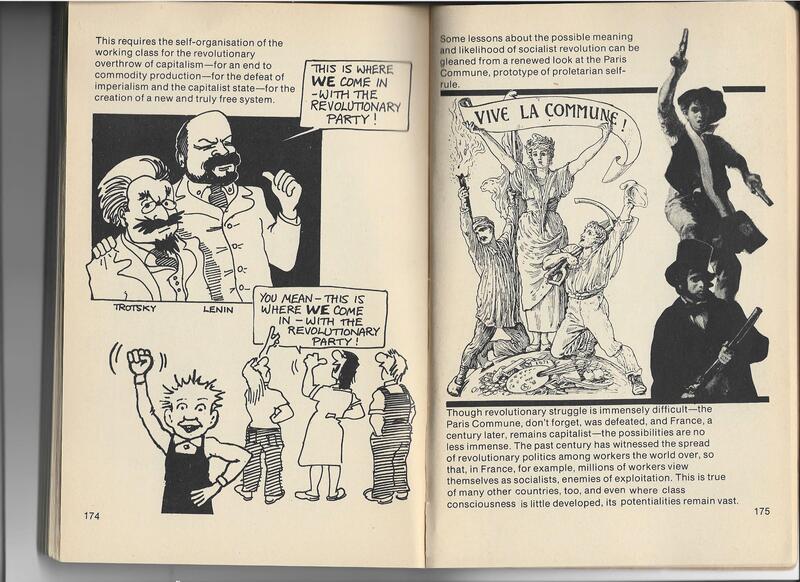
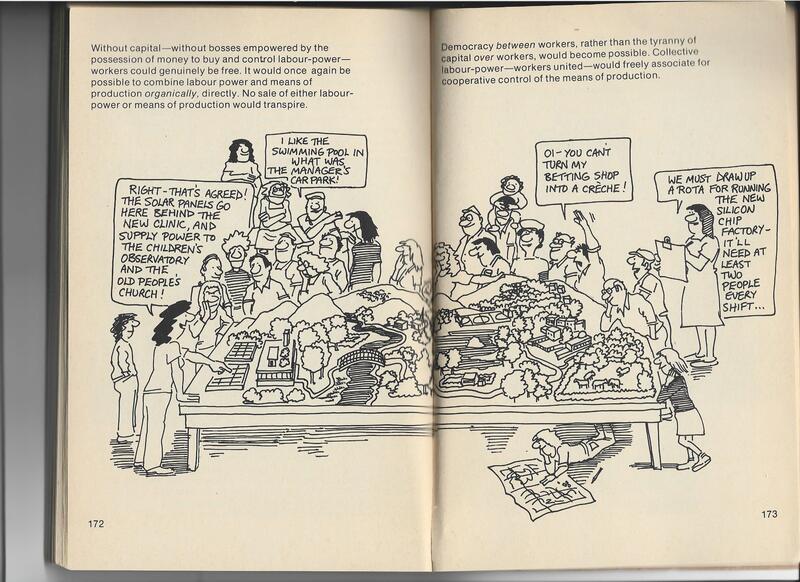
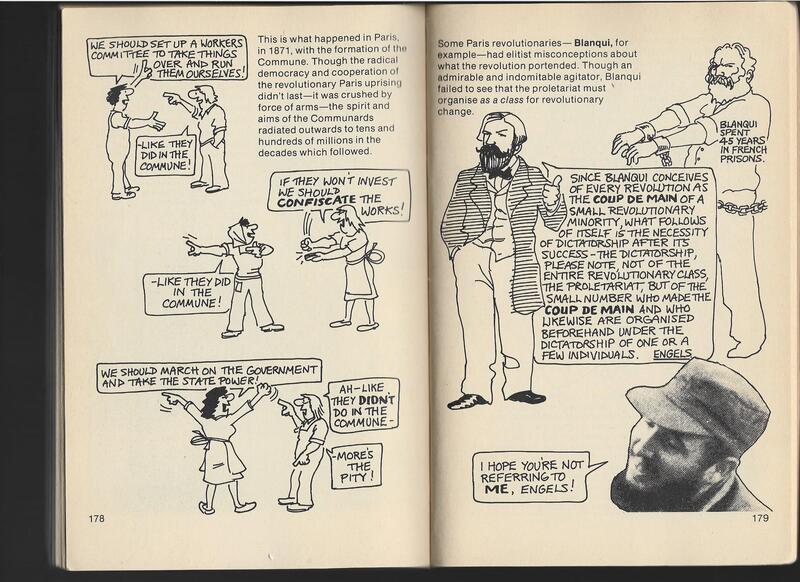
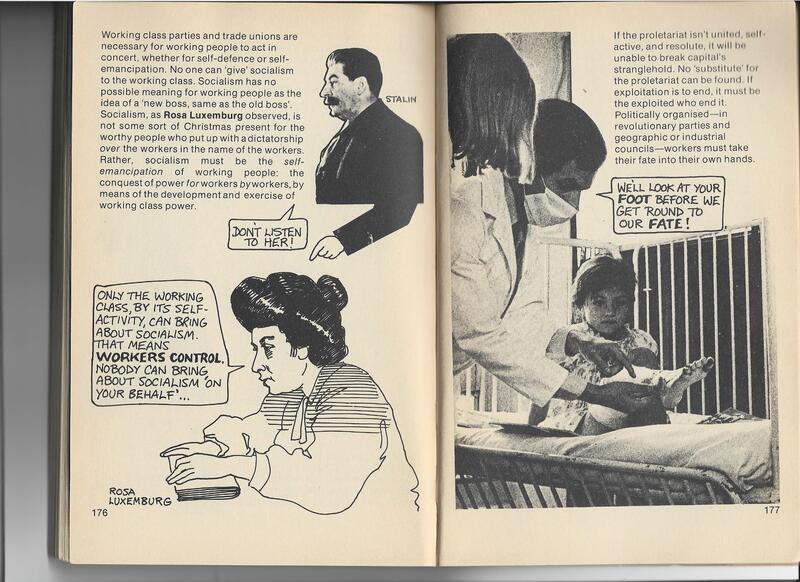
 RSS Feed