There’s an infuriatingly common type of liberal who purports to oppose Israel’s actions in Gaza while also saying they support “Israel’s right to exist”, as though Israel’s existence is somehow separable from its genocidal murderousness. This is a state that literally cannot exist without nonstop violence and tyranny, as demonstrated by its entire unbroken history since its inception. It was set up as a settler-colonialist outpost for western imperialism from the very beginning, and that’s exactly what it’s been ever since.
History has conclusively established that it is not possible to drop an artificial ethnostate on top of an already-existing population in which the pre-existing population is legally subordinate to the new one without tremendous amounts of warfare, police violence, mass displacement, apartheid, disenfranchisement and oppression. This is not actually debatable. It is a settled matter (no pun intended). Is it possible to have a nation in which Jews are welcomed and kept safe? Of course. Many such nations exist outside of Israel, and the majority of the world’s Jews live in them. What isn’t possible is a Jewish ethnostate in historic Palestine in which the pre-existing population is treated as less than the Jewish population that does not necessarily entail nonstop violence, tyranny and abuse. This is self-evidently a direct contradiction in goals, but it’s what the liberals we’re discussing here pretend to believe is a reasonable possibility.
There absolutely could be a state in that region wherein Palestinians and Jews coexist peacefully, but it would be so wildly different from present-day Israel that you can’t pretend it would be the same state as the one we see now. It would entail such a radically dramatic overhaul of Israeli civilization, such a comprehensive dismantling of deeply ingrained racism, such a drastic restructuring of governmental and living systems, so much labor, sacrifice, humility, inner work and reparations, that to call it by the same name as the state that presently exists would be nonsensical.
And that isn’t what the liberals in question are talking about instituting when they say they oppose Israel’s atrocities in Gaza but “support Israel’s right to exist”. What they are saying is they want Israel to remain the unjust and tyrannical apartheid state that is has always been, but for the killing to stop. They want the injustice to continue, but they want its most overt manifestations to stop causing them cognitive dissonance. They want the status quo, without the murderous savagery that is necessary for the status quo’s existence. They want to pretend they live in an imaginary fantasyland where such a thing is possible. In order to make this fantasy seem more believable, liberals will pretend that the violence we are seeing can be blamed entirely on the Netanyahu government, as though things would be fine without Bibi in office despite the fact that Israel’s abusiveness began long before he showed up, and despite the fact that Israel’s atrocities in Gaza have the approval of the vast majority of Israelis. Israeli violence isn’t the product of Netanyahu, Netanyahu is the product of Israeli violence. He built his political career upon sentiments that were already in place.
They’ll also tell themselves fairy tales about a two-state solution to make their position seem more valid, ignoring inconvenient facts like that Israeli officials have been openly saying a Palestinian state will never happen, that Israeli Jews overwhelmingly oppose such a measure, and that Israeli settlements are being built in Palestinian territories with the explicit goal of making a future two-state solution impossible. Liberals subscribe to these fantasies as a kind of cognitive pacifier, which allows them to relax and feel okay with themselves despite the fact that they’re not actually endorsing any viable path toward justice.
And to be clear this isn’t just what liberals do with regard to Israel-Palestine; it’s their whole entire position on everything. On every issue their position is little more than “Maintain the status quo, but make it pretty and psychologically comfortable for me.” They never want to do what’s right, they just want to feel like they are right. Theirs is an imperialist, militarist, tyrannical oligarchic ideology with a bunch of feel-good social justice bumper stickers slapped on top of it. A boot on your neck and a flower in its hair. That’s who liberals are. It’s who they’ve always been. Phil Ochs released the song “Love Me, I’m a Liberal” in 1966, and they haven’t changed one iota ever since. The issues change, their arguments change, but their “maintain the status quo but let me feel nice about it” values system has remained exactly the same for generations. ArchivesMarch 2024
0 Comments
3/19/2024 Starvation Is a War Crime: Note From the Israeli Genocide Against the Palestinians. By: Vijay Prashad.Read Now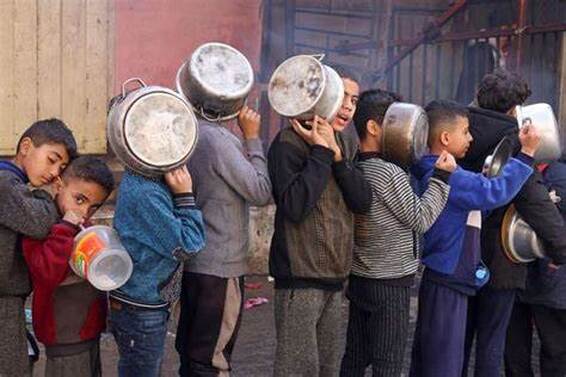 Speaking in Rome, Italy, the head of the United Nations World Food Program Cindy McCain said, “If we do not exponentially increase the size of aid going into the northern areas” of Gaza, “famine is imminent. It’s imminent.” Over 30,000 Palestinians have been killed in Gaza by the genocidal Israeli war, and the Palestinians in Gaza are on the verge of famine. Palestine’s Permanent Observer at the United Nations Riyad Mansour said that over half a million people are “one step away from famine.” “What it means for mothers and fathers to hear their babies and children cry of hunger day and night, no milk, no bread, nothing,” he added. Indeed, babies and children already have begun to die due to the famine-like conditions in Gaza. With Ramadan already begun, the situation is not only physically acute, but also mentally torturous. There are currently 2,000 medical workers who are trying their best to operate basic medical care in northern Gaza. They are working without access to any hospital facilities and often with no power or water, including very limited supplies of medicines. Now, the Palestinian Ministry of Health in Gaza has said that these workers are themselves in a dire situation. The staff, said the Ministry, “will start Ramadan without Suhoor or Iftar meals.” “Doctors will die. The nurses there will die. And the world will witness the largest number of victims of hunger in the coming days,” said Ashraf al-Qudra, the ministry’s spokesperson. War Crime In June 1977, at a conference on humanitarian law in armed conflict, the member states of the United Nations extended the Geneva Conventions (1949) to add Protocol II. Article 14 of that protocol says that “[s]tarvation of civilians as a method of combat is prohibited.” The belligerent power is “prohibited to attack, destroy, remove, or render useless” any “objects indispensable to the survival of the civilian population, such as foodstuffs, agricultural areas for the production of foodstuffs, crops, livestock, drinking water installations and supplies and irrigation works.” Two decades later, when the UN member states wrote up the Rome Statute (1998), they added in a section on starvation under the heading of war crimes (Article 8); “intentionally using starvation of civilians as a method of warfare by depriving them of objects indispensable to their survival, including wilfully impeding relief supplies” is a war crime. The Rome Statute is the treaty that formed the International Criminal Court (ICC), which has thus far remained silent on its obligations to act on its own founding document. On February 29th, trucks with humanitarian aid came into the northern part of Gaza. When desperate people rushed to these trucks, Israeli soldiers fired on them and killed at least 118 unarmed civilians. This is now known as the Flour Massacre. In its aftermath, 10 UN experts released a strong statement, which noted, “Israel has been intentionally starving the Palestinian people in Gaza since 8 October. Now it is targeting civilians seeking humanitarian aid and humanitarian convoys.” The UN special rapporteur for food, Michael Fakhri, who signed that statement, later expanded this accusation against Israel. “Israel,” he told the UN Human Rights Council, “has mounted a starvation campaign against the Palestinian people in Gaza.” These statements are very pointed. Words such as “intentionally” and phrases such as “starvation campaign” directly accuse Israel of war crimes based on Protocol II and the Rome Statute. Fakhri focused on Gaza’s fishing industry, which had provided important food security for the 2.3 million Palestinians who live there. “Israeli forces,” he said, have “decimated the Port of Gaza, destroying every single fishing boat and shack. In Rafah, only two out of 40 boats are left. In Khan Younis, Israel destroyed approximately 75 small-scale fishing vessels.” This destruction, Fakhri said, has pushed Gaza “into hunger and starvation.” “In fact,” he added, “Israel has been strangling Gaza for 17 years through a blockade, which included denying and restricting small-scale fishers access to their territorial waters.” At the UN General Assembly, Palestine’s Riyad Mansour said that Israel has bombed “every bakery and farm, destroying livestock and all means of food production.” In the first month of the bombardment, Israel bombed the major bakeries of Gaza City. In November 2023, Abdelnasser al-Jarmi of the Bakery Owners Association in the Gaza Strip said that bakeries have not been able to function for lack of fuel and flour. As a consequence of the absence of bread, families have begun to gather a weed called khubaiza (or Malva parviflora) and to boil this as the main meal. “We are dying for a piece of bread,” said Fatima Shaheen as she built a meal for her two sons and their children in northern Gaza. Crossings Israel has refused to fully open the crossings into Gaza at Beit Hanoun and Karem Abu Salem as well as refused to allow complete opening of the Rafah crossing the links Gaza to Egypt. Since these land crossings are closed, and since Israel destroyed the Yasser Arafat International Airport in 2001, there are no easy solutions to bring food aid into Gaza. Delivery of food and supplies through the air is not sufficient—indeed it is a drop in the ocean (which is where some of the aid packages landed). There is now talk of building maritime corridors, but since Israel has bombed the Port of Gaza this is not an easy option. That the U.S. has said that it would build a temporary pier off the coast of Gaza’s southern half is ridiculous. It would be so much easier to open the Rafah crossing to allow at least 500 trucks a day into Gaza. But Israel will not permit this option. International law is clear as daylight on the point of starvation as a war crime. There are no loopholes in Protocol II (1977) or in the Rome Statute (1998). Friends in Gaza are finding this Ramadan month to be more difficult than any previously. Starvation is their general condition. But, unlike with other Ramadans, there is no early morning meal (Suhoor) and no late-night meal (Iftar). There is only the perennial noise of Israeli fighter jets mirrored by the groans of hunger in their bellies. Author Vijay Prashad is an Indian historian, editor, and journalist. He is a writing fellow and chief correspondent at Globetrotter. He is an editor of LeftWord Books and the director of Tricontinental: Institute for Social Research. He has written more than 20 books, including The Darker Nations and The Poorer Nations. His latest books are Struggle Makes Us Human: Learning from Movements for Socialism and (with Noam Chomsky) The Withdrawal: Iraq, Libya, Afghanistan, and the Fragility of U.S. Power. This article was produced by Globetrotter. Archives March 2024 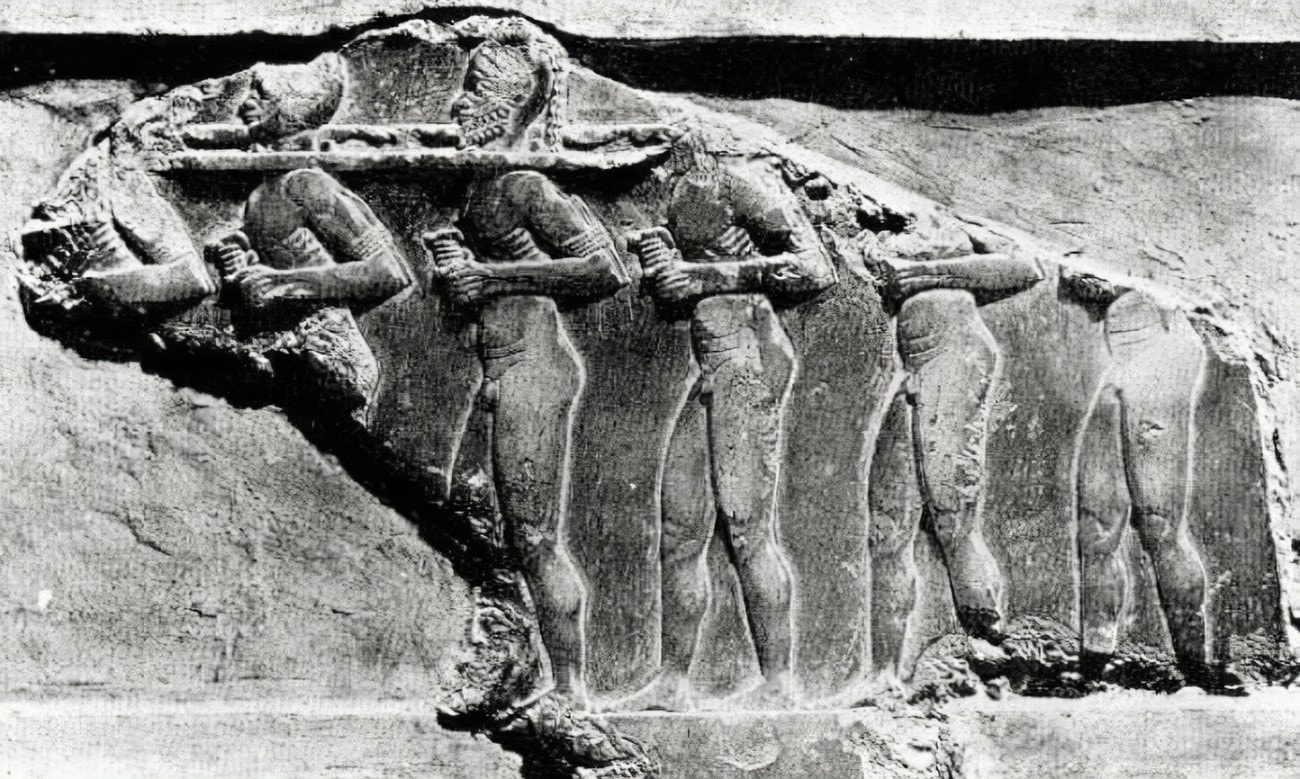 When interest-bearing commercial and agrarian debt came to be incorporated into civilization’s economic structure in the third millennium BC, it was accompanied by clean slates that liberated bondservants and restored to debtors the rights to the crops and land that creditors had taken. By the second millennium BC in Babylonia these royal “restorations of order” became customary proclamations rescuing debtors whose family members had been reduced to bondage or who had lost their land to foreclosing creditors. Anthropologists have looked at surviving tribal enclaves for ideas of how the Bronze Age takeoff may have been managed. But no tribal communities in today’s world possess the outward-reaching dynamics of Mesopotamia during its commercial takeoff, which occurred in many ways that are alien to modern ways of thinking. The documentation describes an approach operating on different principles from those that most modern observers assume to have been primordial and universal. The Character of Bronze Age Debt That Made Royal Clean Slates Necessary The dynamics of interest-bearing debt are different from those of tribal gift exchange and related reciprocity obligations. Monetary credit arrangements bear a specific interest rate, and the date of payment is specified in advance rather than left open-ended. That requires debts to be recorded in writing and formally witnessed. Creditors may take foreclosure measures for non-payment, leading to the debtor’s bondage or the loss of land rights. Civilization’s earliest written records, from Sumer in the third millennium BC, provide the best evidence for civilization’s monetized debt relations “in the beginning.” Two categories of debt existed, each associated with its own designated monetary commodity. Business obligations owed by traders and entrepreneurial managers were denominated in silver, above all those associated with foreign trade. The agrarian economy operated on credit denominated in barley units, assigned a value equal to the silver shekel in order to strike a common measure. Money Loans and Long-Distance Trade Rules for money loans described in scribal training exercises are found almost exclusively in the commercial sphere, especially in connection with long-distance trade. These loans were denominated in silver at the equivalent of a 20 percent annual rate of interest, doubling the principal in five years. Under normal conditions merchants were able to pay this rate to their creditors and keep a profit for themselves. Lenders shared in the mercantile risk, taking what in effect was an equity position. If caravans were robbed or ships and their cargoes lost at sea through no fault of the merchant, the debt was voided. There is no indication that payment of such mercantile debts led to problems requiring royal intervention. Interest-bearing debt had initially arisen in the commercial sphere, taking the form of advances of assets by the large public institutions to entrepreneurial recipients, enabling them to make an economic gain in commerce and land management. But throughout all antiquity the most problematic debts disrupting the economy’s fiscal and social balance were in the agrarian sphere. The original objective of charging interest to sharecroppers and other cultivators, however, can hardly have been to reduce them to bondage or to expropriate them from their self-support land. Their labor was needed for the agrarian economy to function. Agrarian Debt and Land-Rental Agreements Rural usury and the consequent widespread forfeiture of lands seem to have derived from advances of land, animals, and tools to sharecroppers (or their manager intermediaries) by temples and palaces. Sharecropping land and agricultural inputs were advanced for a rent of one-third of the (optimistically) estimated normal crop yield 1. Interest was charged on arrears of this rent and other agrarian obligations not settled at harvest-time. The interest rate charged on these carry-over debts was the same as the sharecropping rental rate: one-third. Even arrears for unpaid debts for food or credit for other needs, such as priestly social services, were charged interest at the rate of one-third of the sum owed, simply mirroring the sharecropping rental return for creditors. Arrears on agrarian obligations must have been infrequent, given the ever-present risk of crop failure preventing anticipated crops payments from being paid. Researchers Alfonso Archi and Piotr Steinkeller show that agrarian interest rates denominated in barley are attested by the middle of the third millennium BC. Officials, collectors for the palaces and temples, and merchants often acted in their own private capacity to make interest-bearing loans to cultivators in arrears for arrears of fees owed to the large institutions. Rural usury thus emerged as well-to-do “big men” charged for arrears owed to the palace and temples, also lending food and other necessities to distressed cultivators. But agrarian interest-bearing debt, especially usury charged to borrowers in need, was always denounced as socially unfair. The question therefore arises as to just how such charges originated in the first place. Few types of barley debt involved actual loans of money. What often are called “loan documents” should more literally be termed “debt records” or simply “notes of obligation.” Even in the commercial sphere with its debts denominated in silver, textiles, and other handicrafts that temple and palace workshops consigned to merchants for trade were recorded as debts. And when contractual work was to be performed, craftsmen gave customers tablets of obligation when they were given materials to make into a finished product. The basic contractual formulae were well established by the end of the third millennium BC. Debt tablets state the sum owed, the due date, and the names of witnesses, with the appropriate seals. Additional stipulations might include the pledges involved, guarantees by individuals who stood surety, and the interest rate to be charged (often to accrue only if the debt were not paid on time). Some documents were given a title citing the reason why the debt was established. Agrarian debts mostly arose on rental agreements on land advanced by public institutions to intermediaries, who then subleased it to sharecroppers. Near East researcher Johannes Renger describes how land and workshops were administered directly by palace officials in Ur III (2111-2004 BC), but by the Old Babylonian period (2000-1600 BC) the palace franchised the management of its fields and date orchards, herds of sheep, brick-making workshops, and other handicrafts to “entrepreneurs” as Palastgeschäfte, “royal enterprises.” These managers were entitled to keep whatever they could produce or collect above and beyond the amount stipulated by their contract with the palace, but if the sums they collected fell short, their arrears were recorded as a debt and they were obliged to pay the difference out of their own resources. The rate of interest payable by cultivators on such debt arrears was, as described above, one-third, being the same as the rate charged for advances of sharecropping land. Cultivators were also charged this one-third rate of interest for unpaid arrears of charges for advances to buy food or beer or meet emergency needs on credit. If they lacked the means to pay out of whatever assets they had, they had to work off the debt charges in the form of their labor service or that of their family members (daughters, sons, wives, or house-slaves), and ultimately they had to pledge their land rights. How Agrarian Debt Transformed Land Tenure Barley debts had an annual character reflecting the crop cycle, falling due upon harvest. The accrual of such debts did not reflect a parallel growth in the cultivator’s ability to pay out of their harvest. Creditors obtained work at harvest-time by extending loans whose interest was paid in the form of labor service, as labor-for-hire was not generally available in this epoch. In addition to their labor, debtors were obliged to pledge their family members as bondservants, followed by their land rights. Self-support land had traditionally been conveyed from one generation to the next within families, not being freely disposable outside of the family or neighborhood. Land transfers did occur when families shrank in size and transferred their cultivation rights to distant relatives or neighbors. But starting with rights to its crop usufruct, subsistence land was pledged and relinquished to outsiders after 2000 BC. Debtor families initially were left on the land after they lost their crop rights, but were forced off the land as the new appropriators turned to less labor-intensive cash crops such as dates. Debtors often ended up as members of rootless bands or mercenaries after the middle of the second millennium BC. Instead of crop and land rights being lost only temporarily—being returned to their original owners by royal edicts that restored the status quo ante2—such forfeitures became irreversible by the first millennium BC, especially in Greece and Italy to the west. The Logic of Canceling Rural Debts and Reversing Land Forfeitures An inability to meet obligations was inherent in the risks to which agrarian life was subject throughout antiquity: drought, flooding, infestation, or an outbreak of disease, capped by military disruptions. The problem confronting rulers was how to prevent debts from mounting up to the point where they threatened to expropriate the community’s corvée labor and fighting force, dooming debt-ridden realms to defeat by outsiders. If the indebted rural citizenry were to survive along customary lines, priority could not be given to creditors. Mesopotamian rulers countered the rural debt problem not by banning interest outright, but by annulling barley debts. To restore the means of self-support, rulers issued edicts “proclaiming justice,” decreeing economic order and “righteousness.” These proclamations date from almost as early as interest-bearing debt is attested, starting in Sumer with Lagash’s rulers Enmetena circa 2400 BC and Urukagina and 2350 BC. Much as commercial debts were forgiven when the merchandise was lost through no fault of the merchant, Hammurabi’s laws (§48) provided that cultivators would not be obliged to pay their crop debts if the storm-god Adad flooded their field and the crop was lost. The operative principle was that debtors should not lose their economic liberty by being held liable for “acts of God.” And inasmuch as most barley debts were owed to the palace or royal officials, it was easy for rulers to cancel them. Letting officials and merchants keep the crops and labor of debtors would have deprived rulers of their ability to collect the customary royal fees and land rents for themselves and to obtain corvée labor and military service. There was no modernist thought that the dynamics of interest-bearing debt might be self-stabilizing by letting “market forces” proceed unimpeded. There was no thought of Adam Smith’s Deist god designing the world to run like clockwork, with checks and balances automatically maintaining equilibrium without any need for intervention by kings or priestly sanctions. Not even the wealthy voiced the ideology of modern free-market fundamentalism arguing that society’s wealth and revenue would be maximized by letting it pass into the hands of the richest and most aggressively self-serving individuals reducing hitherto free families to bondage. Notes 1. Although not clear from the records, it seems likely that agricultural inputs were advanced as part of a “package” with the land for a total rental of one-third of the crop.↩ 2. The classic studies of these edicts are F.R. Kraus, Königliche Verfügungen in altbabylonischer Zeit (Leiden, 1984); Jean Bottéro, “Désordre économique et annulation des dettes en Mesopotamie à l’époque paléo-babylonienne,” Journal of the Economic and Social History of the Orient, vol. 4 (1961): pp. 113-164; J.J. Finkelstein, “Ammisaduqa’s Edict and the Babylonian ‘Law Codes,’” Journal of Cuneiform Studies, vol. 15 (1961): pp. 91-104; “Some New misharum Material and Its Implications,” in Assyriological Studies, no. 16 (1965); Studies in Honor of Benno Landsberger on His Seventy-Fifth Birthday: pp. 233-246; “The Edict of Ammisaduqa: A New Text,” Revue d’Assyriologie et d’Archéologie Orientale, vol. 63 (1969): pp. 45-64; and the works of Igor Diakonoff and Dominique Charpin.↩ AUTHOR Michael Hudson is an American economist, a professor of economics at the University of Missouri–Kansas City, and a researcher at the Levy Economics Institute at Bard College. He is a former Wall Street analyst, political consultant, commentator, and journalist. You can read more of Hudson’s economic history here. This article was produced by Human Bridges. Archives March 2024  A group of young people in Paris are enjoying a drink in a café on an unseasonably warm evening. The conversation drifts into politics, but—as one young woman says—“Let’s not talk about France.” The others nod their assent. They focus on the U.S. presidential election, a slight bit of Gallic arrogance at play as they mock the near certainty that the main candidates will be President Joe Biden and former President Donald Trump. Biden is 81 years old and Trump is 77. A Special Counsel in the United States has called Biden an “elderly man with a poor memory,” hardly the words required to inspire confidence in the president. Trying to defend himself, Biden made the kind of gaffe that is fodder for online memes and affirmed the report that he tried to undermine: he called President Abdel Fattah El-Sisi of Egypt the “president of Mexico.” No new evidence is required, meanwhile, to mock the candidacy of Trump. “Is this the best that the United States can offer?” asks Claudine, a young student at a prestigious Parisian college. These young people are aware enough that what appears to be comical on the other side of the Atlantic—the U.S. presidential election—is no less ridiculous, and of course less dangerous, in Europe. When I ask them what they think about the main European leaders—Olaf Scholz of Germany and Emmanuel Macron of France—they shrug, and the words “imbecilic” and “non-entity” enter the discussion. Near Les Halles, these young people have just been at a demonstration to end the Israeli bombing of the Rafah region of Gaza. “Rafah is the size of Heathrow Airport,” says a young student from England who is spending 2024 in France. That none of the European leaders have spoken plainly about the death and destruction in Gaza troubles them, and they say that they are not alone in these feelings. Many of their fellow students feel the same way. The approval ratings for Scholz and Macron decline with each week. Neither the German nor the French public believes that these men can reverse the economic decline or stop the wars in either Gaza or Ukraine. Claudine is upset that the governments of the Global North have decided to cut their funding for the United Nations Relief and Works Agency (UNRWA), the UN Palestine agency, although another young person, Oumar, interjects that Brazil’s President Lula has said that his country will donate money to UNRWA. Everyone nods. A week later, news comes that a young soldier in the United States Airforce—Aaron Bushnell—has decided to take his own life, saying that he will no longer be complicit in the genocide against the Palestinians. When asked about the death of Bushnell, White House press secretary Karine Jean-Pierre said that the President is “aware” and that it is a “horrible tragedy.” But there was no statement about why the young man took his life, and nothing to assuage a tense public about the implications of this act. Eating an ice cream in New York, U.S. President Joe Biden said that he hoped that there would be a ceasefire “by the beginning of the weekend” but then moved it to “by next Monday.” The meandering statements, the pledge for a ceasefire alongside the prevarication, and the arms deliveries do not raise the confidence of anyone in Biden or his peers in Europe. With the Emir of Qatar beside him, France’s President Emmanuel Macron called for a “lasting ceasefire.” These phrases—“lasting ceasefire” and “sustainable ceasefire”—have been bandied about with these adjectives (lasting, sustainable) designed to dilute the commitment to a ceasefire and to pretend that they are actually in favor of an end to the war when they continue to say that they are behind Israel’s bombing runs. In London, the UK Parliament had a comical collapse in the face of a Scottish National Party (SNP) resolution for a ceasefire. Rather than allow a vote to show the actual opinions of their members, both the Labour Party and the Conservative Party went into a tailspin and the Parliament’s speaker broke rules to ensure that the elected officials did not have to go on the record against a ceasefire. Brendan O’Hara of the SNP put the issue plainly before the Parliament before his words and the SNP resolution was set aside: “Some will have to say that they chose to engage in a debate on semantics over ‘sustainable’ or ‘humanitarian’ pauses, while others will say that they chose to give Netanyahu both the weapons and the political cover that he required to prosecute his relentless war.” Global desire for an immediate stop to the Israeli bombing is now at an all-time high. For the third time, the United States vetoed a UN resolution in the Security Council to compel the Israelis to stop the bombing. That the United States and its European allies continue to back Israel despite the widespread disgust at this war—exemplified by the death of Aaron Bushnell—raises the frustration with the leadership of the Global North. What is so particularly bewildering is that large sections of the population in the countries of the North want an immediate ceasefire, and yet their leaders disregard their opinions. One survey shows that two-thirds of voters in the United States—including majorities of Democrats (77 percent), Independents (69 percent), and Republicans (56 percent)—are in favor of a ceasefire in Gaza. Interestingly, 59 percent of U.S. voters say that Palestinians must be guaranteed the right to return to their homes in Gaza, while 52 percent said that peace talks must be held for a two-state solution. These are all positions that are ignored by the main political class on both sides of the Atlantic Ocean. The qualifications of “lasting” and “sustainable” only increase cynicism among populations that watch their political leadership ignore their insistence on an immediate ceasefire. Clarity is not to be sought in the White House, in No. 10 Downing Street, or in the Élysée Palace. It is found in the words of ordinary people in these countries who are heartsick regarding the violence. Protests seem to increase in intensity as the death toll rises. What is the reaction to these protests? In the United Kingdom, members of parliament complained that these protests are putting the police under “sustained pressure.” That is perhaps the point of the protests. Author Vijay Prashad is an Indian historian, editor, and journalist. He is a writing fellow and chief correspondent at Globetrotter. He is an editor of LeftWord Books and the director of Tricontinental: Institute for Social Research. He has written more than 20 books, including The Darker Nations and The Poorer Nations. His latest books are Struggle Makes Us Human: Learning from Movements for Socialism and (with Noam Chomsky) The Withdrawal: Iraq, Libya, Afghanistan, and the Fragility of U.S. Power. Source: Globetrotter Archives March 2024 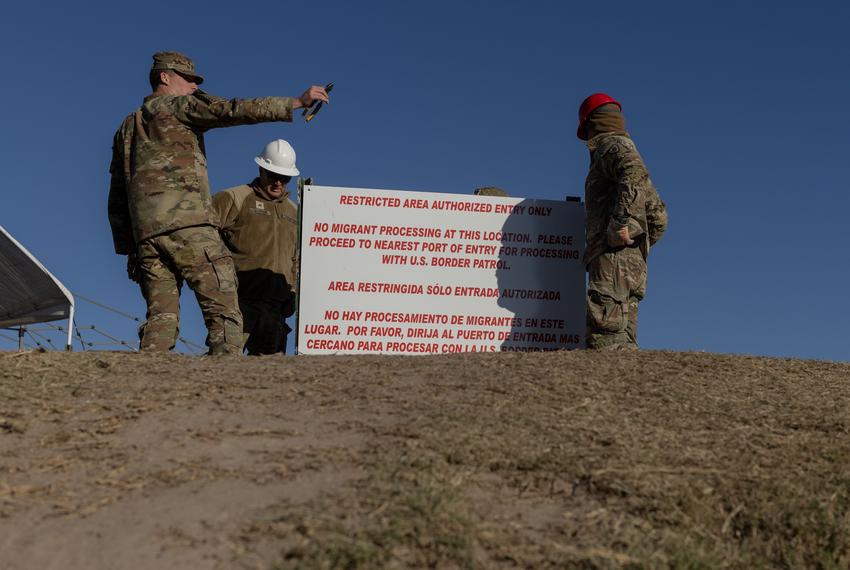 In 2009, former Texas governor Rick Perry discussed secession from the federal United States government at an anti-tax rally. Today, the same threats are made by Texas governor Greg Abbot over the standoff between the state of Texas and the US federal government. Headlines swept the country that made this clash appear to be rooted in a division of political opinion on immigration between Republican and Democrat governed states. However, the two sides of this standoff are rooted in a deeper phenomenon that has left a split in interest between the federal government and the red state governments, namely southern state governments. To understand the standoff at Eagle Pass, we have to look at Governor Abbot’s Operation Lonestar from its beginning in March 2021, and the demoralization crisis among the Texas national guard members that’s plagued the operation throughout its three year existence. We have to examine its antagonistic first year with the broad Texas national guard membership. We have to look at its second year, where this membership does the historically unprecedented by organizing their own union, forcing the state of Texas into compromises. We have to examine its third year, where guard members defy their command, and refuse orders to commit human rights abuses against migrants. While examining these occurrences, we must also look at how this demoralization crisis creates a political split in the economic interest between the federal and southern state governments, and the private corporate donors that dominate them. The southern states consist of the largest private military industrial complexes, compared to the other states, that together, make up the most incarcerated country in the world. Migrants apprehended at the southern border make up a considerable portion of this prison labor force, whether it be at facilities designated for immigration or general population. The interest of the southern states, governed by the “America first” republican party, particularly relies on US prison labor for their mode of profit. These private corporate donors are compelled to use their governmental power to pull national guard members from their civilian lives, in order to maximize detainment of a prison workforce. In contrast, what the US federal government does is determined by a much larger, international private corporate interest. While the less free, southern states are inclined to maximize a prison work force as rapidly as possible, the US federal government has to consider its overall military strength in the long run. The US federal government doesn’t have an interest in declining its prison population. The Biden administration apprehended over four million migrants in the first two years of its presidency according to United, We Dream. ICE and CBP are federal programs specifically installed to maximize the apprehension of undocumented people in the United States. However, across all military branches, there has been a record low recruitment in the past several years. This record low in recruitment comes at a time after a record number of police officers in the United States resigned during the Black Lives Matter protest in 2020. The US federal government is in a tense point of its history, in conflicts for sanction power with major forces like China and Russia.. US congress members have even begun to draw up bills to invade Mexico. In order to maintain its massive military presence across the entire world, while maintaining a coercive grip on the working class at home, the US federal government can not allow for a demoralization crisis to plague the national guard in a state as critical as Texas, especially as the result of something as non-combative as Governor Abbot’s Operation Lonestar. It can not allow for Texas National Guard service members to gain practice in defying orders, like we have seen all throughout the duration of Operation Lonestar. “Political Pawns” Greg Abbot launched Operation Lonestar on March 6 2021, exactly two months into the Biden presidency. Now it’s become the largest deployment in the history of the Texas National Guard in size and duration. It began with the deployment of 500 guard members. By November, Greg Abbot boasted a total of ten thousand guard members deployed. However, records show that number never reached beyond 6,500. On January 5-10, 2022, ten months into Operation Lonestar, a survey was taken at a base near Brownsville, Texas. The survey was taken among 250 guard members, asking questions and taking direct quotes. The survey was published and distributed by the Military times and the Texas Tribune. The conductor of the survey has not been revealed, as they were not authorized to leak the survey. The survey found that more than half of the guard members “expressed skepticism and frustration with Operation Lonestar.” Nearly thirty percent “vented about the length, haste, and involuntary nature” of the mobilization. One in five members gave no response to “what they liked most about Operation Lonestar,” or stated that they disliked everything about it. Each of the following direct quotes come from separate guardsmen that took the survey. “Members feel like political [pawns] and do not feel like their [issues] are being heard.” “Most of us signed up to help Texas in times of need like hurricanes. This doesn’t feel like we are helping any Texans besides the governor and his ability to say he has activated the [Guard] to the border.” “Whether or not you agree with the politics and morals of [Operation Lone Star], the best thing you could do to improve morale would be to shorten [deployments]. I’ve spoken to very few people who plan on continuing their service in the Texas [National Guard], much less staying on [the border] any longer than they have to. Send people home.” “[Operation Lone Star] cares more about numbers than the impact on individuals and their families. It does greater harm to our members than good by putting their families and own lives at risk for an unclear mission.” “We are disposable in the eyes of top leaders, from the governor on down. The leadership failures of this mission will be a case study for military leaders for years to come.” In the year leading up to the survey, there are several instances that indicate demoralization among the guardsmen. In May 2021, a cavalry troop from Louisiana was temporarily disbanded for misconduct and command issues. This is noted to be a “rare occurrence.” Due to an arrest made for narcotic trafficking in McAllen, Texas, local law enforcement brought drug sniffing dogs to a hotel where many guardsmen were living in the deployment in September. A staff officer at McAllen was quoted by the press saying, “We are literally the biggest threat to ourselves down here,” One instance during the year, a guard member slipped away from her unit, and returned to her home territory of Puerto Rico to seek psychological treatment. On September 10th, 2021, an unknown guard member had slipped a manifesto under every door of his brigade quarter that said the following: “Someone please wave the white flag and send us all home. I would like to jump off a bridge headfirst into a pile of rocks after seeing the good ol’ boy system and fucked up leadership I have witnessed here.” On January 4th, 2022, it is reported four Texas guard members deployed to Operation Lonestar had committed suicide in the span of two months. In response, a retired Texas National Guard general made a public statement admitting that morale is low in the Texas National Guard. By December 31st, 2021, The National Guard had only 327 reenlistments, or roughly 65% of the target set by the National Guard Bureau. This can be compared to the reenlistment rate that occurred in the first three months of 2021, before Operation Lonestar, which reached expectations by 105%. Guard Members Unionize and Defy Orders On February 21st, 2022, the Texas National Guard held its first union meeting in the history of its existence. Talks to begin unionizing began in December, 2021. This came after January 25th, 2022, when the Department of Justice ruled that National Guard members can unionize as public employees when on state active duty, as the laws against military unionization exclusively apply to federal military members. Immediately following the union meeting, the Texas Military Department issued an urgent statement discouraging members from joining the historically unprecedented Texas National Guard Union. However, this came along with an obligation to reform the leadership of Operation Lonestar in the following month. In the face of this historically unprecedented act of defiance, Governor Abbot replaced the general and two other top officials overseeing Operation Lonestar. The Texas National Guard union leader made this public statement at the time of the first meeting: “It'd be one thing if they were like, ‘Hey, yeah, we mobilized too fast and we shortchanged on equipment,’ or ‘We're gonna rectify that.’ Instead, you've got leadership that's acting like a petty ex-girlfriend. Just not taking us seriously. You're not going to fool the guys who are actually here, you may fool your voting base back home, But we know better. And it's kind of insulting. This isn't some politically motivated endeavor, we're not out just to get Beto O'Rourke elected. That's not why we're doing this. We want better conditions, and we, you know, most of us want to go home.” The month after Pro-Publica released an investigation that revealed the number of fentanyl arrests that Greg Abbot credited to Operation Lonestar, actually included the entire number of fentanyl arrest made in the state of Texas away from Operation Lonestar, we see evidence that Texas National Guard members had began defying their command, and breaking orders to keep migrants from drowning in the Rio Grande. Unfortunately, this was revealed to us when tragedy struck at the same Eagle Pass location we see the standoff at today. Spc. Bishop Evans had jumped into the Rio Grande to save a migrant from drowning while not being supplied with a floatation device to do so. He and the migrant he was trying to save both drowned as a result. The Texas Military Department had issued orders for guard members to not enter the water under any circumstances, yet the death of Spc. Bishop Evans revealed that many guard members had been doing the same thing. This gives us a first indication of when guard members at Eagle Pass began to defy their orders from the Texas government, out of honest sympathy with migrants who would die as a result of the orders being carried out. The Texas National Guard union leader, Hunter Schuler, made this public statement in response, once again demanding the end of Operation Lonestar: “Our hope is that the new TMD command staff learns from this tragedy, listens to soldiers, and works cooperatively with leaders on the ground towards safer working and living environments. With the growing number of service member fatalities on Operation Lone Star, what more will it take for the Governor to end this political charade? It is long past time to let the thousands of involuntarily activated guardsmen and women return home to their families - before it’s too late for yet another soldier.” Fast forward a few months to July, the US federal government officially begins a probe into Operation Lonestar for human rights violations. This is followed by civilian protests against Operation Lonestar in the border cities of El Paso and Brownsville in August. On September 14th, Greg Abbot rolled back the number of Texas Guard members deployed from 6,500 to 5,000. On October 1st, the US federal government deployed 2,500 troops to the US border, replacing the 1,500 that Governor Abbot was inclined to roll back, at the demand of the Texas Guard union. On October 6th, 2022, it’s revealed that the Texas Department of Military issued a filing error that resulted in 96% of Guard Members to unexpectedly owe back hundreds to thousands of dollars in taxes to the federal government. This was due to the Texas department of Military not issuing pay stubs correctly. Guard members had been quoted saying that they were curious why their payment checks had been so high. Guard members began writing state representatives asking them to address the Texas Department of Military about the issue. “Made In The Image of God” After the Biden administration sent another 1,500 troops to the US border on May 2, 2023, Greg Abbot began deploying flotation devices into Rio Grande on June, 8th. However, these flotation devices are not the flotation devices that Spc. Bishop Evans needed it in order to survive his heroic attempt to save a drowning migrant. These deployed buoys hid razor wire underneath them, intentionally designed to maim drowning migrants reaching for somewhere to rest. This targeted migrants that guard members, like Bishop Evans, had been heroically diving in to save from drowning in the past year. At Eagle Pass, the same location that Bishop Evans made his heroic attempt, and at the same location we see our standoff between the Texas and federal government today, an email leaked that once again showed Texas national guard members defying their command for the sake of migrant survival. Nicholas Wingate, a trooper and paramedic for the Texas Department of Public Safety, wrote an email to his sergeant explaining why his fellow troopers defied their shift command: “While doing so (going on patrol- author’s insert) we came across 120 people camped out along the fence line. In this group there was several small children and babies who were nursing. The entire group was exhausted hungry and tired. We called the shift officer in command, and we were given orders to push the people back into the water to go to Mexico. We decided that this was not the correct thing to do. With the very real potential of exhausted people drowning. We made contact with command again and expressed our concerns and we were given the order to tell them to go to Mexico and get into our vehicle and leave.” He went on in the email to explain the type of damage that the razor wire had done to the people they came in contact with. He detailed a man who was severely bleeding from tearing his leg while freeing his small child from the razor wire, a 15 year old child who had broken his leg, and a 19 year old woman who was having a miscarriage from being stuck in the razor wire. He detailed a mother and her two children drowning as a result of the razor wire. “I believe we have stepped over a line into the in humane (sic). We need to operate it correctly in the eyes of God. We need to recognize that these are people who are made in the image of God and need to be treated as such,” He says in the last paragraph of his email, “The wire and barrels in the river needs to be taken out as this is nothing but a in humane trap in high water and low visibility. Due to the extreme heat, the order to not give people water needs to be immediately reversed as well.” On December 7th, 2023, the Texas Department of Public Safety concluded an investigation into itself in response to Nicholas Wingate’s leaked email, and cleared itself of any wrongdoing. The official report conceded that others besides Wingate had come forward with legitimate concerns. However, on January 2nd, 2024, the Biden administration, obligated to maintain the morale of the entire US military, petitions the US supreme court, to allow the federal government to concede to the demands of the Texas national guard membership, and remove the razor wire buoys that were deployed as a part of Operation Lonestar in June. The federal supreme court ruled that the Biden administration will be able to concede to the demands of the Texas national guard membership, and remove the razor wire from the river on January 22nd. Greg Abbot refuses to comply with the supreme court, which leads to the standoff at Eagle Pass, and the powerless threats of secession that we see today. Demoralization, Defiance, and the Standoff at Eagle Pass In order to understand the standoff at Eagle Pass, we have to understand Operation Lone Star in its three year existence. The standoff at Eagle Pass is not the result of a clash between the Democrat and Republican Party. It’s not the result of a clash between the state of Texas and the US federal government. It is the result of a clash between the broad membership of the Texas National Guard and the entire standing order behind their command. Before the federal government ever ruled for the razor wire to be removed in 2024, we find the Texas National Guard demanding the end of the entire Operation Lonestar as early as February 2022, through their new organized union. We saw heroic Texas guard members defy their orders from Austin for the sake of human dignity, and use their leverage against Operation Lonestar, until one side united economic interest between the federal and state governments was forced to cave into their demands. This is a critical issue to US politics, yet our major corporate media continues to duck from any further investigation into the source of this occurrence. This is why we have to explain everywhere we can to the working people in the rest of the United States, what really led up to the political standoff between the US and Texas governments at Eagle Pass. Author Ned Brown is a community organizer and writer. In the past, he has organized to overturn ICE policies in Arkansas. He is a contributor at CommunityParty.net and the Alienated Press. Archives February 2024  The way China engages in corporate governance and enterprise discipline has been subject to much scrutiny, particularly by the Left. Many in the Western Left claim that China’s corporate governance is far too lacking. This article is designed to go over the way China is able to exert its party influence over both state-owned and non-state-owned enterprises. It is the third part in our series of articles that conduct an in-depth investigation of China’s economy. Our first article of the series investigated the degree of state-control over China’s economy. The second article of the series investigated how finance, banks, and investments work in China, in addition to how China was able to survive the many financial crises mostly unharmed that many other countries - including the West - could not. Corporate Social Credit According to the Communist Party of China (CPC) document “The Planning Outline for the Establishment of a Social Credit System (2014 - 2020)”, the following is stated the establishment of a social credit system: “... must have advancing the establishment of creditworthiness in government affairs, commerce, and society and establishment of judicial credibility as its primary content; must have advancing the establishment of a culture of creditworthiness and establishing mechanisms to encourage trustworthiness and punish untrustworthiness as key points; must be supported by advancing the establishment of industry and region specific credit, and developing credit services markets; must have raising the entire society’s awareness and levels of creditworthiness, and improving the economic and social operating environment as its goals; and must put people first, to form an environment across all society in which trustworthiness is honored and untrustworthiness is shameful, and make honesty and trustworthiness the entire populations’ conscientious behavioral norm.” [1] What is credit worthiness? It is being able to comply with financial agreements and willingness to pay debts. And in the context of the social credit score, to ensure companies enact on their promises. The score is used to regulate the private sector and continue to clamp down on potential exploitative behavior that may be undergone. In other words, social “credit” can also be translated from Chinese as social trustworthiness. The score is given to private firms and there are real punishments and drawbacks for those who do not comply or fail to achieve a high score. 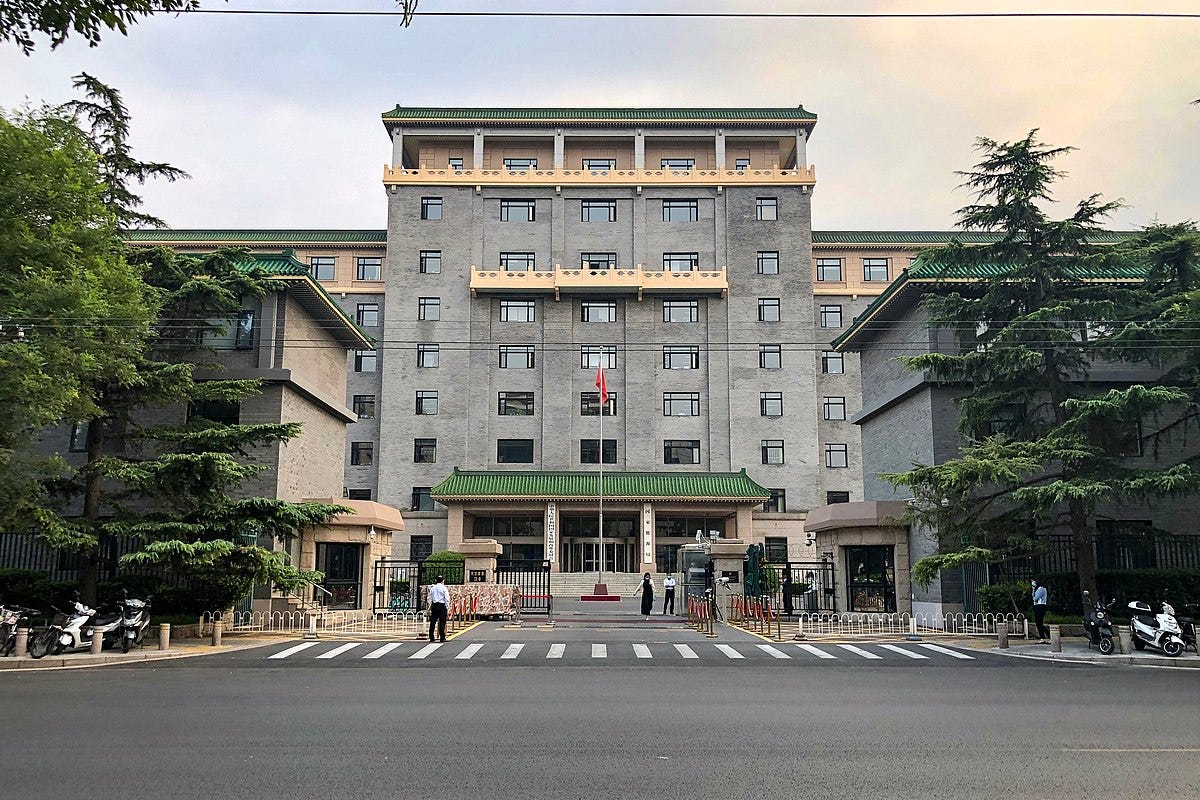 National Development and Reform Commission headquarters. Image source: Wikimedia Commons. The National Development and Reform Commission (NDRC) is pushing ahead with social credit-based supervision of all commercial entities from large firms to small, independently owned and operated businesses, which prompted complaints over corporate privacy and heavy-handed government intervention [2]. The social credit rating will include court rulings, tax records, environmental protection issues, government licensing, product quality, work safety and administrative punishments by market regulators [2]. In 2019, Lian Weiliang, deputy chairman of the NDRC, stated the following: “All the existing credit incentive and punishment measures listed in the memorandums are based on laws and regulations... For severe violations, especially those endangering life and property, harsh punishment will be adopted, such as a temporary or even permanent ban on market entry.” [2] While the China Blacklisting system is still in its early stages, it is already the most prominent system of its kind worldwide. China has already put this system into action, and has barred thousands of Chinese residents’ rights to buy plane tickets and travel either domestically or abroad. However, most of the blacklisting that has occurred to date has been as a result of violations or misbehavior of companies and the individuals working for them. [3] Individuals who end up on a blacklist due to mistreatment of workers or violating the laws around workers’ rights are given penalties. These penalties can be as severe as having their business license revoked or barring them from using social amenities and public services until they fix their social credit score. How the social credit score is measured according to CreditChina, the website responsible for openly publishing corporate social credit data lists the following reasons for a low social credit score:
A study found that the Corporate Social Credit System could be used in a way that signals “corporate fealty” to the Party. This incentivizes more corporate social responsibility programmes such as participating in poverty alleviation, strictly implementing deadlines for national industrial and environmental policies. The credit system itself does not award scores based on profitability, profitability is not a metric that is factored. [5] There is however a wide misconception that the social credit score is something that only impacts people. However, state owned enterprises and other government bureaucrats who work at state owned enterprises can be subject to the corporate social credit. The social credit system is ‘self-reflective’: Bureaucrats and politicians themselves will be subject to the regime, with the goal of reducing corruption. This core concept is known as “Government integrity” which is a part of Xi Jinping’s Anti Corruption crackdown. [3] 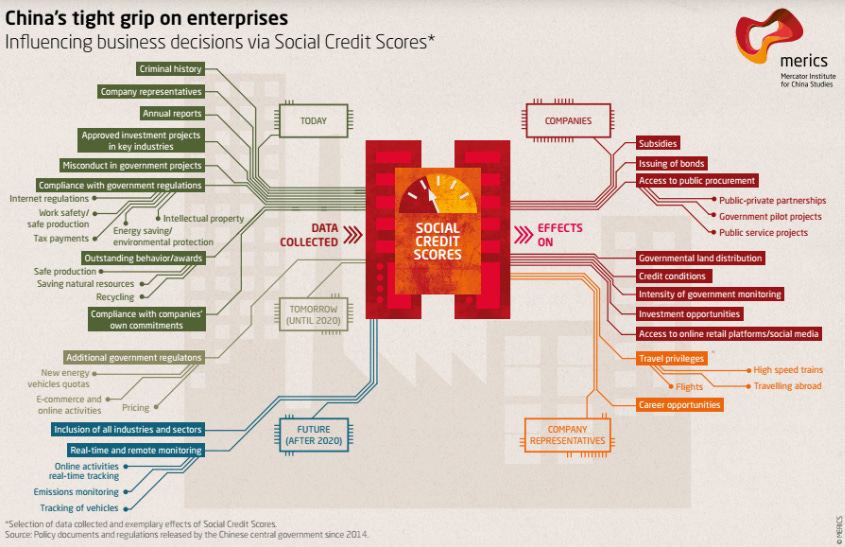 Diagram breaking down how China’s Social Credit System works; notice, it primarily affects companies and at most, the representatives of said companies, not random individuals as fearmongered by Western media narratives. [4] Blacklists and Redlists As mentioned earlier, with the Social Credit System (SCS), there comes consequences to gaining low scores or high scores. This comes in the form of Blacklists and Redlists. The blacklist is negative while the redlist is positive. A blacklist is a type of public record which identifies companies and individuals found in violation of a predetermined set of regulations — for example, one blacklist may identify companies which have violated work safety regulations, while another identifies parties found in violation of patent laws. A redlist is the opposite: a roster of companies and individuals demonstrating consistent compliance with a specific set of regulations, such as consistent tax payment or low rates of import-export violations. [6] The majority of existing blacklists and redlists were created between 2016 and 2018. Since then, the announcement of new national-level lists has slowed dramatically. As of November 2019, forty established blacklists and eight redlists were in effect at the national level. Of these, about half have a broad scope, such as those targeting violations in the areas of environmental protection, import-export, social security, tax arrears, and e-commerce fraud. The remaining blacklists are only applicable to enterprises and professionals operating in specific sectors, such as financial services, transportation, insurance, salt production, domestic services, travel, real estate, food, agriculture, and medicine. [7] Companies found to have engaged in “seriously untrustworthy behavior” may have their business license revoked and credit irreparable. And of course, being subject to imprisonment. [8] These acts include:
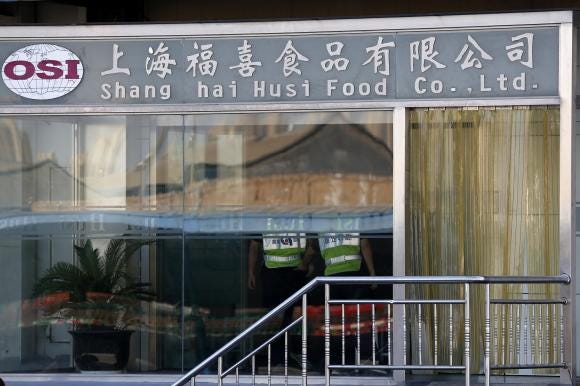 Shanghai Husi headquarters closed. Image source: Food Safety Magazine. A court case found the firm guilty in 2016, after which the directly responsible employees within the company were sentenced to prison and fined for the crime of producing and selling fake and inferior products, as were members of Shanghai Husi’s holding company OSI. [10] This had credit-related consequences: the local government revoked Shanghai Husi’s food production licenses, while the company was designated as a “seriously untrustworthy producer” and added to the food safety blacklist by Shanghai local government officials for a period of two years (2016-2018). Additionally, three key responsible parties (the quality supervisor, factory manager, and planning director) within the organization were personally blacklisted for a period of five years (2016-2021) [11]. The company reportedly lost RMB 6 billion in the year after the scandal, though how much of those losses resulted from Corporate Social Credit System (CSCS) penalties rather from the scandal more generally, is unknown [12]. The company did not repair their credit, and though OSI still operates in China, Shanghai Husi appears to have effectively halted operations. [13] In Regard to Foreign Enterprises Foreign enterprises are not free from the social credit score. Companies that do not comply or actively reject party building and the formation of party organizations within the enterprise (more on that later) will be penalized by the Social Credit System (SCS). A report published by the EU Chamber of Commerce estimates that multinational firms in China will be subject to approximately 30 different ratings under the Corporate SCS, the requirements of which will be dispersed across numerous government documents. Firms are also required to disclose to the Chinese government detailed data and other information about their operations and capabilities, which may include proprietary information or sensitive intellectual property. [14] An example of which is that 44 airline companies attempting to operate in China were required to follow the Chinese mainland designation of Taiwan; failure to comply would result in their corporate social credit score being deducted. Japanese retailer Muji was fined over $30,000 for describing Taiwan as the “country of origin” on 119 clothing hangars last year. [15]  Airliners at the gates of Beijing Capital International Airport. Image Source: Alamy. This further solidifies the state control over foreign enterprises inside China, where the terms are dictated by the state, and these corporations have to follow the line. When the Communist Party tells foreign entrepreneurs to jump, the response from these entrepreneurs is to ask how high and how far. According to the EU Chamber of Commerce, the corporate social credit score system will mean life or death for foreign enterprises wanting to operate in China. China’s Corporate Social Credit System is here to stay. Businesses in China need to prepare for the consequences, to ensure that they live by the score, not die by the score. [16] This further solidifies the fact that foreign enterprises cannot escape the grasp of the Communist Party of China.  EU Chamber of Commerce in China. Image Source: WSJ. Corporate Party Organizations A study in 2008 looking into listed organizations found that for every listed enterprises’ board of directors, there is a parallel power structure known as the firm’s Party Committee, headed by a party secretary. In the large SOEs (state-owned enterprises), the Party Secretary appoints the top executives and directors, often simply relaying orders from the Communist Party of China’s Central Organizational Department, and effectively exercising a leading role in the company. Thus, significant overlap between the Party committee or group with traditional corporate structures. Where the two structures do not overlap, real power flows through the party channels, leaving the board and formal corporate top executives with scant real authority. The figure below visualizes this arrangement. [17]  Corporate governance organization chart in China. Notice parallel structures and overlaps between the Party committee and corporate board. Note: CA = cross appointments; CA1 = chairman of the supervisory board; CA2 = chairman of the board -party secretary; CA3 = general manager-Party vice-secretary, head of the discipline inspection team + one to two other managerial deputies. CD = collective decision-making. “Sanzhong yida” (三重一大) = “Three Importants and One Big”, discussed later. [38] In the book, Capitalizing China, it was found that: Parallel to this corporate governance system, each (Listed) enterprise also has a Communist Party Committee, headed by a Communist Party Secretary. These advise the CEO on critical decisions, and are kept informed by party cells throughout the enterprise that also monitor the implementation of party policies. Indeed, the party secretary plays a leading role in major decisions, and can overrule or bypass the CEO and board if necessary. For example, foreign independent directors on the board of CNOOC reportedly first learned of that enterprise's takeover bid for Unocal, an American oil company, from news broadcasts. Directors often also learn of such major strategic moves, and of equally major personnel moves such as the rotation of oil company top managers described earlier after the fact. Despite their formal powers, CEOs and boards are thought to welcome party advice, and any directors likely to have reservations are kept out of the loop to preserve harmony-especially if issues the CCP views as strategically important are involved. [18] Furthermore, according to Article 33 of the Constitution of the People’s Republic of China: Primary-level Party organizations in non-public sector entities shall implement the Party's principles and policies, guide and oversee their enterprises' observance of state laws and regulations, exercise leadership over trade unions, Communist Youth League organizations, and other people's group organizations, promote unity and cohesion among workers and office staff, safeguard the legitimate rights and interests of all parties, and promote the healthy development of their enterprises. [19] Most of the listed shareholder firms have a party secretary. A study on 4,104 listed firms was conducted between 2000 and 2004, which represents 68% of the total firms with A-shares in China during that period. Note, referring back to our previous article, A-Shares are shares of companies based in mainland China that are listed on either the Shanghai or Shenzhen stock exchanges that are off limits to foreigners. It was found in this study that only 11% of the firms said that they did not have a party secretary. In those firms with party secretaries, many of the secretaries hold other management positions as well: 5% also serve as both the chairman and the CEO; 18% also serve as the chairman; 6% also serve as the CEO; and 26% also serve as a supervisor, director, or executive. Thus, many party secretaries have a significant effect on firm management. [20] One example can be observed with the China National Petroleum Corporation (CNPC), a central SOE holding group. As of October 2019, the Party group in CNPC had eight members (see Table below), six of whom simultaneously held top management positions: the chairman of the board, the general manager, the chairman of the supervisory board, the head of the discipline inspection office, the chief accountant (i.e. chief financial officer) and the chief safety monitor. With this level of insider control, the Party group dominates corporate decision making. In addition, many of these Party group members simultaneously held positions in the publicly listed subsidiary company – as board members and/or members of the subsidiary Party organization. For example, Liu Yuezhen was simultaneously a Party group member, chief accountant of the parent company and non-executive director of the subsidiary. Thus, to recap, the Party committee exercises strong horizontal control within the parent company’s top management through overlapping positions, but also exercises strong vertical control through SOE control of subsidiary enterprises and more overlapping positions. The result is more streamlined management as a result of how embedded the Party is in these enterprises. [38]  Table showcasing “Bidirectional Entry and Cross Appointment” Principle by the Party committee in CNPC. [38] In Taizhou, 39 listed firms in 2018 modified their charter to include party construction in their constitution. And the party organization’s role entails the party branch to have more say in the company's selection and employment of personnel, to play a core role in political leadership, as well as decision-making in other major corporate decisions. For instance, feedback/voice on the acquisition of other enterprises, which falls under having a role in corporate business decisions. [21] Interestingly, as a side effect of having Party Committees, a study found that Communist Party Committees actually improved enterprise value and reduced corruption within SOEs, indicating that they are not just a tool to enforce party leadership, but also assist positively in business decisions. [22] Another study found that while ostensibly cooperative enterprises (Township Village Enterprises) had private revenue rights, their control rights were not. In reality, collective enterprises are under close control of the government. Major investment and employment decisions could not be made without government direction or approval. [23] Enterprises which have party committees are much more likely to engage in “Green Innovation”, which refers specifically to inventing technologies or having processes which reduce environmental pollution. [24]  Chinese conference promoting Green Innovation for Belt and Road. Image source: China Daily. The Three Importants and One Big But what does this entail specifically? How do party committees actually engage in their day-to-day management of enterprises? One of the largest key aspects of this is the ability to set performance indicators. The party’s pre-decision powers include the “three importants and one big” (sanzhong yida, 三重一大), which refers to:
First and foremost, party committees (party groups) at all levels are expected to actively reform and improve leadership methods, adhere to and improve democratic centralism, combine collective leadership with individual division of labor and responsibility, fully develop intra-party democracy, and strive to improve scientific decision-making, democratic decision-making, and decision-making in accordance with the law, ability and level. Moreover, party group members, especially the principals in charge, should correctly handle the relationship between democracy and centralism, work together with decision-making bodies, take the lead in implementing democratic centralism, ensure the correct exercise of power, and prevent the abuse of power. [27] Intra-Party regulations shall be decided by the shareholders' meeting, the board of directors, the management team without a board of directors, the workers' congress/union and the party committee (party group) matters. It mainly includes the major measures taken by enterprises to implement the party and the country's lines, principles, policies, laws and regulations, and important decisions of superiors, enterprise development strategies, bankruptcy, restructuring, mergers and reorganizations, asset adjustments, property rights transfers, foreign investments, interest allocation, organizational adjustments, etc. major decisions on corporate party building, security and stability, and other major decision-making matters. [28] Party Organizations in Foreign Enterprises Foreign enterprises and their joint-ventures are not free from party organizations. As the majority of foreign enterprises are actually joint-ventures ran with SOEs (State-owned enterprises), naturally there would be a spillover in terms of party committees. Party committees were first implemented in SOEs afterall and naturally their subsidiaries (which include joint-ventures with foreign companies) would be affected as a result. In 2018 an analysis prepared by the European Commission investigating the Chinese Party-State’s role in the domestic Chinese economy. It noted that Party organizations in both SOEs and private companies “can potentially wield significant influence, and allow for the CCP to directly influence the business decisions of individual companies.” [29] In May 2018, the US-China Business Council noted that certain SOE joint venture companies had asked some of their foreign partners to alter their articles of association to support Party groups within the joint venture, even going so far as to request that they be amended to allow critical matters to be approved by the party organization before they are presented to the board. [29] In one example, Mercedes-Benz established a Party organization in its local Chinese joint venture in 2013. The secretary of the Party organization participates in the company’s economic management meetings through the entire process and has full authority to participate in the company’s major decision making. This means that even in joint-ventures, party organizations still have sway in major decision making and economic management. [30]  A Mercedes-Benz factory in Beijing. Image source: Reuters. In 2018, a Samsung subsidiary had seven Chinese executives of the company who are all Party members and 74 percent of middle managers and above are Party members. The same article notes that 70.8% of all foreign enterprises have party organizations. In Pinpu Company given in the article, it was found that Party organizations play decisive roles in R&D decisions as well as decisions over production optimization. They also play a role of promoting party policies, such as for instance with Ford’s China subsidiary being convinced to start investing in New Energy Vehicles. In Nokia Shanghai, it was found that party organizations assisted heavily in human resources, especially in regard to employee management and development plans. [31] Another 2018 article on Nissan’s automotive joint venture Dongfeng Motor Co. notes that their Party organization has been written into the enterprise charter, with members of the Party organization playing a role in enterprise decisions. This includes ensuring the direction of business development, complying with national laws and regulations, ensuring legal operations, safeguarding the legitimate rights and interests of employees, and promoting corporate stability, especially in the selection and use of talents. [32] Control Via Shares Previous essays in the series have gone over how limited liability corporations (Multiple shareholders in one company) could be controlled/steered towards state directives via internal corporate governance through the use of a majority or controlling state shareholder that coordinates the enterprise alongside party directives. As mentioned earlier, it is not just SOEs that have implemented the Party Committees, but also limited liability corporations, some of which are listed on the stock market while others have a significant minority state share. Corporate groups in the People’s Republic of China, and by extension their subsidiaries and divisions, are therefore actually controlled by Party-State nomenklatura insider appointees working at the core holding company level, and as directors and officers of the subsidiary entities controlled by the core holding company. As Party-State bureaucratic political actors seeking advancement in the Party system, these individuals are perfectly responsive to Party-State policy (which necessarily includes national industrial policy), while at the same time they are content to ignore the interests of external minority shareholders in the listed subsidiaries they formally manage. [33] Consequently, there are also ways for the CPC to institute corporate governance within these mixed ownership enterprises without establishing a controlling/majority share in these companies, via something that is known as a golden share. A golden share is a type of share that gives its shareholder veto power over changes to the company's charter. One golden share controls at least 51% of voting rights and may be issued by private companies or government enterprises. [34] This concept was first introduced in 2013, to allow the CPC to exert more influence over private enterprises, particularly media conglomerates [35]. Between 2018 and 2022, several government entities took 1% stakes in popular news and content platforms, including US-listed Sina Weibo, 36kr, Qutoutiao and Kuaishou, according to company filings or public registration records. [36] The stakes in subsidiaries of Alibaba and TikTok parent ByteDance Ltd. have allowed the government to get in on—and police—the growth of the tech behemoths. Golden shares have become a useful tool to keep companies like these in line with party objectives without the need for the state being a major stakeholder. Companies that sell the government the much smaller stakes called golden shares are finding that even this way, the government is getting a lot of power over their businesses. The director whom China’s cybersecurity watchdog named to the board of ByteDance’s main subsidiary has veto rights over content on apps including Douyin, the Chinese version of TikTok, according to people close to the subsidiary. The director also can vote on corporate issues such as the subsidiary’s personnel decisions, compensation packages and investment or divestiture plans. [37] Conclusion In short, the idea that corporate entities, whether foreign, private or collective are somehow free from state influence, but more specifically party influence is untrue. Even companies with minority shares from the State have party committees onboard, let alone joint ventures with foreign enterprises. The Social Credit System is a means to hold corporations and their bosses accountable to certain standards to the benefit of the mass public. Corporate Governance in China is one that does not allow any corporate entities, SOE or non-SOE, to escape its grasp. Archives March 2024 3/19/2024 Applied geopolitics and the battle for peace and the right to development: Palestine as the focal point of the global balance of power. By: Bruno DrweskiRead Now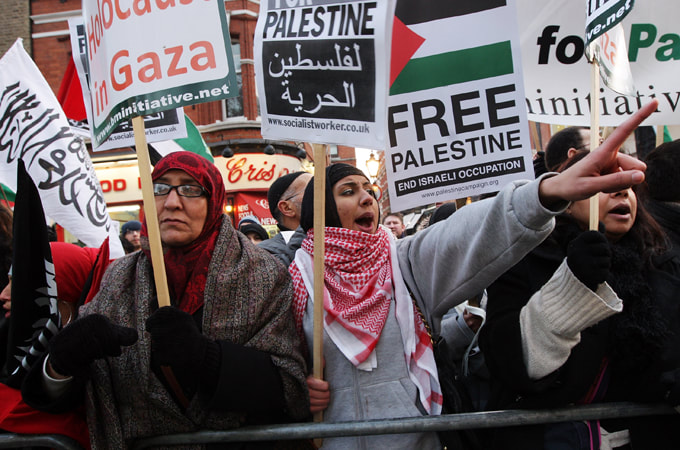 In his recent book, La défaite de l'Occident (The Defeat of the West), Emmanuel Todd observes that the United States and its associates react to every international crisis only in violent ways, which enabled them to give Israel an unlimited license to kill on October 8, 2023. This "reaction" noted by Todd in fact goes much further than an expression of the nihilism of a civilization in perdition, even if it testifies to the moral decadence of Western elites who keep on imposing their rules on the entire planet. But the bellicose moods of our leaders are also the result of the ever-growing weight of the private military-industrial complex that has developed in Western countries at the expense of civilian production committed to the economic and social progress of their populations. The result has been the relocation of civilian industries to low-wage countries, and the transition in the Western bloc towards the domination of its financial sector over its industrial sector. The fight for peace and against the militarization of our societies is therefore not just a moral imperative, it complements the necessary struggle to defend existing civilian enterprises and promote a policy of re-industrialization of our countries. This can only be done within the framework of an economic policy planned by a state power under popular control, favoring socially profitable, productive, and creative investments at the expense of merchants of death. The fight against sending weapons to Ukraine or Israel, against military interventions and the dispatch of soldiers or mercenaries to Ukraine and Israel, against the bombing of Yemen or other countries targeted by NATO, against the presence of foreign troops in Europe and elsewhere, against sanctions and blockade policies, is also the fight for the reconstruction of our productive forces, for the development of scientific research and for social progress. Only then will we be able to defeat the forces that serve the murderous interests of the merchants of death running around the world to increase their profits. Profits from which wage-earners, workers, the precarious and the unemployed, receive fewer and fewer crumbs, as the rate of profit continues to fall. Late globalized capitalism has reached the end of its road, since the whole world has been subjected to its rules and tariffs, and there are no longer any new markets to conquer. In reaction, local peoples and bourgeoisies have begun to promote development in the territories where they live, work, produce and create. This explains the emergence of counter-hegemonic powers such as China and Russia, and of ideologically very different states such as Cuba, Venezuela, (North) Korea, Nicaragua, Belarus, Iran, and Eritrea, all of which have chosen to oppose "capitalism without borders". The fight for peace therefore aims to disarm powers that have failed to fulfill their commitments, such as those expressed in the preamble to the French constitution, which is supposed to institute a "social republic", and those contained in the United Nations Charter prohibiting the use of force outside the right of self-defense, a right that should be interpreted solely within the framework of the United Nations system. Geopolitics as a method for analyzing international conflicts and social relations Initially, geopolitics was a method of analysis developed mainly by researchers working for certain colonial powers. Its aim was to analyze, on the basis of geographical and territorial data, the fundamental interests of each state, which was supposed to be either opposed to or, on the contrary, a partner of other states. This method tended to determine, in an initially rather mechanical way, conflicts seen as almost "natural" and inevitable, with the aim of controlling a "vital space". In its most extreme form, this led to the justification of Nazism, which sought to conquer "the vital space necessary for the German people". After 1945, geopolitics was delegitimized as a bourgeois, imperialist science, before that is, relevant elements of this method were gradually rediscovered in the USSR of the 1970s, as well as in the USA, especially if made dynamic through a class analysis of each state's politics. To use geopolitics dynamically, we must first determine the class basis of each state, in the knowledge that in our time, there is no such thing as a "chemically pure" system, since every state is confronted with trends either pushing it towards more capitalism and deregulated markets or, on the contrary, pushing it away from them to build alternative paths. It is in this context that the place occupied by each country in the era of globalization in the "international division of labor" combines with the territory it occupies and the economic potential this gives it. This explains why our era is one of a de facto Third World War between forces of unipolarity centralized around the USA, NATO and their allies, and counterforces of multipolarity. Today, however, this war is taking place in a "hybrid" form, with multiple "local" hot wars being waged by protagonists unable or unwilling to confront each other directly. This "pacifying" factor is all the more evident as the domination of the consumer society model and the triumphant individualism of neoliberalism have led a mass of people to reject the idea of risking their lives in the service of a higher cause. The dominant Western powers are controlled by bourgeoisies who can set commodity prices ("terms of trade") and derive wealth from them. Depending on the balance of power between countries and social classes, this wealth can be used to distribute crumbs in order to corrupt at least some of the working classes who would have an objective interest in breaking away from the capitalism organized around Wall Street and the City of London. In economically dominated countries, on the other hand, we have to deal with a comprador bourgeoisie that takes advantage of its role as local intermediary for foreign imperialist bourgeoisies. But there are also national bourgeoisies seeking to defend their national market, their territory, and to launch self-centered development policies to face up to the competitive pressures of those powers dominating the world market. In this context, wage-earners in dominated and overexploited countries, as well as those in "central" countries, act as a spur to greater independence for their national bourgeoisies and petty bourgeoisies. In this struggle, the popular forces and national bourgeoisies rely on the advantages of their national territory, in terms of resources and geostrategic position. Their aim is to conquer autonomous spaces that will enable them to launch policies of development, industrialization, and even socially progressive reforms. Geopolitics can therefore be a useful scientific method if it combines analysis of the territorial situation of each political entity, in terms of strategy, resources, historical links with its neighbors ("geo-economics" and "geo-culture"), etc., with analysis of the class base of each state formation. It is against this backdrop that, among the forty or so armed conflicts in the world, known or unknown, more or less active or "frozen", since October 2023, the conflict in Palestine has become the "central conflict" between the unipolar bloc and the "nebula" of countries and peoples manifesting counter-hegemonic tendencies. This conflict is a continuation of the wars and tensions we are witnessing in Ukraine, Syria, Yemen, the African countries of the Sahel, Taiwan, and the Korean peninsula - in other words, all around the Eurasian core. Geopolitics of Palestine If we look at the map of Palestine and the Israeli entity that took total control of it between 1948 and 1967, the first thing that stands out is the fact that its borders were drawn during the Anglo-French Sykes/Picot agreements following the First World War in such a way as to encompass the entire southern desert (Negev or Naqab), This enabled the territory to extend all the way to the Red Sea, giving whoever controlled Palestine a "dagger" cutting through the Arab nation, the Islamic world and the Afro-Asian space ("Third World" or "Global South") in two. These two parts, located on either side of the Palestinian territory redesigned by the English colonist, can no longer communicate directly without passing through Palestinian ("Israeli") territory. As a result, every Arab, every Muslim and every anti-colonial activist in Africa or Asia sees his or her territorial, national, cultural, religious or anti-colonial solidarity space - and therefore both his or her imaginary and political space - blocked or at least hindered in their movements. This was the historical reality of the Crusader state in the Middle Ages and, geopolitically speaking, it is exactly the same position occupied by the Israeli entity (see the geostrategic context of Zionism from the development of English colonialism). As a result, the Palestinian question has become the emblematic cause of all anti-colonial movements worldwide. Depending on their political and cultural sensitivities and class cleavages, each has been able to accentuate the anti-imperialist, nationalist, cultural or religious component of this state of affairs. So, in the geopolitics of Palestine, there is simultaneously an anti-Western geopolitical aspect, a social aspect aimed at promoting the struggle of the working classes against the bourgeoisie of the "collective West", and a symbolic and identity-related aspect that can take the form of Arab nationalism, Arab socialism, a more specific Palestinian nationalism or an Islam experienced as an element of affirmation in the face of the colonizer. For, as Thomas Sankara once said, "You don't read the Bible or the Koran in the same way if you're rich or poor, otherwise there would be two editions of the Bible and two editions of the Koran". This was amply demonstrated by the period that followed the dismantling of the socialist camp and the Soviet Union. Palestine at the heart of the contemporary world's geopolitical contradictions This central aspect of the Palestinian question, at once geopolitical, political and identity-related, explains why there is a particularly violent opposition between the Arab comprador bourgeoisies at the head of regimes that have little legitimacy and are therefore particularly authoritarian, and the "Arab street", the term used to designate the Arab masses, especially the Palestinians, including the Palestinian masses who have taken refuge in neighboring countries such as Jordan, Lebanon, Syria, Iraq and the Gulf states. This situation also explains why all the conflicts in Western Asia, Northern Africa and generally elsewhere in the world have a more or less direct link with the Palestinian question. This is very clearly seen in the Arab-Islamic cultural area, but it is also evident in sub-Saharan Africa, in socialist countries, in Latin America and among the various layers of marginalized populations in the West. The exceptional mobilization visible today and in the past among the Irish in support of Palestine therefore appears extremely symptomatic of the objective and subjective reasons mentioned above, in connection with the national liberation struggle of the Irish people, for Ireland was geopolitically confronted with British imperialism as it still is today within the framework of the unipolar world centered on the Anglo-Saxon powers. Palestine and national liberation struggles Palestinian geopolitics is marked by the attempt made by Zionists since the beginning of the colonization of Palestine to "de-territorialize" the indigenous people, replacing them with imported colonial settlers who are supposed to "territorialize" in their place. And today, all the world's conflicts around the issue of globalization actually raise the question of territory and its role in the politics of right to development in the face of policies pushing for relocation of production and promoting "supranational" strategic and economic choices. This explains why "Israel" has been and remains perceived by all Arab peoples as a "foreign body" prevenitng any possibility of regional integration and development. This situation also explains why, until the demise of the USSR, the Palestinians were generally able to rely on socialist, non-aligned, and decolonized countries. After the crisis and the end of this "bipolar" world, the Palestinians found themselves on their own in an environment where, quite naturally, the comprador bourgeoisies of the Gulf, Egypt, Lebanon, and Jordan tended to dominate the region. But more broadly, all the peoples of the world see the Palestinian cause as emblematic of their own relationship to the right to development, recognized in the 1970s by the UN, globalized capitalism, neo-colonialism and imperialism. The Iranian revolution, the rise to power of the People's Republic of China and the return to world politics of a Russia where a national bourgeoisie has partly asserted itself in opposition to the "oligarchs" (making up in fact the local comprador bourgeoisie) have been the cause of the development of the Eurasian integration process, which has led to the formation of the BRICS and the Shanghai Cooperation Organization. These organizations represent a counterweight that is helping to loosen the imperialist stranglehold on West Asia and Africa in particular. And as Euro-Atlantic imperialism has entered a deep crisis, particularly since 2008, fractions of the bourgeoisie in key countries such as the Gulf states, Turkey, Indonesia, Pakistan, Venezuela, etc. have been increasingly tempted to distance themselves from the unipolar center in favor of the "multipolar adventure". The latest episode is the accession of countries such as Saudi Arabia and Egypt to the BRICS. Against this backdrop of multiple global and social contradictions, we can see that, both objectively and indirectly, the process of asserting counter-powers around the world has given new impetus to the resistance of the Palestinian people as a consequence of the weakening of the Western pole. Today, the Palestinians, thanks to the military aspect of the action of October 7, 2023, and after the American-European defeats in Iraq, Syria, Afghanistan and at least in part in Ukraine, have been able to regain their central place on the dividing line between the "collective West" and the "global South", a new counter-hegemonic factor towards which the more independent "Eastern European countries" are also tending. For the first time since the 1970s, China has justified armed struggle as a legitimate and internationally recognized means of struggle for a colonized people. The new stage in the struggle of peoples, countries and states towards sovereignty The relocation and de-industrialization of countries in the NATO bloc centered on the USA, the Anglo-Saxon Five Eyes, the EU, and Japan, with Israel as their colonial outpost at the Afro-Asian crossroads, have reinforced the weight of the only non-relocated productive sector in these countries, the military-industrial complex. The emerging counter-hegemonic powers, for their part, are tempted to promote a more productive and therefore more peaceful economic development policy. This explains why Russia waited from 2014 to 2022 before reacting to NATO's eastward thrust threatening Ukraine, and why China and Iran favor diplomacy and economic ties over the use of force to alter the international balance of power. This is in line with the interests of the local national bourgeoisies, who are also organically reticent about any international tension that might push the popular masses to take direct control of the struggle for national sovereignty, and therefore for popular sovereignty and the democratization of social and economic relations, and political systems. The difference between the national bourgeoisie and the comprador bourgeoisie in the countries of the Global South is clearly perceptible when we observe the fear of the people that plagues the comprador bourgeoisies, while national bourgeoisies seek to retain the support of its people and wishing to retain a monopoly on power; in other words, betrayal on the one hand, opportunism on the other. In a context where social tensions tend to explode all over the world due to the relative and often absolute impoverishment of the masses, Palestine, and Gaza in particular, is the world's "pressure cooker", bound to explode following attempts by Western powers and conservative Arab and African regimes to bury the Palestinian question by putting forward less burning issues. This is one of the reasons why the military leadership of Palestinian Hamas has decided to take a proactive response to the despair of the people of Gaza and Palestine, as well as of neighboring countries and those further afield who feel humiliated. Indeed, it had long been preparing for the coup de force of October 7, which, whatever one may think in the specifics, fundamentally altered the international balance of power. This explains the extraordinary response to Gaza from people all over the world, including in Western countries. In the USA, for example, the mobilizations in support of the Palestinians represent the most massive demonstrations to have taken place in that country in the last two decades, to the point where 40% of Jews in the USA disassociate themselves from Israel and 30% of neo-evangelicals are now in favor of the Palestinians. This shows that prejudice aimed at essentializing one religious group, or another is counter-productive. In France, the Macron government's ban on demonstrations denouncing the ongoing genocide in Gaza, and the repeated aggressions targeting Lebanon, Syria, and the West Bank, are not evidence of power strength, but, on the contrary, of its weakness. France's conservative authorities have been forced to adopt a particularly authoritarian stance, in keeping with what happened during the Algerian war, and gradually with the mass movement of the Gilets jaunes, in order to avoid a possible "convergence of struggles" between "pro-Palestinians", working-class neighborhoods largely populated by people of immigrant origin, the movement for decent pensions, farmers, outlying towns, Gilets jaunes, trade unionists, community activists, radical political activists, Muslims, Marxists, working-class priests and so on. For all progressives in France and elsewhere in the world, and regardless of what some may think of the Palestinian tool that is Hamas (supported by its secular or Marxist allies in Palestine, Lebanon, Yemen, and Iraq), this tool has been able to take into account the local and global contradictions of the moment. This qualitative leap explains why no Palestinian organization, including even the Palestinian Authority in Ramallah, felt able to criticize this action. While we must always avoid the fetishism that leads to the adulation of certain organizations or, on the contrary, the demonization of others, we must also be in a position to observe how they are capable or incapable of modifying the balance of power in the long term. Organizations are merely tools which, sometimes consciously, sometimes less consciously so, can from time to time trigger a new process of struggle, turning things on their head and leading to the delegitimization of a whole bloc of powers. This explains the immense joy of the "Arab street", and more broadly of working-class neighborhoods and strata the world over, at the sight of young Palestinians storming the latest Israeli tanks. At a time when, in Ukraine, tanks sent by Western powers are being destroyed. To make us forget these extraordinary Palestinian feats of arms, we have been told about the horrors committed by these new fedayeen, even since certain Israeli witnesses and certain investigations by rare Israeli media remaining free have begun to cast at least some doubt on those horror tales. (see: https://www.middleeastmonitor.com/20231030-report-7-october-testimonies-strikes-major-blow-to-israeli-narrative/ https://www.youtube.com/watch?v=kkHs7ZG7rFY/ https://www.chroniquepalestine.com/wp-content/uploads/2024/01/Hamas_our_narrative.pdf). All this reminds us of the article written by Karl Marx in the New York Daily Tribune describing the violence committed by the Indian Cipayan insurgents against British settlers responsible for prior, far more painful, violence and humiliations. So, even if the extreme pain we feel in the face of Gaza's martyrdom reminds us of other martyrdoms in history - the Paris Commune, the Warsaw Ghetto, the thousands Soviet, Yugoslav, Polish, Chinese, Greek, Algerian, Vietnamese, and Korean villages, etc. whose populations were exterminated to punish them for having given birth to rebels who might themselves have committed questionable or even reprehensible acts of violence, the essential historical fact is that the Palestinian question goes far beyond the question of Hamas alone, which is no more than a tool of the Palestinian people at a given moment in history. On the other hand, Hamas's action has put the Palestinian question back at the heart of the global contradiction, namely the pivotal issue in the balance of power between the imperialist pole and the various counter-hegemonic currents emerging around the world. This is what the peoples of the world have already remembered, and this is what world history will remember. (Note: For thoughts on the possible future of a reunited, multi-ethnic Palestine after the collapse of the "two-state solution", see my article in the 2020 Géostratégiques magazine.) The current "hybrid world war" situation therefore demonstrates that geopolitics is a useful method of analysis, to be combined with the analysis of social and economic relations. At this stage in human history, it is becoming essential to make an intellectual effort to understand the world as a whole, and to link the tragedy being experienced by the Palestinians with that being experienced by Ukraine, Syria, and all other countries at war or under economic blockade, in the face of a dominant capitalist world whose rotten nature is becoming ever more apparent. Author Bruno Drweski is an activist and a professor at the National Institute of Eastern Languages and Civilizations in Paris. He sits on the editorial board of 4 peer-reviewed journals and has published extensively (articles, chapters, and books) in history, political sociology, and geopolitics. Archives March 2024 |
Archives
May 2024
Categories
All
|
 RSS Feed